
!
Piano Key actuator fault
A dead key on one group is its switch. We test the actuator, replace the switch, and verify the full rail.

Volume espresso, low-profile
Three groups deep into a rush is the worst time to learn one boiler has drifted. MACH 3 repair is group-by-group work and we treat it that way: verify each PID against a calibrated reference, time the API actuation per group, rebuild whichever Cool Touch valve is passing steam, and leave all three stations agreeing with each other.
We'll get back to you today.
Thanks. We received your request.
A Grajqevci technician will get back to you today to confirm your machine and book the visit. If it's urgent, call us directly at (289) 217-3796.
Something went wrong sending your request.
Please try again, or call us directly at (289) 217-3796 and we'll book your service over the phone. You can also email [email protected].
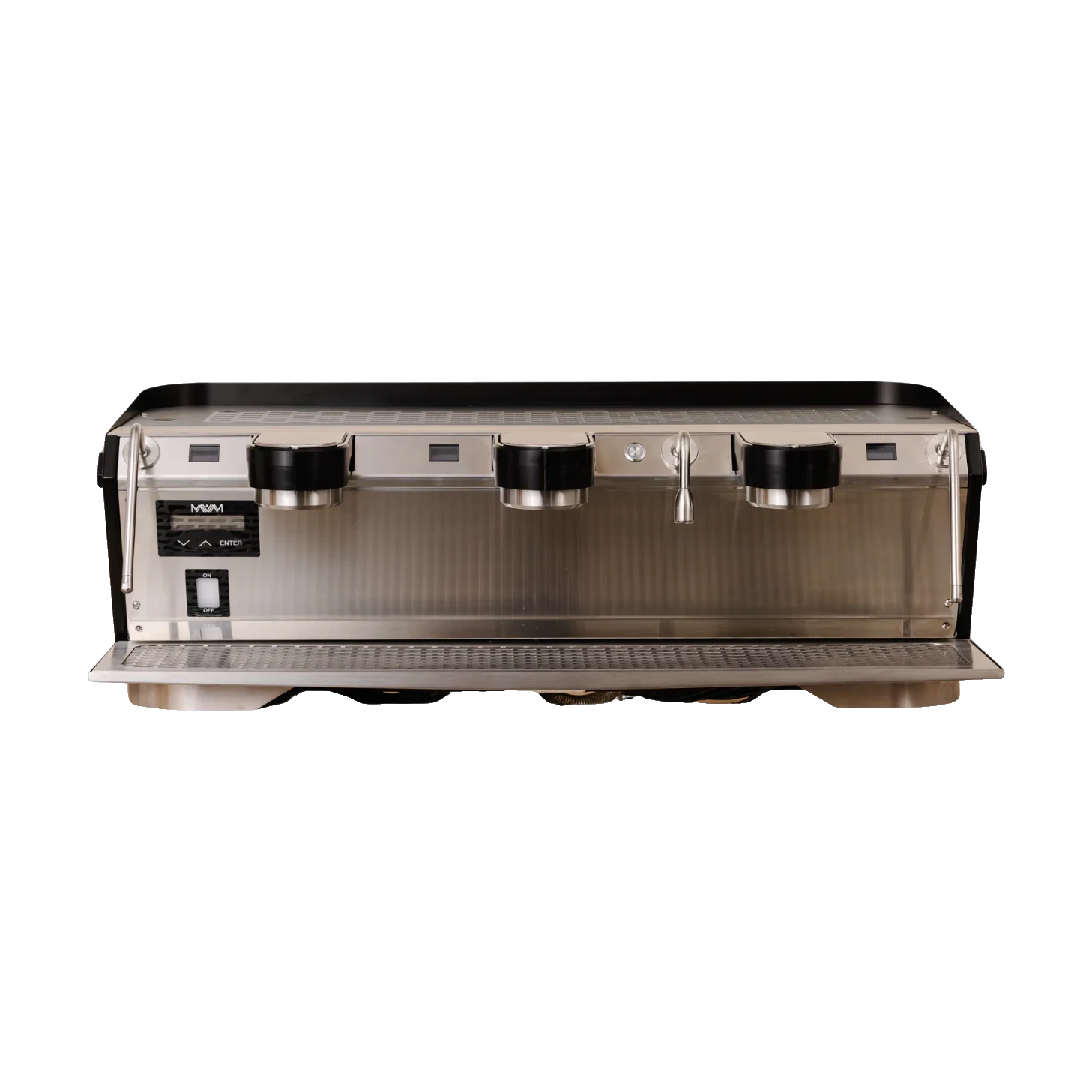
Mavam · On-counter low-profile espresso, 3-group multi-barista
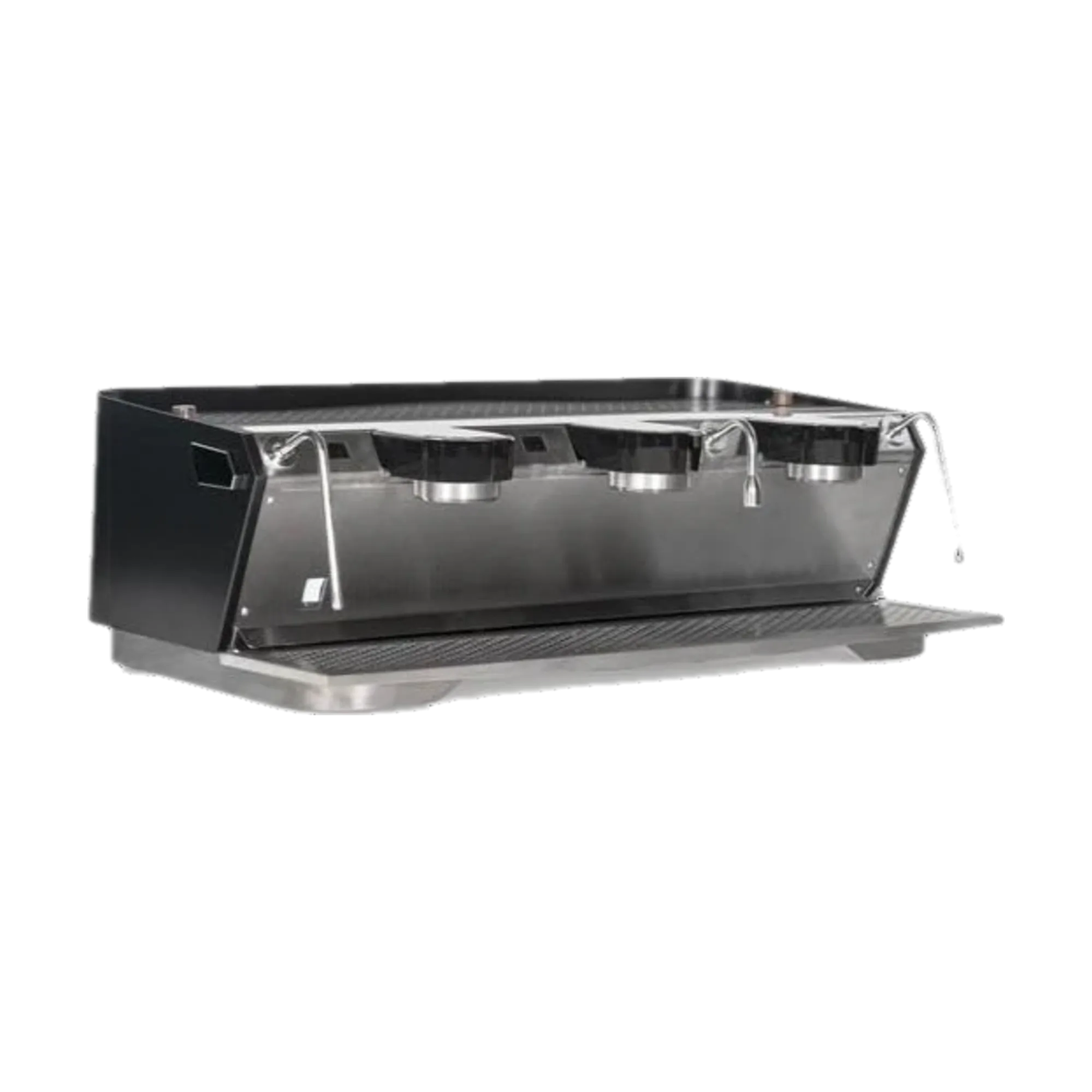
The Mavam MACH 3 runs three groups and three boilers in the same 32 cm low-profile chassis. It's the MACH built for high-volume specialty programs: every group its own thermal system, with Piano Key activation and Automated Pre-Infusion keeping shots repeatable across three baristas at once. Living with one is mostly a matter of rhythm; the wear arrives evenly, so steam cartridges, switches, and PID offsets are best checked as a set rather than one at a time.
Why Grajqevci
Call in the morning and a technician is usually on-site before the day is out. Most Mavam MACH 3 jobs get diagnosed and fixed on the first visit.
Commercial coffee equipment is all we do, and Mavam MACH 3 is part of the weekly rotation. Not a generalist guessing at a service manual. Genuine OEM parts, industry-standard procedures.
Flat rate for the visit, with parts billed separately. For bigger jobs you'll see a written quote on-site before we proceed.
Skip the wait
Trusted by Toronto's most demanding teams






MACH 3 faults we diagnose
On a MACH 3 every fault is one group's fault until proven otherwise. Here's what we see and how we fix it.
A dead key on one group is its switch. We test the actuator, replace the switch, and verify the full rail.
Across three groups, an API fault stays group-scoped: one solenoid or sensor out of time. We verify actuation per group and replace the failed part.
With three independent boilers, drift on one group is that PID's offset. We check all three against a calibrated reference and recalibrate where needed.
Three wands, three cartridges, all wearing on their own schedules. We rebuild whichever valve is passing steam and check the other two while the tools are out.
Your coffee emergency ends here
Call or submit the form. We confirm your address, model, and the issue.
An experienced technician arrives, runs full diagnostics, and identifies the root cause.
You receive a flat, itemized quote. Nothing proceeds without your green light.
We complete the repair, run a test cycle, and walk you through what to watch for.
Parts on the truck
Track record
They diagnosed and fixed the problem with our coffee grinder in no time. Now it works like new.
*Estimated based on the approximate distance from our nearest service centre, average commute time, and median service-call length for one machine. Prices in Canadian dollars (CAD $). Final quote provided on-site after diagnosis.
FAQ
20 answers covering service, repair, parts, installation, warranty, and edge cases.
Updated July 2026
By comparison, which is the luxury of three groups. Every group carries its own boiler, PID, API timing, and steam valve, so we measure the suspect against its two healthy neighbours. The odd one out gives itself away quickly.
Rarely. Per-group isolation means we can usually repair one station while the other two keep serving. The exceptions are shared power and water supply work, and you'll know before we start, not after.
We rebuild the one that's failed and measure the other two, then let the numbers decide. Three wands on a busy bar often wear close together, and folding a second rebuild into the same visit is cheaper than a second call-out. You get the option, not a default upsell.
Consumables in contact with coffee and steam: group gaskets, dispersion screens, and steam cartridges, with Piano Key switches behind them. Boilers and electronics last years when the water is treated. The pattern is so consistent we can usually predict a 3-group's next repair from its volume.
Identical recipes assume identical hardware states, and one group has drifted: a PID offset, API timing, or scale restricting flow. We test that group's temperature and actuation against the other two and correct what's moved. The bar gets three stations that agree again.
Most three-station bars run at least two, but it's workflow, not a requirement, since the MACH 3 pairs with external grinders. The service benefit is real either way: dose problems stay at the grinder and machine problems stay at the machine.
Mavam platforms are rated for 10 to 15 years with service, and volume mostly moves the service frequency, not the lifespan. Water treatment is the bigger lever: a softened, filtered 3-group working hard will outlive a gently-used one on raw municipal supply.
Usually, by working group by group while the bar pours on the others. For bigger jobs we'll take the quietest window in your day, and evening slots exist for bars where there isn't one. The goal is that your customers never learn we were there.
Flat rate for the visit, parts billed at their actual cost on top. You'll hear the rate when you book, and for bigger jobs we quote in writing on-site before any work starts. No estimate that balloons mid-job.
Same-day in most cases. Call in the morning and a technician is usually on-site before the day is out; calls placed later in the day book for the next morning. Urgent breakdowns get priority routing.
The GTA and most of the Golden Horseshoe: Toronto through Mississauga, Vaughan, and Markham, out to Oshawa, Hamilton, and Niagara. If you're not sure you're in range, call and we'll tell you straight.
No. We work call by call. Plenty of customers put us on a maintenance schedule eventually, but that's their choice after seeing the work, never a requirement.
Parts carry their manufacturer warranty, and we stand behind our labour: if the same fault recurs, call us and we'll review it. Specific terms are discussed upfront on each job, not promised in marketing copy.
On-site whenever possible, which is most of the time. If a job genuinely needs the bench, like a full boiler rebuild or major electronics work, we'll say so before anything leaves your building.
Call us or send the form on this page. We confirm the machine, the fault, and a time window the same day. If it's urgent, say so and we'll route the nearest technician.
Diagnosis first: we confirm the fault, tell you what caused it, and quote the fix before touching a wrench. Most repairs finish in that same visit because the common wear parts ride on the truck.
High-wear parts for the platforms we service constantly ride on the truck. Anything else we order, usually next-day where suppliers allow, and we tell you the lead time before committing you to anything.
Usually, yes. We service legacy machines for as long as parts can be sourced, and we're honest when a repair stops making financial sense against a replacement. You get the math, you make the call.
Often, but that's not the pitch. We quote against the actual work, not a factory pricing book, and we'll tell you when a manufacturer warranty claim is the better route. Transparency is the value; the price usually follows.
Yes, and we do it by default on the way out. Half of repeat faults trace back to skipped daily cleaning or wrong routine, so the technician walks your team through what actually matters before leaving.
Book it before the next rush finds the weak station.
Call (289) 217-3796 now →