
!
One group not building brew pressure
That group's pump, OPV, or a restriction between them. We isolate the group, measure pump output at the inlet, and test the OPV under load, without having to suspect the rest of the machine.

The design-led cafe workhorse
When one group dies on a multi-group Under Counter, half the bar keeps earning while we fix the other half, and that's when owners call us. We repair the failing parts without disturbing what's working: boiler elements, probes, pumps, steam valves, a vague paddle pre-infusion. On a single-group it's the same job with one module, and most faults stay scoped to one group.
We'll get back to you today.
Thanks. We received your request.
A Grajqevci technician will get back to you today to confirm your machine and book the visit. If it's urgent, call us directly at (289) 217-3796.
Something went wrong sending your request.
Please try again, or call us directly at (289) 217-3796 and we'll book your service over the phone. You can also email support@grajqevci.com.
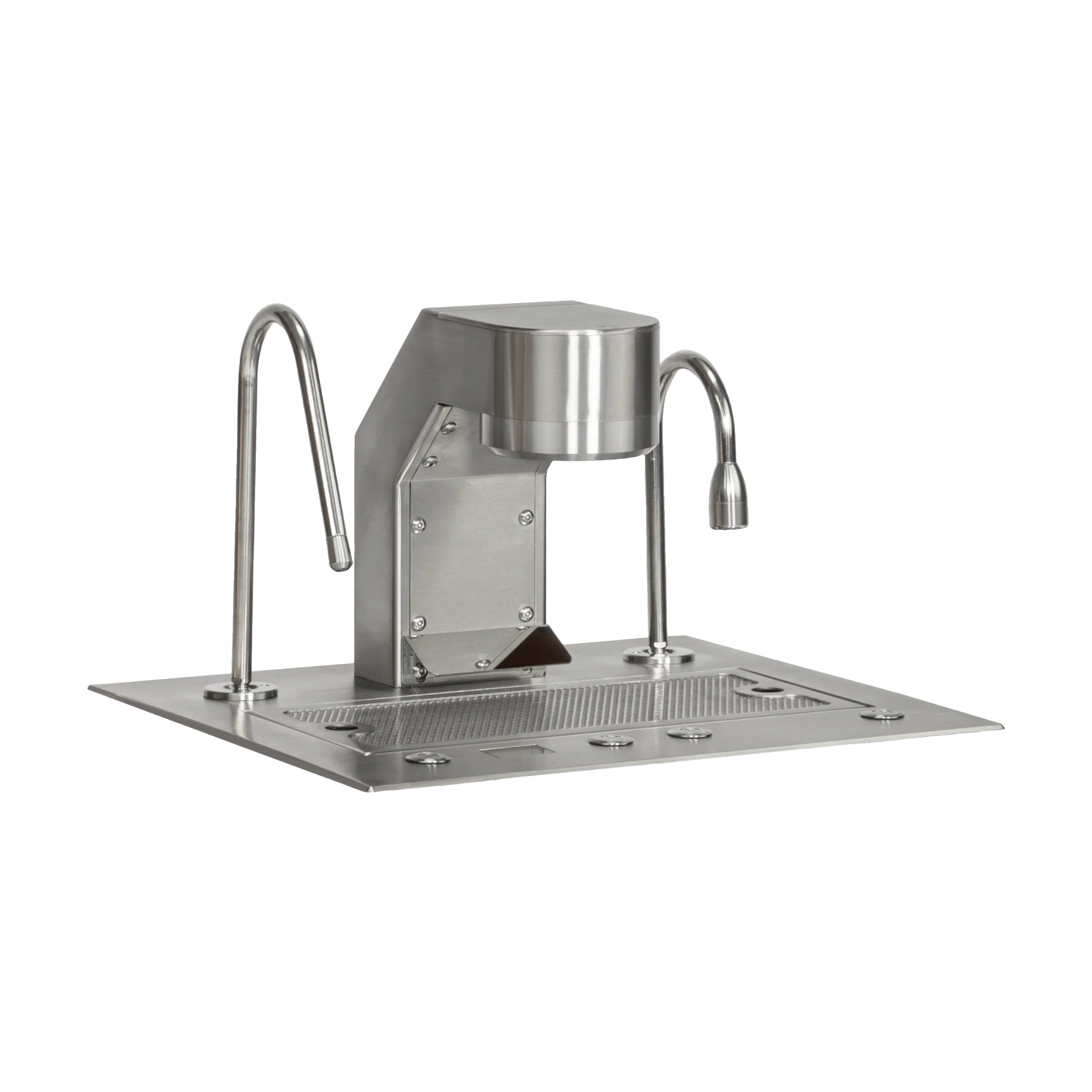
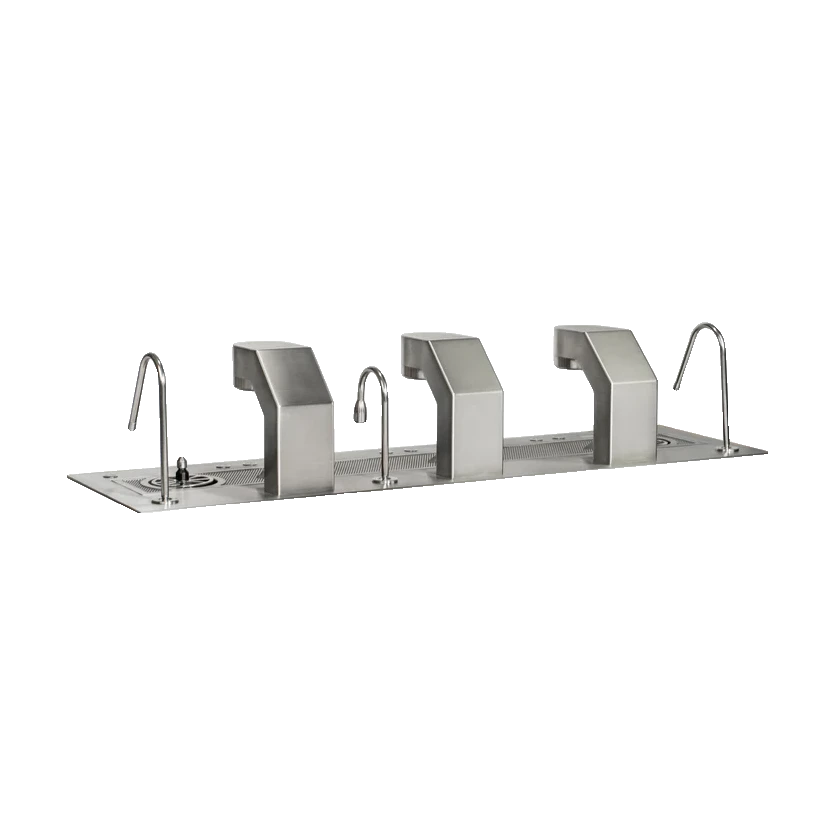
Mavam · Under-counter modular commercial espresso (1/2/3-group)
The Mavam Under Counter hides the espresso machine below the bar, leaving only the group heads and steam wands on top. It comes in 1-, 2-, and 3-group builds, and each group carries its own boiler, PID, and pump, so on the multi-group setups they behave like separate machines sharing a counter. Specialty cafes and design-led restaurants run them hard, and the wear list is steady: gaskets, steam cartridges, paddle bushings, and the scale that small boilers collect.
Why Grajqevci
Call in the morning and a technician is usually on-site before the day is out. Most Mavam Under Counter jobs get diagnosed and fixed on the first visit.
Commercial coffee equipment is all we do, and Mavam Under Counter is one of the platforms we know best. Not a generalist guessing at a service manual. Genuine OEM parts, industry-standard procedures.
Flat rate for the visit, with parts billed separately. For bigger jobs you'll see a written quote on-site before we proceed.
Skip the wait
Trusted by Toronto's most demanding teams






Under Counter faults we diagnose
Most Under Counter service starts with one of the faults below, listed with the cause and what the repair involves.
That group's pump, OPV, or a restriction between them. We isolate the group, measure pump output at the inlet, and test the OPV under load, without having to suspect the rest of the machine.
Routine wear: the gasket hardens, the screen clogs, the seal lets go. New gasket and screen, cleaned threads, a verified seal, and a check of the through-counter sealing collar while we're there.
A scaled dispersion screen or a scaled water path feeding that group. We pull the screen, descale or replace it, and prove the flow even with a naked portafilter.
Per-group pumps make this easy to localize: air in that group's supply or that pump at end of life. We bleed the line, check inlet pressure, and swap the pump if it measures below spec.
Brew pressure wanders as the OPV ages. We measure at the affected group, reset to 9 bar, and confirm it holds under load.
Independent boilers mean the cold group owns the problem: its element, probe, or PID. We isolate that group, test element resistance, verify the probe against a calibrated reference, and check the setpoint. A failed element or an out-of-range sensor closes most of these calls.
Two small boilers double the scale exposure on hard water. We pull and descale both from the cabinet, inspect each element, and check the filtration upstream. If there's no softener on the line, we'll recommend one.
A stagnant path in that group or a spent filter. We flush the affected path, replace the filter if it's exhausted, and confirm a clean dispense.
With two boilers' worth of manifolds and fittings, one weakened joint is all it takes. We pressure-test each boiler, dye-trace where needed, and replace the failing fitting.
Scale, a worn valve cartridge, or low steam pressure on that group's boiler. We descale the pathway, rebuild the valve with a fresh cartridge if it's passing, and verify pressure at the tip.
The valve stem O-ring has worn and the valve no longer shuts dry. We strip the valve, replace the seal kit, lubricate, and test for dry shutoff.
One PID misbehaving means that group's controller, probe, or wiring, rarely the whole platform. We swap the probe to a known-good reference, check the controller, and replace what fails. Each group's brew profile is preserved through a controller swap.
Counter-side knocks and surges land on the power and protection circuitry under the bar. We test the supply at the machine input, check the breaker and in-line protection, and verify power distribution to both groups.
Retrofits sometimes leave less cabinet clearance than the machine was specced with. We assess the access, work within what exists, and document what the operator needs to change so the next visit is easier. We'd rather tell you that than force a compromised repair.
A tired collar gasket lets water track along the group body and under the bar. We replace the gasket on the affected group and verify the counter-top seal.
The paddle mechanism wears at its pivot, and pre-infusion gets vague with it. We disassemble the mechanism, replace the bushing and seals, lubricate, and verify the action is smooth and positive again.
Your coffee emergency ends here
Call or submit the form. We confirm your address, model, and the issue.
An experienced technician arrives, runs full diagnostics, and identifies the root cause.
You receive a flat, itemized quote. Nothing proceeds without your green light.
We complete the repair, run a test cycle, and walk you through what to watch for.
Parts on the truck
Receipts
Tech corridor office in Markham. Our machine throws an error code, I send a photo, they tell me what it is on the phone, often without dispatching. That kind of help is rare.
*Estimated based on the approximate distance from our nearest service centre, average commute time, and median service-call length for one machine. Prices in Canadian dollars (CAD $). Final quote provided on-site after diagnosis.
FAQ
21 answers covering service, repair, parts, installation, warranty, and edge cases.
Updated August 2026
Because each group runs its own boiler, element, probe, and PID, faults don't spread. The cold side has a failed element, a drifted sensor, or a wrong setpoint, and your working side is proof the rest of the machine is healthy. We test the cold group's components against the good one and replace what fails.
Usually, yes. The groups are isolated enough that we can work on one while the other keeps pouring, which is one of the platform's quietest advantages. We'll tell you up front if a specific job, like a shared power fault, needs the whole machine down.
It is. The paddle mechanism wears at its pivot, and the bushing and seals are the usual culprits. We disassemble the mechanism, fit new bushing and seals, lubricate, and verify the action comes back smooth and positive.
Two small boilers means double the exposure to whatever your water carries. If both are scaling on the same schedule, the water treatment is the real fault, not the machine. We descale both from the cabinet, inspect the elements, and put numbers on a softener recommendation if there isn't one inline.
Worth checking, since both pumps usually share an age and a workload. The whine itself is air in the supply line or a pump at end of life, which we confirm by measuring output. While we're in the cabinet we measure the second pump too, so you know where it stands.
No, per-group profiles survive controller and probe swaps. A wrong reading is usually a drifting probe telling lies to a healthy controller. We test the probe against a calibrated reference first, then the controller, and replace only the component that's actually failed.
A partially clogged dispersion screen or scale in the water path just upstream of that group. We pull the screen, descale or replace it, and prove the flow with a naked portafilter. If the group's flow restrictor has scaled, the line gets flushed back through the boiler.
That's the through-counter sealing collar, and yes, it wants attention. A tired collar gasket lets water track along the group body and under the bar top. We replace the gasket on the affected group and verify the seal before the millwork pays for the delay.
Different boiler, that's the point: each group feeds its own steam circuit on this platform. Weak steam on one station means scale in that line, a worn valve cartridge, or low pressure on that group's boiler. We descale the pathway, rebuild the valve if it's passing, and verify pressure at the tip.
Flat rate for the visit, parts billed at their actual cost on top. You'll hear the rate when you book, and for bigger jobs we quote in writing on-site before any work starts. No estimate that balloons mid-job.
Same-day. Call in the morning and a technician is usually on-site before the day is out; calls placed later in the day book for the next morning. Urgent breakdowns get priority routing.
The GTA and most of the Golden Horseshoe: Toronto through Mississauga, Vaughan, and Markham, out to Oshawa, Hamilton, and Niagara. If you're not sure you're in range, call and we'll tell you straight.
No. We work call by call. Plenty of customers put us on a maintenance schedule eventually, but that's their choice after seeing the work, never a requirement.
Parts carry their manufacturer warranty, and we stand behind our labour: if the same fault recurs, call us and we'll review it. Specific terms are discussed upfront on each job, not promised in marketing copy.
On-site whenever possible, which is most of the time. If a job genuinely needs the bench, like a full boiler rebuild or major electronics work, we'll say so before anything leaves your building.
Call us or send the form on this page. We confirm the machine, the fault, and a time window the same day. If it's urgent, say so and we'll route the nearest technician.
Diagnosis first: we confirm the fault, tell you what caused it, and quote the fix before touching a wrench. Most repairs finish in that same visit because the common wear parts ride on the truck.
High-wear parts for the platforms we service constantly ride on the truck. Anything else we order, usually next-day where suppliers allow, and we tell you the lead time before committing you to anything.
Usually, yes. We service legacy machines for as long as parts can be sourced, and we're honest when a repair stops making financial sense against a replacement. You get the math, you make the call.
Often, but that's not the pitch. We quote against the actual work, not a factory pricing book, and we'll tell you when a manufacturer warranty claim is the better route. Transparency is the value; the price usually follows.
Yes, and we do it by default on the way out. Half of repeat faults trace back to skipped daily cleaning or wrong routine, so the technician walks your team through what actually matters before leaving.
Tell us which group is acting up and we'll likely arrive knowing why.
Call (289) 217-3796 now →