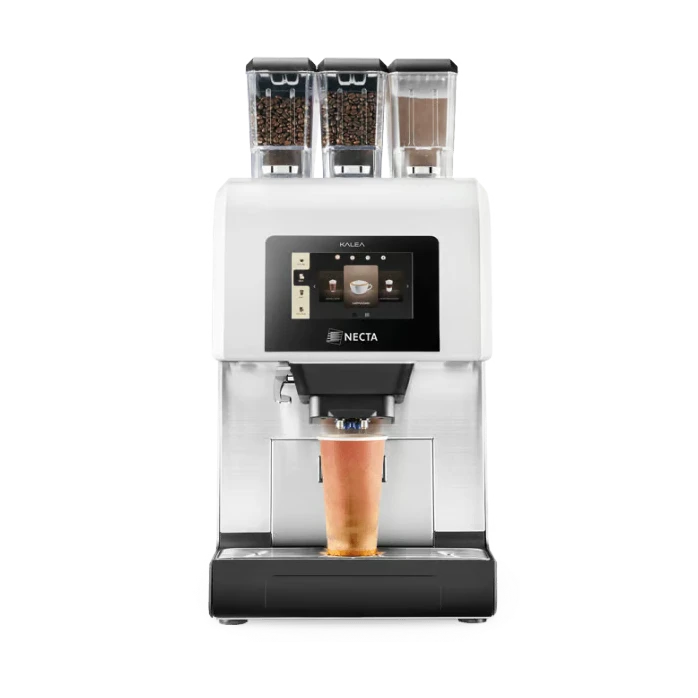
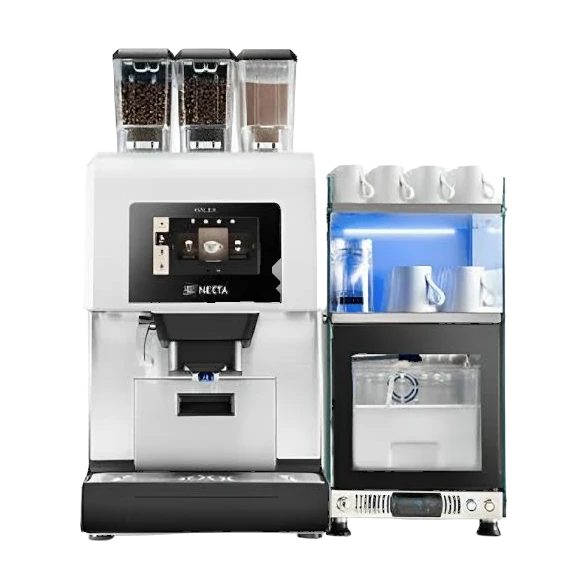
What kind of site is the Kalea built for?
Hospitality back-of-house, a cafe pantry or hotel service counter pulling fresh-milk drinks at mid volume, up to around 500 cups a day. It is a behind-the-counter machine rather than an open self-serve unit. If you want the bigger menu and capacity, the Kalea Plus steps up from it.
Why has the milk on our Kalea gone thin?
Residue in the milk circuit, almost always. A film in the air-intake bore, a worn impeller, or a drifting temperature sensor flattens the foam or leaves it lukewarm. We sanitize the whole milk path, pressure-test the suction line, replace what is below spec, and put the daily rinse back on the rails with your staff.
Our Kalea won't dispense and says the bin is full. It isn't. Why?
The grout-bin counter has reached its limit, and the machine locks out until it is reset, full bin or not. We confirm the bin is seated, check that the microswitch reads it, and reset the counter in the service menu. A flaky microswitch gets replaced while we are in there.
The shots from our Kalea keep changing. Can you sort it?
Yes. As the burrs wear, a time-based dose drifts and the cup gets inconsistent. We weigh the dose over several reference shots, measure the burr gap, recalibrate against the target weight, and replace the burrs only if they are past spec. It is a precise job, not a guess.
Is the Kalea the same as a Barista 500 underneath?
Mechanically they are very close; the 500 is the chassis that consolidated the Kalea family, and they share the Z4000 brewer and lead-free hydraulics. That works in your favour: parts and service knowledge carry straight across, so a Kalea is no orphan even though the nameplate is older.
Our Kalea's overnight clean keeps aborting. What's behind that?
Usually a level sensor in the cleaning tank misreading, an empty detergent canister, or a blocked return line. We pull the service log to see where in the cycle it stalls, check the detergent dosing, clear any blockage, and replace the sensor if it is intermittent. We confirm a full clean before leaving.
Can you still get parts for a Kalea?
Yes. The critical brewer parts stay in production through the current Barista platform, and we source the rest from refurbisher networks and donor machines. Availability does thin over the years, so if the Kalea is central to your service, it is worth having us look it over before something major fails.
How long should a well-kept Kalea last?
Eight to twelve years is realistic with the brewer serviced and scale kept in check. The machines that get their milk circuit and descaling looked after run for years; the ones that do not tend to announce it with milk and brewer faults. We flag wear early so it does not become a breakdown.
How much does a repair visit cost?
Flat rate for the visit, parts billed at their actual cost on top. You'll hear the rate when you book, and for bigger jobs we quote in writing on-site before any work starts. No estimate that balloons mid-job.
How fast can you get here?
Same-day. Call in the morning and a technician is usually on-site before the day is out; calls placed later in the day book for the next morning. Urgent breakdowns get priority routing.
Which areas do you cover?
The GTA and most of the Golden Horseshoe: Toronto through Mississauga, Vaughan, and Markham, out to Oshawa, Hamilton, and Niagara. If you're not sure you're in range, call and we'll tell you straight.
Do I need a service contract?
No. We work call by call. Plenty of customers put us on a maintenance schedule eventually, but that's their choice after seeing the work, never a requirement.
Are the repairs warrantied?
Parts carry their manufacturer warranty, and we stand behind our labour: if the same fault recurs, call us and we'll review it. Specific terms are discussed upfront on each job, not promised in marketing copy.
Do you repair on-site or take the machine away?
On-site whenever possible, which is most of the time. If a job genuinely needs the bench, like a full boiler rebuild or major electronics work, we'll say so before anything leaves your building.
How do I book a service call?
Call us or send the form on this page. We confirm the machine, the fault, and a time window the same day. If it's urgent, say so and we'll route the nearest technician.
What happens on the first visit?
Diagnosis first: we confirm the fault, tell you what caused it, and quote the fix before touching a wrench. Most repairs finish in that same visit because the common wear parts ride on the truck.
Do you carry parts or order them in?
High-wear parts for the platforms we service constantly ride on the truck. Anything else we order, usually next-day where suppliers allow, and we tell you the lead time before committing you to anything.
My machine is older or out of production. Will you still look at it?
Usually, yes. We service legacy machines for as long as parts can be sourced, and we're honest when a repair stops making financial sense against a replacement. You get the math, you make the call.
Are you cheaper than the manufacturer's service network?
Often, but that's not the pitch. We quote against the actual work, not a factory pricing book, and we'll tell you when a manufacturer warranty claim is the better route. Transparency is the value; the price usually follows.
Can you train our staff so this doesn't happen again?
Yes, and we do it by default on the way out. Half of repeat faults trace back to skipped daily cleaning or wrong routine, so the technician walks your team through what actually matters before leaving.