Do you actually repair Necta machines across the GTA?
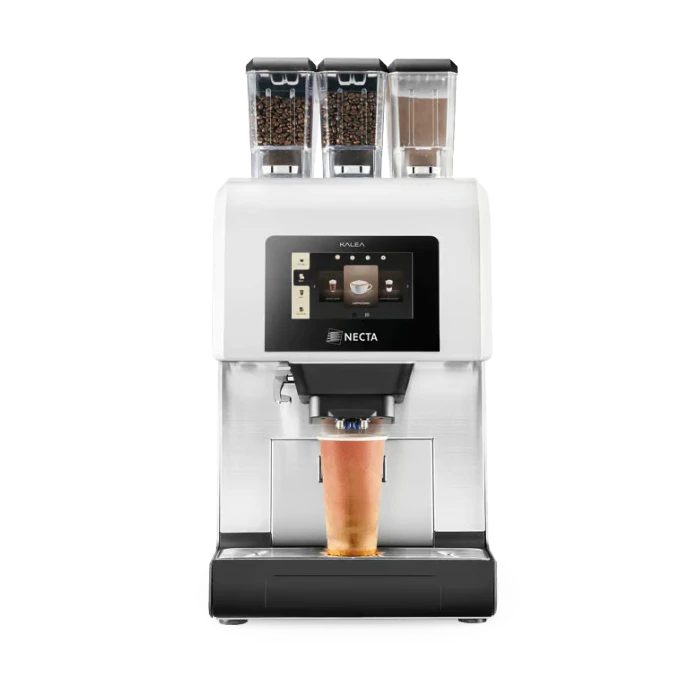
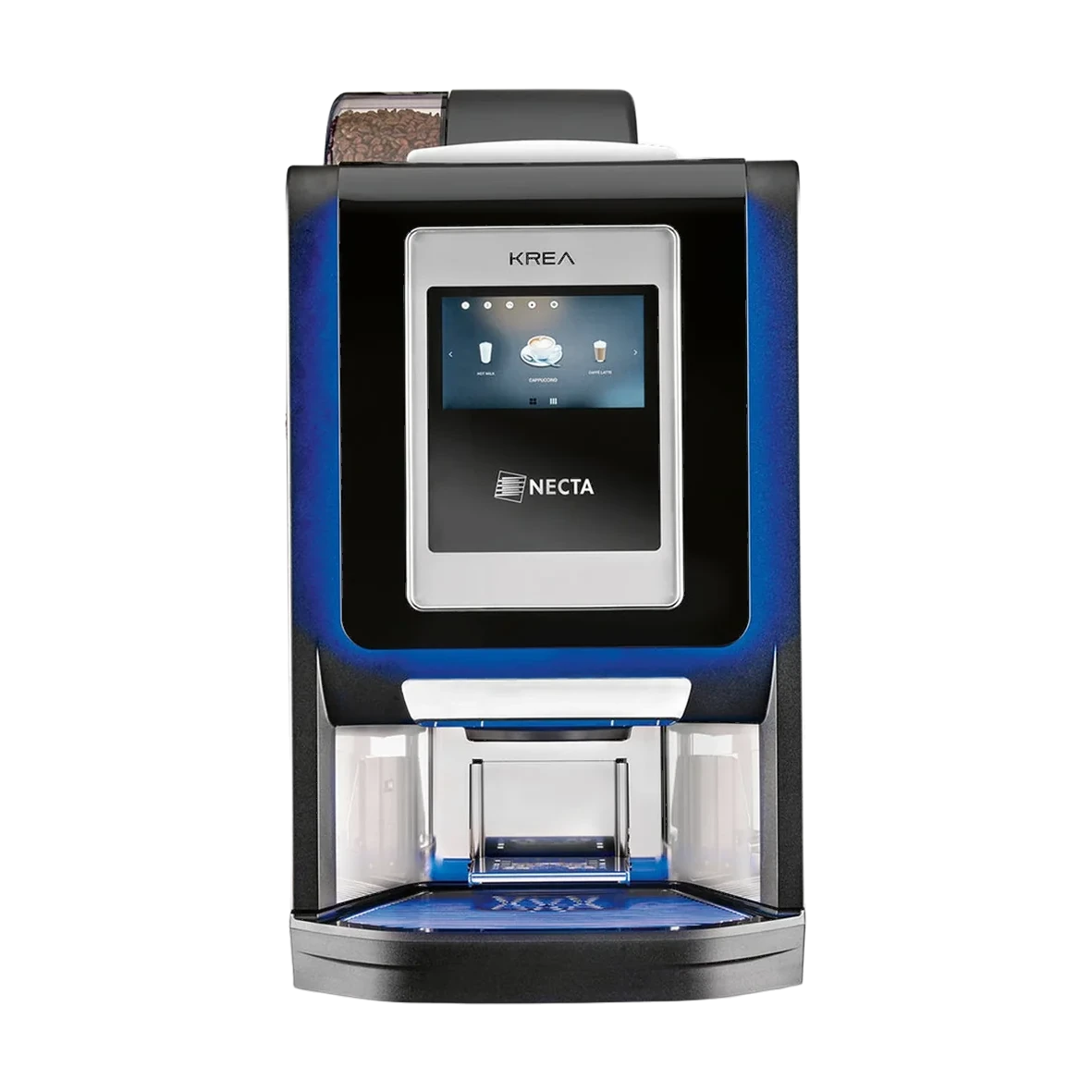
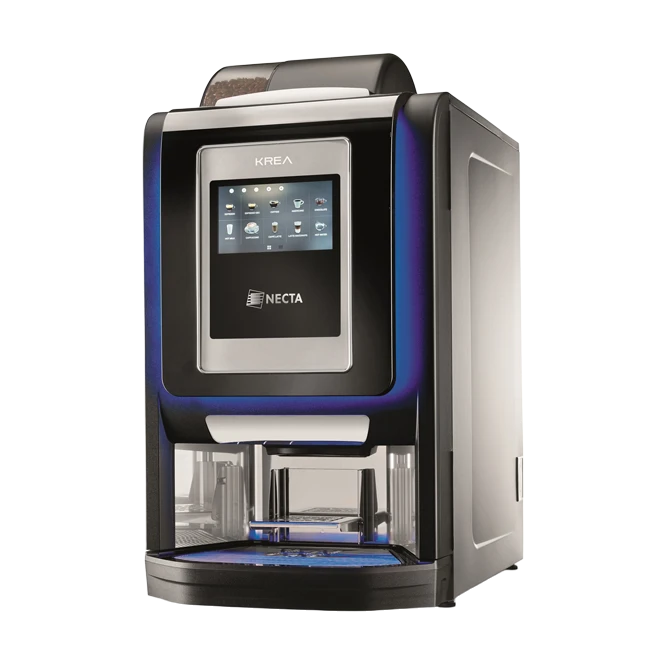
Yes. Necta is one of the vending and self-serve platforms we work on most across GTA offices, institutions, transit sites, and OCS routes. There's usually a Barista, a Krea, or a Kalea on the bench or a van heading to one.
Are you authorized by Necta or Evoca?
No, and we say so plainly. We are an independent commercial coffee specialist, which lets us work on out-of-warranty machines, keep older Krea and Kalea units going after the authorized network moves on, and quote without a manufacturer pricing book.
What's the most common Necta repair you see?
The Z4000 brew group, by a wide margin. Thousands of unattended cycles pack the cam path with grounds and dry out the seals until the brewer jams or throws a home-position error. We strip it, fit fresh seals, regrease it, and show your team the cleaning that prevents the repeat.
What is the Z4000 brewer and why does it jam?
It is Necta's patented brew group, the heart of the Barista platform and the older Krea and Kalea machines. It jams when ground coffee builds on the cam path, the piston seals wear, or the home-position microswitch drifts after heavy use. None of that is a write-off; a strip-down, new seals, and a regrease normally clear it in one visit.
My Necta won't dispense even though the waste bin is empty. Why?
The grout-bin counter has reached its programmed limit, and Necta machines lock out dispense at that point whether or not the bin is physically full. We confirm the bin is seated, check the microswitch reads it, and reset the counter through the service menu. If the switch is intermittent we replace it on the spot.
Why does the milk foam on our Necta keep going thin or cold?
On a fresh-milk machine it is almost always the milk circuit. Protein residue narrows the air-intake bore, an impeller wears, or the temperature sensor drifts, and the foam goes flat or lukewarm. We strip and sanitize the whole milk path, replace what is below spec, and reset the daily clean so it holds.
Our Necta touchscreen is frozen or stuck on the splash screen. Fix or replace?
Usually a fix. A frozen Pro Touch or Touch screen is more often a firmware hang or moisture under the bezel than a dead panel. We reset, check the firmware, dry and inspect the seal, and reflash from a known-good image, restoring your drink profiles. A panel swap is the exception, not the default.
The card reader on our Necta stopped working. Can you fix the payment system?
Yes. A dead reader is usually a cable seating on the MDB or Executive bus before it is a board fault. We reseat the harness, check the bus voltage, and test the handshake with a known-good coin, card, or contactless reader, replacing the payment board only once the bus signal is confirmed bad.
How does Necta repair pricing work?
Flat rate for the visit and diagnosis, which you hear when you book, with parts billed on top at their actual cost. For anything larger you get a written quote on-site before we start, so no estimate balloons mid-job. If replacement honestly makes more sense than repair, we will say so.
What Necta parts do you carry on the truck?
The parts the fault statistics call for: Z4000 brewer seals and screens, microswitches, grinder burrs, milk-circuit impellers and gaskets, solenoids, and common sensors. That covers most calls in one trip. Display modules, payment boards, pumps, and boiler elements are ordered per job, usually within a business day or two.
How fast can you get to a Necta that's down?
Same-day. A call in the morning usually puts a technician on-site before the day is out, and later calls book for the next morning. An unattended vending bank or a transit site with no coffee gets moved up the route.
Can you service the current Barista platform and the older machines?
Yes, both. We work on the full Barista range from the 200 to the 1000, the current Krea and Kalea machines, and the pre-rebrand units underneath them. They share the Z4000 brewer and hydraulics, so the platform knowledge carries straight across.
Can you still repair a legacy Krea, Kalea, Koro, or Concerto?
Usually, yes. Those machines stay on our books long after the dealer network drops them, helped by the fact that the Z4000 brewer parts are still in production through the current range. For anything discontinued we source from refurbisher stock and donor units, and we are honest when a repair stops paying for itself.
Our overnight cleaning cycle keeps aborting. What causes that?
Usually a level sensor in the cleaning tank misreading, an empty detergent canister, or a blocked return line. We read the service log to find where the cycle stalls, check the detergent dosing, clear any blockage, and replace the sensor if it is intermittent. We confirm a full clean before we leave.
The grinder dose has drifted and shots are inconsistent. Can you recalibrate?
Yes. Time-based dosing means worn burrs slowly change the dose, so shots go weak or uneven. We weigh the dose over ten reference shots, measure the burr gap, recalibrate against the target weight, and replace burrs only if they are past spec. On twin-grinder machines we do each hopper separately.
Is our local water hard enough to damage a Necta?
In a lot of the region, yes. Supplies here run from moderate to hard, and scale insulates the heating element, slows heat-up, and chews through valves and seals. We set the descale interval to your water, fit a softener cartridge where it makes sense, and check scale condition on every visit.
We run Necta machines on a vending route across several sites. Can you handle a fleet?
Yes, that is a lot of what we do. We service multi-site vending and OCS routes, can work from your telemetry fault data, and report back on each machine after a visit. When several units share a fault, the cause is usually the water or the cleaning routine rather than the machines.
Do we need a service contract, or can we call as needed?
Call by call by default. Plenty of operators move to a regular schedule once they have seen the work, especially on busy routes and unattended sites, but that is always their choice rather than a contract we push.
Do you do after-hours or overnight service for unattended sites?
Often, yes. Evening and overnight slots exist for transit concourses, hospitals, and vending banks where a daytime visit means lost service, and they are arranged case by case when you book. Tell us your operating window and we will find the time that costs you the least.
Can you read the fault log and diagnose before sending someone?
We can usually narrow it down. Give us the model, the error code, and what the machine is doing, and we will often know the likely fix and which parts to load before dispatch. Some faults genuinely need meters on the machine, and we will be straight about which yours is.