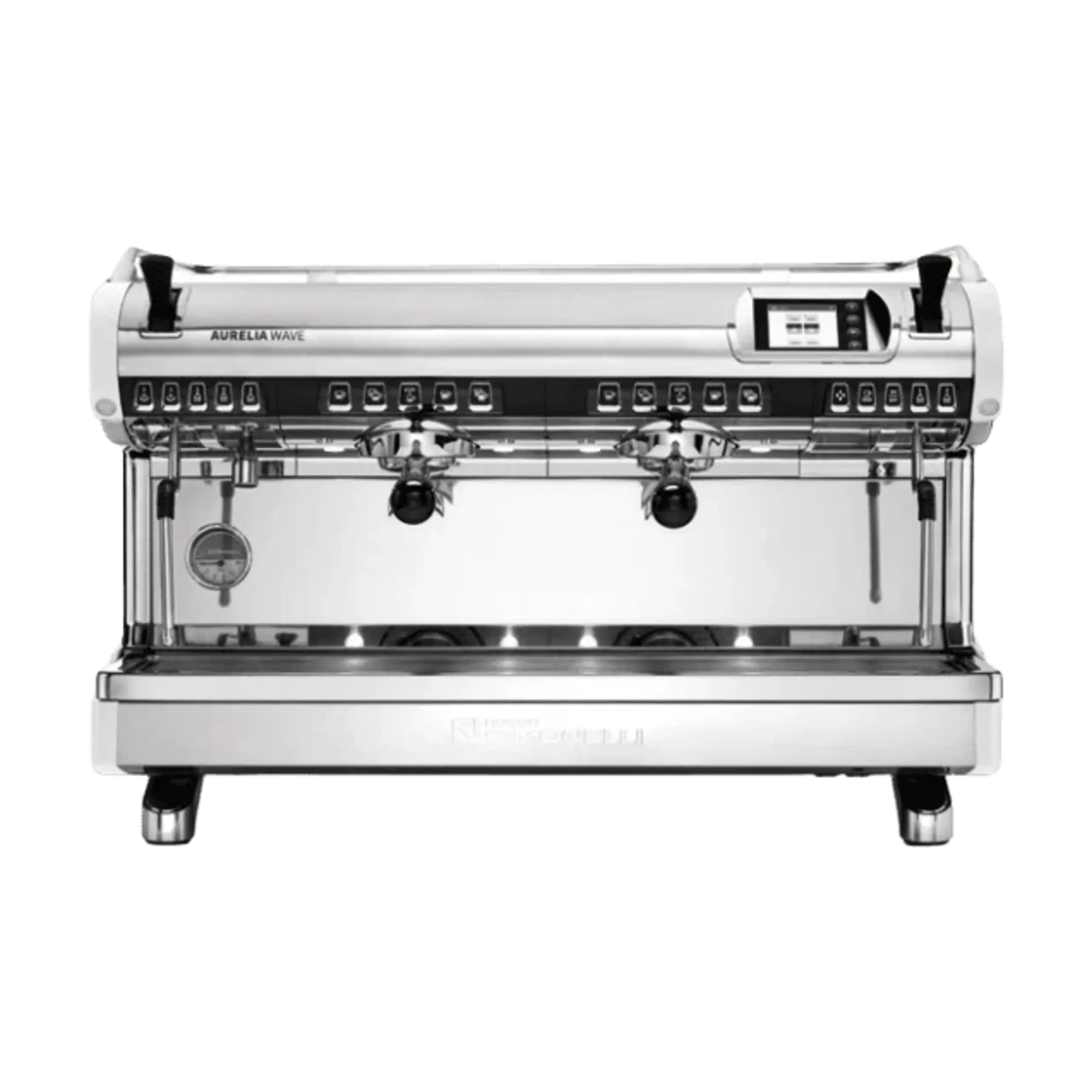
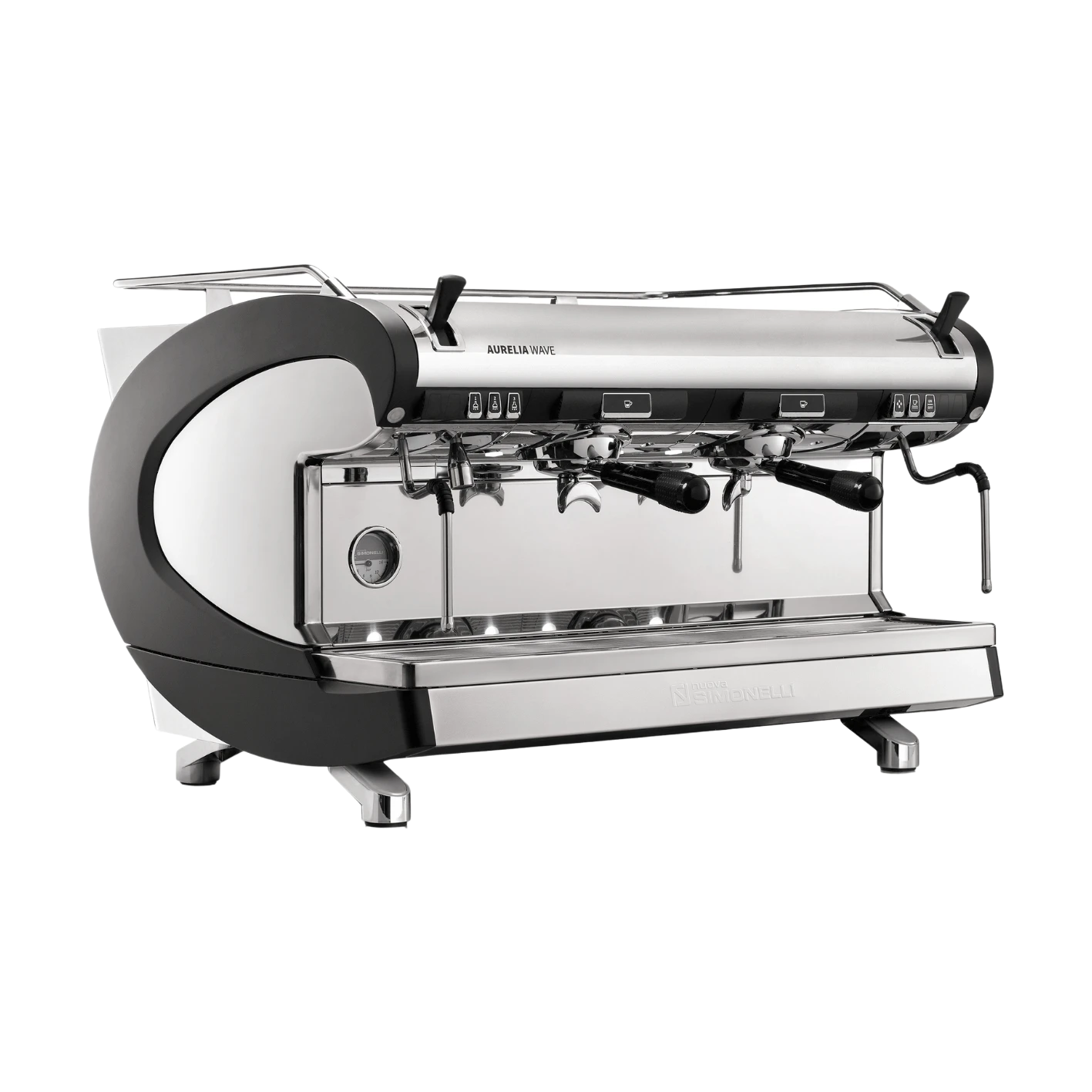
One group on my Aurelia Wave runs hotter than the others. Why?
Each group has its own T3 micro-boiler and NTC sensor, and a single drifted sensor will quietly push that group off setpoint. Scale buildup inside one group boiler causes the same spread more gradually. We test all the sensors against a calibrated reference probe, descale where the readings say to, and recalibrate the PID offsets until the groups agree again.
What does it mean when Soft Infusion stops engaging?
You'll hear the difference first: no pre-infusion click at shot start, then harsher, less forgiving espresso. The cause is almost always a stuck or burnt-out solenoid coil. Replacing the coil or the full solenoid and verifying the pressure curve on a portafilter gauge puts the ramp back the way the machine was designed to run.
Why does the steam on my Aurelia Wave fade during rush?
The steam boiler is rated to keep up with continuous pitchers, so fading under load points at scale on the element or an element that's electrically past it. Both strangle recovery exactly when the queue is longest. We descale the circuit, test the element's resistance, and replace it if it reads low, then benchmark recovery time against spec.
How often do Aurelia Wave group gaskets need replacing?
On a machine doing real volume, every 6 to 12 months. The first symptom is water spitting past the portafilter no matter how hard staff lock it in. We replace the gasket, clean the threads and dispersion screen while the group is open, and prove the seal across five test shots.
My Easy Cream frother is making thin foam. What's wrong?
Milk residue is restricting the air intake or the steam venturi, which kills the air-to-milk ratio that microfoam depends on. A worn O-ring or seized check valve produces the same result. The module gets stripped, sanitized end to end, resealed, and verified on a calibration cycle with fresh milk.
Why do the programmed doses on my Aurelia Wave keep changing?
Mineral deposit builds on the flow meter impellers until the pulse counts stop matching the water actually delivered. The controller faithfully obeys the bad data, and your doses wander. Cleaning each meter and reprogramming by weight against a 1:2 ratio target fixes it; persistent drift afterwards means the meter itself is worn.
The Wave Digit screen froze mid-service. Do I need a new display?
Probably not. Most freezes are firmware hangs that clear with a hard reset, and a reflash to a stable build handles the repeat offenders. A genuinely failed digitizer shows up as touches landing in the wrong place or nowhere at all, and that's the only case where the display module gets replaced.
What's the gravimetric version's load cell alarm about?
Gravimetric Aurelia Waves weigh every shot through load cells under the drip tray, and the alarm means the reading doesn't square with a real cup. A badly seated tray or a vibrating fridge compressor next to the machine triggers it more often than a failed cell. Reseat the tray and level the machine first; if the alarm stays, the cells need calibrating against reference weights.
The steam joystick feels loose and sloppy. Is that serious?
Not dangerous, but it gets worse and starts weeping steam. The pivot bushing wears with every pitcher, and eventually the valve can't find a clean shutoff. New bushings and seals through the joystick assembly restore the positive action, and it's quick work.
How much does a repair visit cost?
Flat rate for the visit, parts billed at their actual cost on top. You'll hear the rate when you book, and for bigger jobs we quote in writing on-site before any work starts. No estimate that balloons mid-job.
How fast can you get here?
Same-day. Call in the morning and a technician is usually on-site before the day is out; calls placed later in the day book for the next morning. Urgent breakdowns get priority routing.
Which areas do you cover?
The GTA and most of the Golden Horseshoe: Toronto through Mississauga, Vaughan, and Markham, out to Oshawa, Hamilton, and Niagara. If you're not sure you're in range, call and we'll tell you straight.
Do I need a service contract?
No. We work call by call. Plenty of customers put us on a maintenance schedule eventually, but that's their choice after seeing the work, never a requirement.
Are the repairs warrantied?
Parts carry their manufacturer warranty, and we stand behind our labour: if the same fault recurs, call us and we'll review it. Specific terms are discussed upfront on each job, not promised in marketing copy.
Do you repair on-site or take the machine away?
On-site whenever possible, which is most of the time. If a job genuinely needs the bench, like a full boiler rebuild or major electronics work, we'll say so before anything leaves your building.
How do I book a service call?
Call us or send the form on this page. We confirm the machine, the fault, and a time window the same day. If it's urgent, say so and we'll route the nearest technician.
What happens on the first visit?
Diagnosis first: we confirm the fault, tell you what caused it, and quote the fix before touching a wrench. Most repairs finish in that same visit because the common wear parts ride on the truck.
Do you carry parts or order them in?
High-wear parts for the platforms we service constantly ride on the truck. Anything else we order, usually next-day where suppliers allow, and we tell you the lead time before committing you to anything.
My machine is older or out of production. Will you still look at it?
Usually, yes. We service legacy machines for as long as parts can be sourced, and we're honest when a repair stops making financial sense against a replacement. You get the math, you make the call.
Are you cheaper than the manufacturer's service network?
Often, but that's not the pitch. We quote against the actual work, not a factory pricing book, and we'll tell you when a manufacturer warranty claim is the better route. Transparency is the value; the price usually follows.
Can you train our staff so this doesn't happen again?
Yes, and we do it by default on the way out. Half of repeat faults trace back to skipped daily cleaning or wrong routine, so the technician walks your team through what actually matters before leaving.