Brew unit jam
Grind buildup, worn cam followers, or a brew group knocked out of alignment will stall the cycle. We pull the brew unit, clean every wear surface, fit fresh seals, lubricate with food-safe grease, and run it until it cycles cleanly.

Small machine, big job, no cup
Eighty drinks a day through a compact chassis means the Coffee Club rarely gets a quiet shift, and a fault shows up as a queue almost instantly. We repair Clubs in restaurants, hotels, and offices: foam quality drops, brew unit jams, steam that fades, boiler codes. Describe what it's doing and we'll usually arrive with the fix on board.
We'll get back to you today.
Thanks. We received your request.
A Grajqevci technician will get back to you today to confirm your machine and book the visit. If it's urgent, call us directly at (289) 217-3796.
Something went wrong sending your request.
Please try again, or call us directly at (289) 217-3796 and we'll book your service over the phone. You can also email support@grajqevci.com.

Schaerer · Mid-volume super-automatic
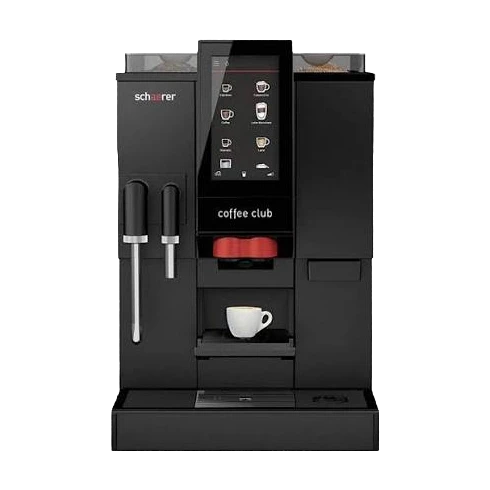
The Coffee Club is the compact end of Schaerer's current range, rated for about 80 drinks a day. Restaurants and hotels like it because it does proper milk drinks from a small footprint: twin 550-gram hoppers with integrated grinders, BestFoam where it's optioned, and a PowerSteam wand for kitchens that froth by hand. It shares platform genetics with the bigger machines, so it wears in familiar ways: brew unit seals and the milk side lead the fault list, and the steam valve is the wear point all its own.
Why Grajqevci
Call in the morning and a technician is usually on-site before the day is out. Most Schaerer Coffee Club jobs get diagnosed and fixed on the first visit.
Commercial coffee equipment is all we do, and Schaerer Coffee Club is one of the platforms we know best. Not a generalist guessing at a service manual. Genuine OEM parts, industry-standard procedures.
Flat rate for the visit, with parts billed separately. For bigger jobs you'll see a written quote on-site before we proceed.
Skip the wait
Trusted by Toronto's most demanding teams


Coffee Club faults we diagnose
Every entry below comes from real Coffee Club service calls: the symptom, the usual culprit, and how we resolve it.
Grind buildup, worn cam followers, or a brew group knocked out of alignment will stall the cycle. We pull the brew unit, clean every wear surface, fit fresh seals, lubricate with food-safe grease, and run it until it cycles cleanly.
A torn brew screen, a worn piston seal, or grind drifting too fine lets grounds past. We inspect both screens, replace whatever shows wear, fit a new piston seal, and recalibrate the grind.
Three suspects: grind drifted coarse, brew temperature down, or pump pressure below spec. We measure all three at the machine, adjust grind and dose, and quote a pump replacement only if the readings call for it.
Scale insulating the heating element is the leading cause, with element fatigue behind it. We descale, measure heat-up time against spec, and replace the element if performance doesn't come back.
A blocked steam valve, scale in the steam circuit, or a worn valve cartridge bleeding pressure. We descale the steam pathway, check that the valve actuates fully, and fit a new cartridge if it's leaking past. Steam should return to spec immediately.
Points to a seal leak, a blocked drain line, or a cracked internal water line. We pressure-test the circuits, trace the leak to its source, then clear the blockage or replace the failed part.
Either the cycle rarely ran to completion or the counter wasn't reset afterwards. We verify the descale actually finished, reset the counter through the service menu, and check that the water-hardness setting matches your supply.
Milk residue in the foam chamber or air-intake line throws off the air-to-milk ratio, and the foam collapses. We strip the BestFoam system, sanitize every pathway, replace the O-rings and intake spring, and run test drinks until the foam holds its texture.
Either the milk temperature sensor has drifted or scale is choking the milk-side heat exchanger. We test the sensor against a reference probe, descale the circuit, and replace whatever reads out of spec. Usually a one-visit fix.
A worn impeller or a small air leak on the suction side lets the pump lose its draw. We pressure-test the milk line, inspect the pump head, fit a new impeller if flow is below spec, and refresh the suction seals while we're in there.
Skipped daily cleans, almost every time. We deep-clean the full milk pathway, sanitize the container connection, and go over the daily cycle with your staff so the smell doesn't come back.
Burr wear is the usual cause, with calibration drift close behind. We weigh dose output across a run of shots, measure the burr gap, recalibrate, and replace the burrs when they're past spec.
Usually a small stone or other foreign object that rode in with the beans, or beans bridging above the throat. We open the grinder, clear the obstruction, inspect the burrs for chips, and replace them if they're damaged.
Most cases are a firmware hang rather than dead hardware. We run a controlled reset, reflash from a known-good image if it sticks again, and replace the display module only when the digitizer itself has failed.
These are the boiler fault family, covering heating, temperature sensors, and pressure. We read the full error log, test the sensor and element to find which actually failed, replace that component, and clear the log. Most are done in one visit.
A misreading level sensor in the cleaning tank or a blockage in the cleaning circuit stalls the cycle. We find where it's stopping, clear the circuit or replace the sensor, and watch a full cycle complete before we leave.
Your coffee emergency ends here
Call or submit the form. We confirm your address, model, and the issue.
An experienced technician arrives, runs full diagnostics, and identifies the root cause.
You receive a flat, itemized quote. Nothing proceeds without your green light.
We complete the repair, run a test cycle, and walk you through what to watch for.
Parts on the truck
The record
Walked us through a milk system rebuild while the tech was on-site. Now our team handles the daily clean properly and we haven't had a foam issue since.

*Estimated based on the approximate distance from our nearest service centre, average commute time, and median service-call length for one machine. Prices in Canadian dollars (CAD $). Final quote provided on-site after diagnosis.

FAQ
20 answers covering service, repair, parts, installation, warranty, and edge cases.
Updated August 2026
Depends on the configuration. BestFoam is optional on the Club, so some units do fully automatic milk drinks while others rely on the PowerSteam wand for manual frothing. It matters for repairs too: tell us which setup yours has when you book and the right parts come along.
A worn valve cartridge, almost every time. Manual frothing puts daily cycles through that valve, and once the seat wears it weeps steam and water between uses. We pull the valve and replace the cartridge and seat, which stops the drip and the slow scale streak it leaves behind.
It's a design point rather than a cliff, but it's honest. A Club pushed well past it wears seals faster, asks for cleaning more often, and starts queueing drinks at peak. If your counter has outgrown the machine, we'll tell you plainly; until then, consistent servicing keeps it comfortable at its rating.
A good deal of the platform is shared with its bigger siblings, including the installed-base Coffee Prime generation. That's good news for repairs: common seals, milk components, and sensors are parts we already stock or source quickly, so the Club doesn't wait in line behind rarer machines.
On BestFoam-equipped Clubs the cause is nearly always residue in the foam chamber or air intake, or an O-ring that no longer seals. We strip the milk system, sanitize the pathways, replace the worn parts, and verify the texture with test drinks. On wand-only machines, flat foam is usually technique or a blocked steam tip, which we also sort.
The 60-series codes are boiler faults: temperature, heat-up, or pressure. A power cycle from the main switch is worth one try, and an overdue descale is worth running. If the code comes back after both, a sensor or element has likely failed and it's a technician job; the codes exist to stop the machine cooking its own heating element.
A torn brew screen, a worn piston seal, or grind that has drifted too fine. All three let fines past the screen and into the cup. We inspect the screens, replace what's worn, fit a new seal, and reset the grind so it doesn't recur next week.
Age alone isn't the answer; condition is. A Club with a sound boiler and a healthy brew unit justifies repairs for years yet, because the parts that commonly fail are inexpensive. We'll quote the fix, tell you what else is close to due, and give you the honest comparison against replacement so the decision is yours with real numbers.
Flat rate for the visit, parts billed at their actual cost on top. You'll hear the rate when you book, and for bigger jobs we quote in writing on-site before any work starts. No estimate that balloons mid-job.
Same-day. Call in the morning and a technician is usually on-site before the day is out; calls placed later in the day book for the next morning. Urgent breakdowns get priority routing.
The GTA and most of the Golden Horseshoe: Toronto through Mississauga, Vaughan, and Markham, out to Oshawa, Hamilton, and Niagara. If you're not sure you're in range, call and we'll tell you straight.
No. We work call by call. Plenty of customers put us on a maintenance schedule eventually, but that's their choice after seeing the work, never a requirement.
Parts carry their manufacturer warranty, and we stand behind our labour: if the same fault recurs, call us and we'll review it. Specific terms are discussed upfront on each job, not promised in marketing copy.
On-site whenever possible, which is most of the time. If a job genuinely needs the bench, like a full boiler rebuild or major electronics work, we'll say so before anything leaves your building.
Call us or send the form on this page. We confirm the machine, the fault, and a time window the same day. If it's urgent, say so and we'll route the nearest technician.
Diagnosis first: we confirm the fault, tell you what caused it, and quote the fix before touching a wrench. Most repairs finish in that same visit because the common wear parts ride on the truck.
High-wear parts for the platforms we service constantly ride on the truck. Anything else we order, usually next-day where suppliers allow, and we tell you the lead time before committing you to anything.
Usually, yes. We service legacy machines for as long as parts can be sourced, and we're honest when a repair stops making financial sense against a replacement. You get the math, you make the call.
Often, but that's not the pitch. We quote against the actual work, not a factory pricing book, and we'll tell you when a manufacturer warranty claim is the better route. Transparency is the value; the price usually follows.
Yes, and we do it by default on the way out. Half of repeat faults trace back to skipped daily cleaning or wrong routine, so the technician walks your team through what actually matters before leaving.

Most Club faults stay small if they're caught early. Call while yours still is.
Call (289) 217-3796 now →