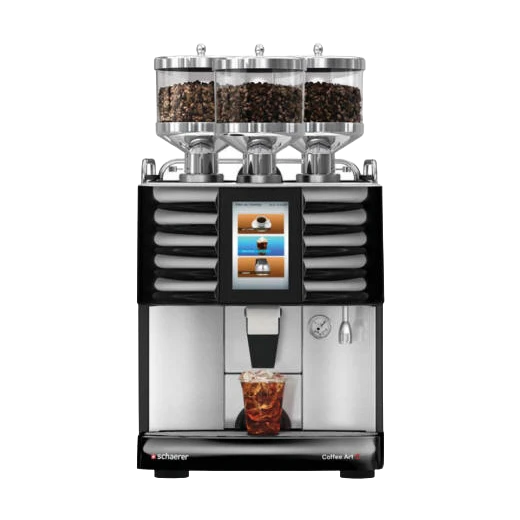
Why are iced drinks from our Coffee Art C coming out warm?
The machine chills cold drinks through a dedicated circuit instead of diluting them over ice, so a warm iced latte points straight at that circuit: a thermostat drifting out of spec or a compressor losing capacity. We measure the actual output temperature, replace a drifting thermostat on the spot, and quote compressor work separately if that's the true fault.
Why does oat milk foam differently than dairy on the Coffee Art C?
Because it genuinely is different: proteins and fats in oat and soy behave unlike dairy, and air metering tuned for one can fall flat on another. The machine supports per-milk calibration for exactly this reason. We sanitize the milk pathway first, since residue masks everything, then recalibrate the air intake for each milk you actually serve.
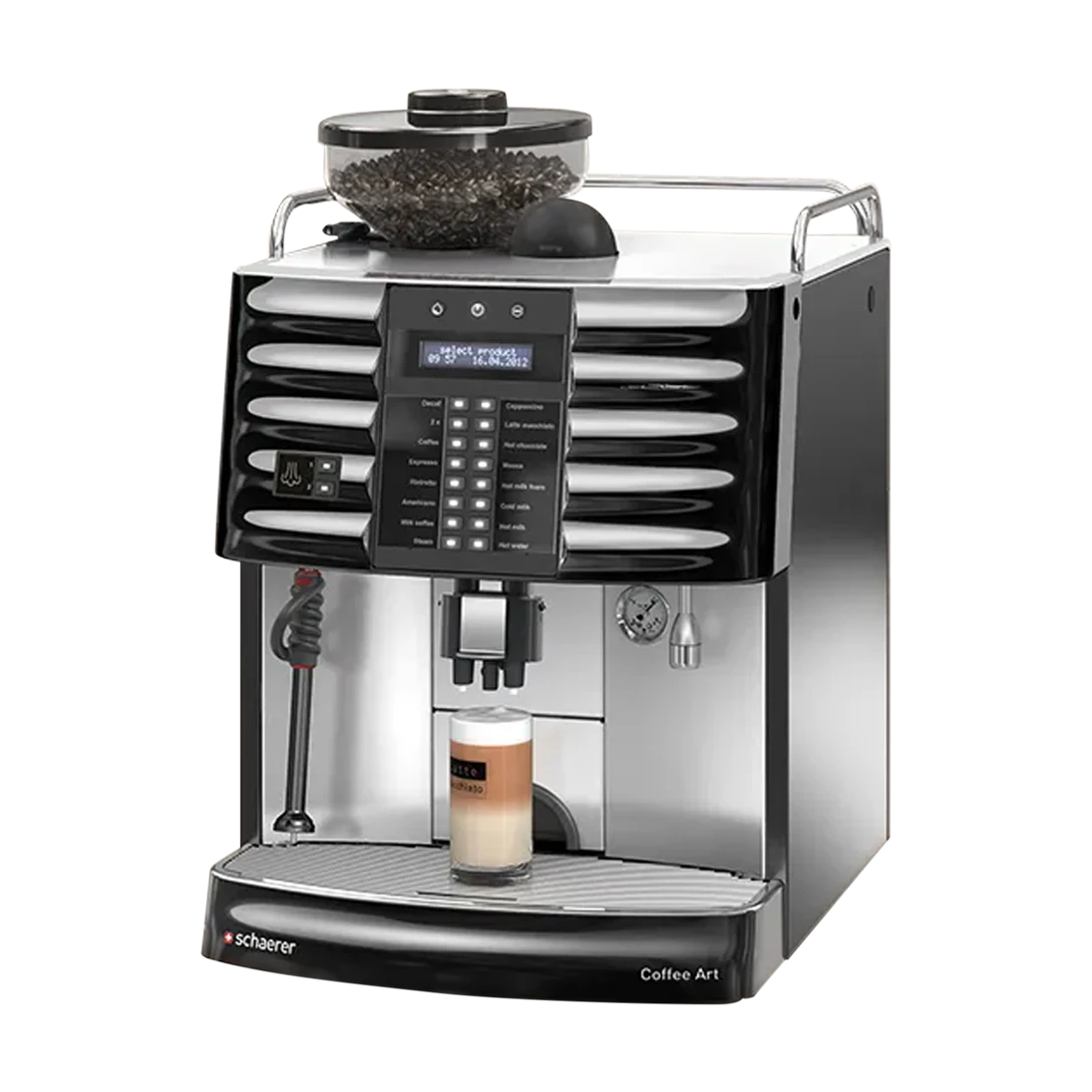
What's actually different between the Coffee Art C and the old Coffee Art Plus?
The headline additions are the no-dilution iced beverage circuit, ProCare automated cleaning, up to three hoppers with dedicated grinders, and a more open, front-of-house design. The underlying super-automatic remains recognizably Schaerer, so wear parts and fault patterns overlap heavily with the Art Plus we've serviced for years. If you're weighing an upgrade, we can give you the service-side view honestly.
ProCare on our Art C keeps stopping mid-clean. What's wrong?
Usually a chemical-level fault or a sensor misreading partway through the cycle, and occasionally a blockage in the cleaning circuit itself. An incomplete clean isn't cosmetic; the machine will start restricting drinks until one finishes. We verify the dosing, replace the sensor if it's lying, and stay until a complete ProCare cycle runs through.
The decaf from our third hopper tastes off. Is the grinder failing?
More likely drifting than failing. The third hopper typically carries decaf or a specialty bean, runs fewer shots, and quietly slips out of calibration while nobody's watching the dose. We weigh its output, check the motor for strain, recalibrate, and only replace burrs if the measurements call for it.
Our Coffee Art C is stuck in a boot loop. Is the board dead?
Probably not. Boot loops on this machine are almost always firmware hangs, often after an interrupted update, and they recover with a reflash from a known-good image followed by a drink-menu restore. Genuine display or controller failures are the rare exception and a part swap when they do occur. Stop power-cycling and book the visit.
Why is steam weak on our Coffee Art C during busy periods?
Scale in the steam circuit or a tiring element shows itself under sustained load first, which is why the machine seems fine at 3 p.m. and gasps at 8 a.m. We descale the steam side, test the element's resistance, and replace it if output doesn't recover. The hardness setting gets checked too, since it controls how often the machine asks to descale.
Our Coffee Art C is nearly new. Should repairs go through Schaerer instead?
If the fault is covered by your manufacturer warranty, the official channel should fix it at no cost, and we'll tell you that on the phone rather than charge you to hear it. Plenty of real-world issues sit outside coverage though: scale, milk hygiene, and worn consumables are usually on the owner. Those we handle without touching your warranty position.
How much does a repair visit cost?
Flat rate for the visit, parts billed at their actual cost on top. You'll hear the rate when you book, and for bigger jobs we quote in writing on-site before any work starts. No estimate that balloons mid-job.
How fast can you get here?
Same-day. Call in the morning and a technician is usually on-site before the day is out; calls placed later in the day book for the next morning. Urgent breakdowns get priority routing.
Which areas do you cover?
The GTA and most of the Golden Horseshoe: Toronto through Mississauga, Vaughan, and Markham, out to Oshawa, Hamilton, and Niagara. If you're not sure you're in range, call and we'll tell you straight.
Do I need a service contract?
No. We work call by call. Plenty of customers put us on a maintenance schedule eventually, but that's their choice after seeing the work, never a requirement.
Are the repairs warrantied?
Parts carry their manufacturer warranty, and we stand behind our labour: if the same fault recurs, call us and we'll review it. Specific terms are discussed upfront on each job, not promised in marketing copy.
Do you repair on-site or take the machine away?
On-site whenever possible, which is most of the time. If a job genuinely needs the bench, like a full boiler rebuild or major electronics work, we'll say so before anything leaves your building.
How do I book a service call?
Call us or send the form on this page. We confirm the machine, the fault, and a time window the same day. If it's urgent, say so and we'll route the nearest technician.
What happens on the first visit?
Diagnosis first: we confirm the fault, tell you what caused it, and quote the fix before touching a wrench. Most repairs finish in that same visit because the common wear parts ride on the truck.
Do you carry parts or order them in?
High-wear parts for the platforms we service constantly ride on the truck. Anything else we order, usually next-day where suppliers allow, and we tell you the lead time before committing you to anything.
My machine is older or out of production. Will you still look at it?
Usually, yes. We service legacy machines for as long as parts can be sourced, and we're honest when a repair stops making financial sense against a replacement. You get the math, you make the call.
Are you cheaper than the manufacturer's service network?
Often, but that's not the pitch. We quote against the actual work, not a factory pricing book, and we'll tell you when a manufacturer warranty claim is the better route. Transparency is the value; the price usually follows.
Can you train our staff so this doesn't happen again?
Yes, and we do it by default on the way out. Half of repeat faults trace back to skipped daily cleaning or wrong routine, so the technician walks your team through what actually matters before leaving.