
!
Brew unit grinding or scraping noise during cycle
The brew piston is moving on worn-out lubricant or dry seals. We pull the brew unit, replace seals, apply food-safe grease, and verify silent cycling.

The office favourite, offline
The Coffee Skye usually earns a small fan club wherever it lands, which makes the morning it won't pour a genuinely bad morning. We repair Skyes regularly: milk foam gone thin, brew unit noise, drinks at the wrong temperature, firmware that hangs after an update. Most faults are diagnosed at the machine and closed out in a single visit.
We'll get back to you today.
Thanks. We received your request.
A Grajqevci technician will get back to you today to confirm your machine and book the visit. If it's urgent, call us directly at (289) 217-3796.
Something went wrong sending your request.
Please try again, or call us directly at (289) 217-3796 and we'll book your service over the phone. You can also email [email protected].
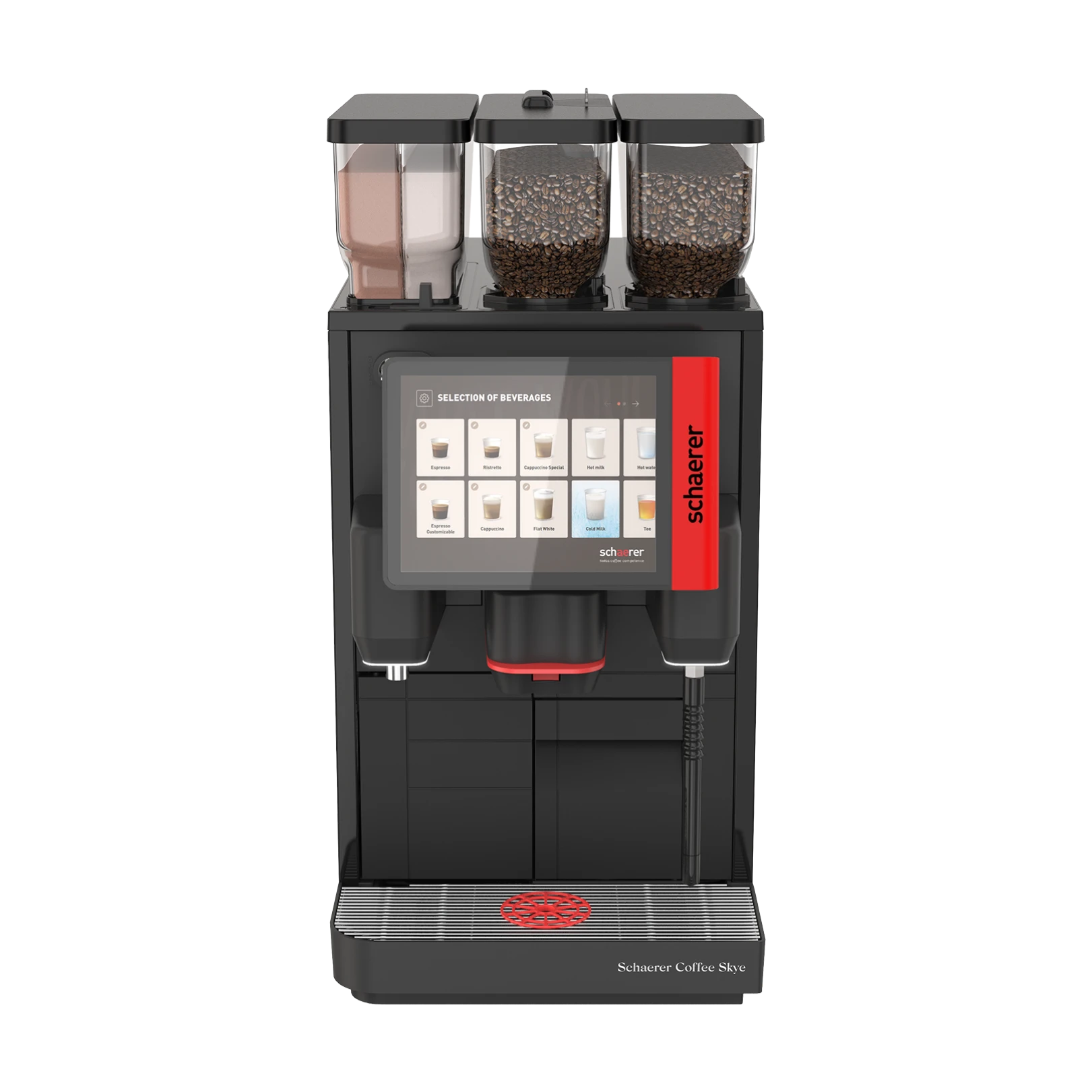
Schaerer · Mid-volume super-automatic
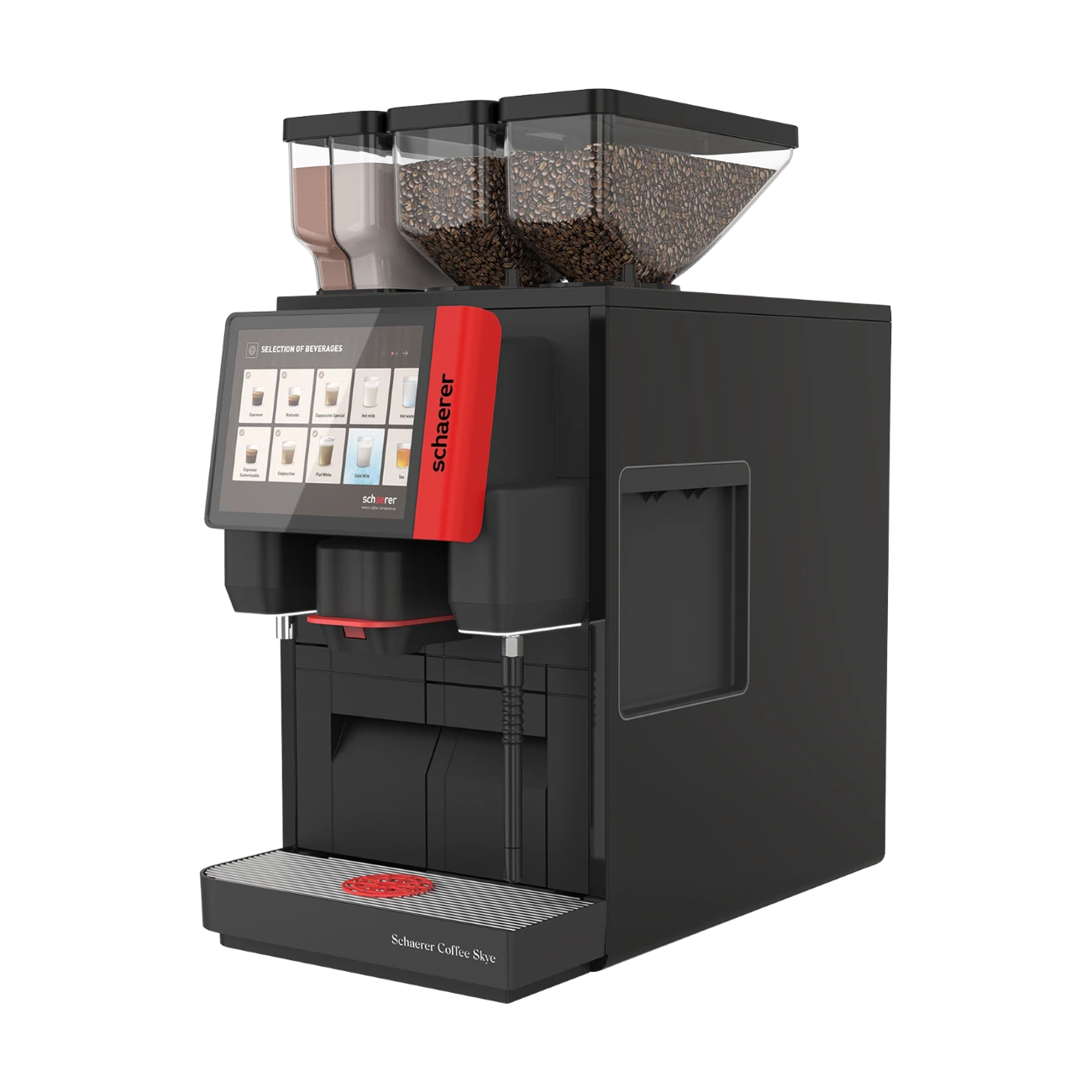
The Coffee Skye is Schaerer's mid-volume machine, sized for up to 150 cups a day. Offices, boutique hotels, and specialty cafés pick it for the spread between footprint and menu: one or two grinders, a 2 or 3kW boiler, and a milk system that pours hot or cold foam with temperature control from 50 to 70 degrees. Service-wise it's a tidy platform. Milk-line hygiene decides most of its faults, seals announce themselves around the 12-to-18-month mark, and one firmware generation had a known touchscreen quirk.
Why Grajqevci
Call in the morning and a technician is usually on-site before the day is out. Most Schaerer Coffee Skye jobs get diagnosed and fixed on the first visit.
Commercial coffee equipment is all we do, and Schaerer Coffee Skye is part of the weekly rotation. Not a generalist guessing at a service manual. Genuine OEM parts, industry-standard procedures.
Flat rate for the visit, with parts billed separately. For bigger jobs you'll see a written quote on-site before we proceed.
Skip the wait
Trusted by Toronto's most demanding teams






Coffee Skye faults we diagnose
Below: the faults that bring a Coffee Skye to a stop, what's usually behind each one, and the repair that follows.
The brew piston is moving on worn-out lubricant or dry seals. We pull the brew unit, replace seals, apply food-safe grease, and verify silent cycling.
Usually a sensor calibration drift or scale buildup affecting heat transfer. We measure brew temperature with a calibrated probe, descale if needed, and recalibrate the temperature offset in service menu.
Typical of seal wear after 12 to 18 months of daily use. We pressure-test the brew and water circuits, identify the leak point, and replace the worn seals. Routine for the Skye platform.
Pump wear or a failing pressure regulator. We measure brew pressure at multiple cycle points, verify pump output to spec, and quote pump or regulator replacement if needed.
Scale buildup is the leading cause, followed by element degradation. We descale, measure heat-up time, and replace the element if performance doesn't recover.
The cycle counter needs to be manually reset after filter swap. We verify the new filter is correctly seated, reset the counter through service menu, and confirm the alert clears.
Caused by residue in the air-intake or worn intake springs. We strip the Pure Foam module, clean the air pathway, replace the intake spring if compression is below spec, and verify foam density with a test cycle.
Either a failing milk temperature sensor or scale in the milk heat exchanger. We test the sensor, descale the milk circuit, and replace the sensor if needed. Most resolved in one visit.
Almost typically milk-protein buildup from skipped daily cleans, or a degraded cleaning chemical that isn't dissolving residue properly. We deep clean the line, refresh the cleaning protocol with the customer, and recommend a switch in cleaning solution if needed.
Ceramic burrs are sensitive to foreign objects. We disassemble the grinder, inspect burrs for chips, replace if damaged, and recalibrate dose. Ceramic burrs typically last longer than steel but cannot be re-sharpened.
Usually a failed grinder motor relay or a feedback sensor not registering. We test the relay, verify sensor signal, and replace the failing component. Motor itself is rarely the issue.
Known issue on certain Skye firmware versions. We roll back firmware to a known-stable build or apply the latest patch that resolves it, then restore drink profiles from backup.
We read the full error history through service interface, identify the specific fault code, and address the root cause (sensor, relay, board). The error log is cleared and the machine is functionally tested across all drink profiles.
Usually a level sensor reading incorrectly or a partially-blocked cleaning circuit. We diagnose where in the cycle it's stalling and clear the blockage or replace the sensor as needed.
Your coffee emergency ends here
Call or submit the form. We confirm your address, model, and the issue.
An experienced technician arrives, runs full diagnostics, and identifies the root cause.
You receive a flat, itemized quote. Nothing proceeds without your green light.
We complete the repair, run a test cycle, and walk you through what to watch for.
Parts on the truck
Receipts
We were a week away from buying a new machine when they came in for a second opinion. Saved us thousands. Honest assessment up front.
*Estimated based on the approximate distance from our nearest service centre, average commute time, and median service-call length for one machine. Prices in Canadian dollars (CAD $). Final quote provided on-site after diagnosis.
FAQ
20 answers covering service, repair, parts, installation, warranty, and edge cases.
Updated July 2026
The Skye's milk system meters air into the milk at a precise ratio, and residue in the intake pathway or a fatigued intake spring disturbs it first. We strip the milk module, clean the air pathway, replace the spring if its compression is below spec, and verify foam density with test drinks. If the daily clean has been slipping, that's the real fix.
Yes, hot and cold foam are both native to the machine, with milk temperature adjustable between 50 and 70 degrees on the hot side. When cold foam stops working but hot drinks still pour, the cold pathway or its valve is the suspect rather than the whole milk system, which narrows the diagnosis nicely. It's a repair we handle at the machine.
That's a known behaviour on certain Skye firmware versions, not a dead machine. We roll the firmware back to a stable build or apply the patch that resolves it, then restore your drink profiles from backup. Avoid repeated power cycles in the meantime; they don't help and can complicate the recovery.
On this platform, leaks that appear out of nowhere usually mean seal wear, and 12 to 18 months of daily use is the typical window. We pressure-test the brew and water circuits, find the exact leak point, and replace the worn seals. It's routine work and the machine doesn't leave your building for it.
Either the temperature sensor has drifted out of calibration or scale is interfering with heat transfer. We measure brew temperature with a calibrated probe, descale if the readings point that way, and recalibrate the temperature offset in the service menu. The fix is verified in the cup, not just on the display.
The ceramic burrs grind quietly and consistently, but they chip rather than flex if a stone rides in with the beans. A new rattle or a sudden dose change is the warning sign, and the right move is to stop using that grinder and call. We open it, clear the object, inspect the burrs, and replace them if they're chipped; ceramic can't be re-sharpened.
The counter doesn't reset itself when the cartridge changes; it needs a manual reset through the menu. We verify the new filter is seated correctly, reset the counter, and confirm the alert stays gone. If it returns anyway, the water-hardness setting probably doesn't match your actual supply, and we correct that too.
At up to 150 cups a day, the Skye comfortably covers most offices and boutique venues. The tell that you've outgrown it is faults arriving faster: more cleaning prompts, earlier seal wear, milk system complaints in clusters. If your volume has genuinely passed the machine, we'll say so with numbers rather than sell you a bigger repair.
Flat rate for the visit, parts billed at their actual cost on top. You'll hear the rate when you book, and for bigger jobs we quote in writing on-site before any work starts. No estimate that balloons mid-job.
Same-day in most cases. Call in the morning and a technician is usually on-site before the day is out; calls placed later in the day book for the next morning. Urgent breakdowns get priority routing.
The GTA and most of the Golden Horseshoe: Toronto through Mississauga, Vaughan, and Markham, out to Oshawa, Hamilton, and Niagara. If you're not sure you're in range, call and we'll tell you straight.
No. We work call by call. Plenty of customers put us on a maintenance schedule eventually, but that's their choice after seeing the work, never a requirement.
Parts carry their manufacturer warranty, and we stand behind our labour: if the same fault recurs, call us and we'll review it. Specific terms are discussed upfront on each job, not promised in marketing copy.
On-site whenever possible, which is most of the time. If a job genuinely needs the bench, like a full boiler rebuild or major electronics work, we'll say so before anything leaves your building.
Call us or send the form on this page. We confirm the machine, the fault, and a time window the same day. If it's urgent, say so and we'll route the nearest technician.
Diagnosis first: we confirm the fault, tell you what caused it, and quote the fix before touching a wrench. Most repairs finish in that same visit because the common wear parts ride on the truck.
High-wear parts for the platforms we service constantly ride on the truck. Anything else we order, usually next-day where suppliers allow, and we tell you the lead time before committing you to anything.
Usually, yes. We service legacy machines for as long as parts can be sourced, and we're honest when a repair stops making financial sense against a replacement. You get the math, you make the call.
Often, but that's not the pitch. We quote against the actual work, not a factory pricing book, and we'll tell you when a manufacturer warranty claim is the better route. Transparency is the value; the price usually follows.
Yes, and we do it by default on the way out. Half of repeat faults trace back to skipped daily cleaning or wrong routine, so the technician walks your team through what actually matters before leaving.
A technician who already knows where this machine wears.
Call (289) 217-3796 now →