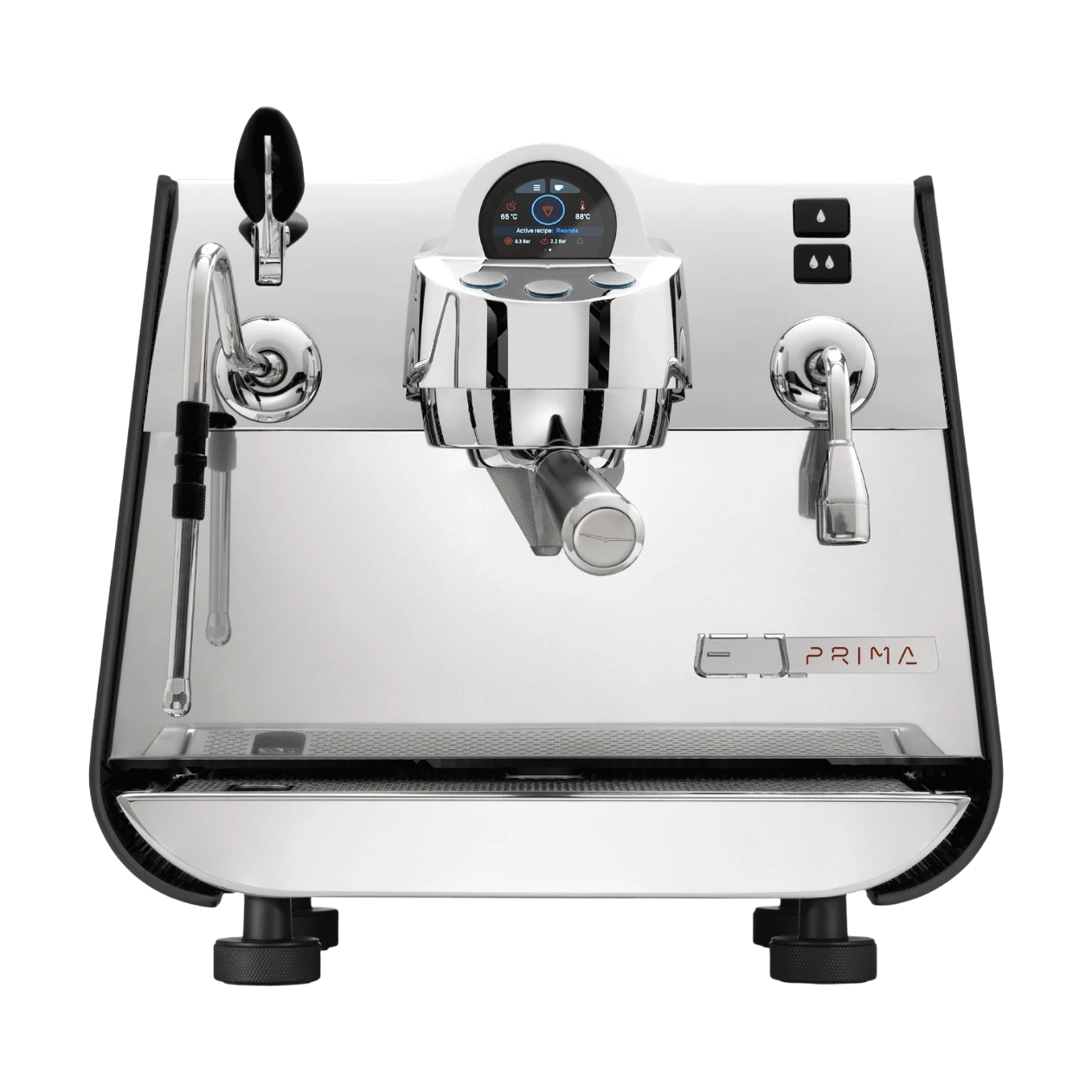
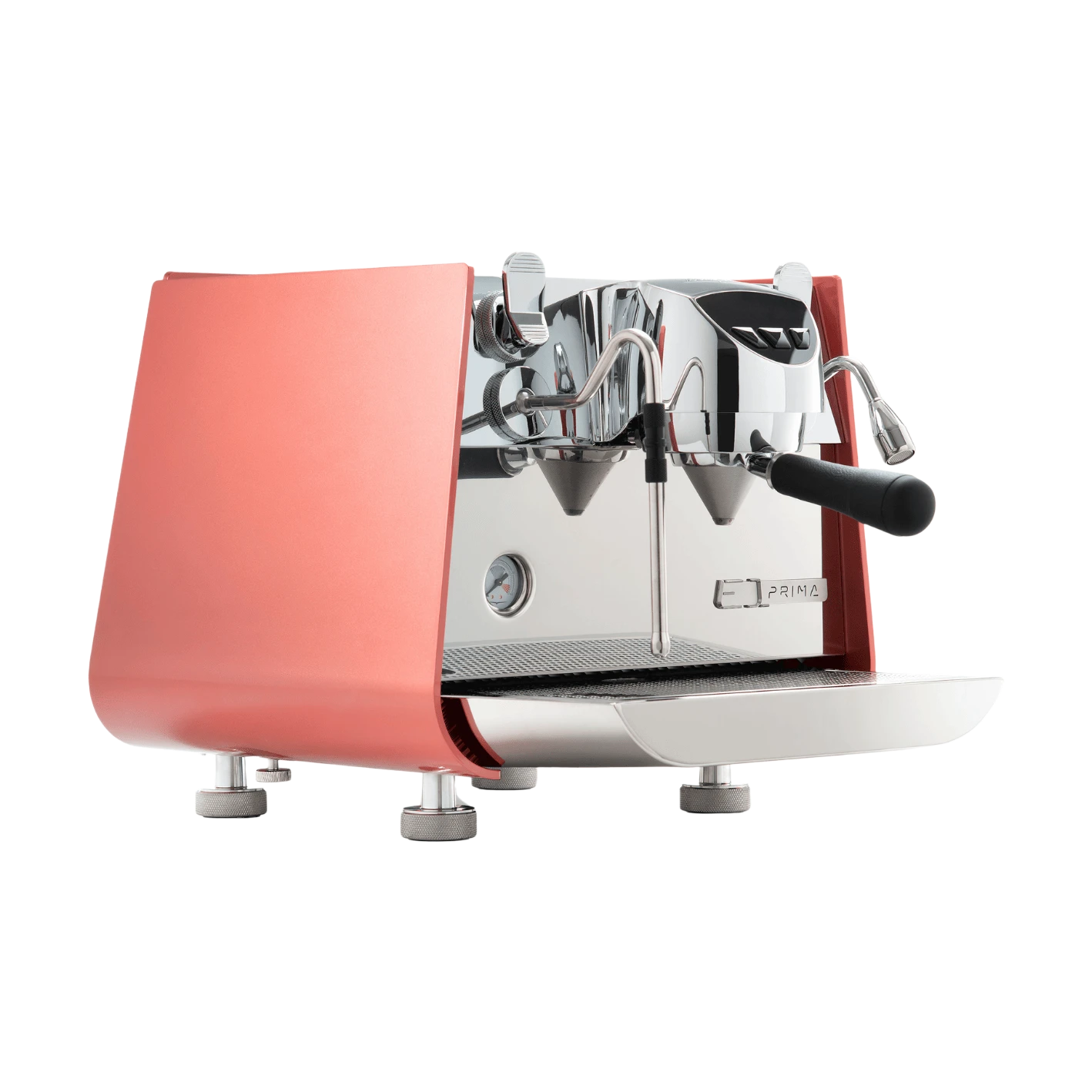
Why has my E1 Prima's group gone cool when the boiler seems hot?
On a heat-exchanger machine the group gets its temperature through the thermosiphon loop, and scale in that loop starves it. The boiler can read perfectly while the group quietly drops. We descale the circuit and then benchmark the group with a calibrated probe so the fix is measured, not assumed.
The pressure stat on my E1 Prima keeps clicking on and off. Is that bad?
Chattering is a pressure stat near the end of its life, and it stresses the heating element with rapid cycling. The swap to an OEM-spec stat is quick and cheap compared to what it protects. We verify clean cut-in and cut-out points after fitting it.
Why is the steam on my E1 Prima suddenly weak?
Scale in the steam pathway, almost every time. The tip blocks, the circuit narrows, and the wand runs out of pressure halfway through a pitcher. We descale the circuit, clear the tip, and confirm recovery against spec.
My E1 Prima fills the boiler constantly. What's wrong?
Three possibilities: a scaled level probe telling the controller fiction, a fill solenoid sticking, or an actual leak. We isolate which one it is, fix it, and verify fill frequency returns to normal. Don't ignore it; constant filling masks leaks and wastes heated water.
Is the E1 Prima the same machine as the Eagle One Prima?
Same family. Prima, Prima Pro, and Prima EXP are trims of the single-group platform, and this page covers all of them. The service fundamentals are shared, with the Pro and EXP adding pre-infusion profiling and pressure features that we calibrate as part of the same visit.
Can a single-group E1 Prima really keep up with a busy cafe?
Within its design point, yes: up to about 100 shots a day suits it, especially spread across the day rather than packed into one rush. If your volume has outgrown that pattern, faults arrive faster and it's worth a conversation about a multi-group machine. We'll tell you honestly which side of the line you're on.
How much water treatment does a small machine like the E1 Prima need?
The same care a big machine gets, scaled down. One boiler does all the work here, so scale hits brewing and steam at the same time. Filtration matched to your local water plus a sensible descale interval keeps the Prima cheap to own; skipping both is how small machines end up with big bills.
The dose buttons on my E1 Prima stopped responding. Quick fix?
Usually, yes. Steam migration corrodes the microswitch contacts behind the panel, and cleaning or replacing the affected switches restores them. We do the full button bank while the panel is off so you're not booking the same job twice.
How much does a repair visit cost?
Flat rate for the visit, parts billed at their actual cost on top. You'll hear the rate when you book, and for bigger jobs we quote in writing on-site before any work starts. No estimate that balloons mid-job.
How fast can you get here?
Same-day. Call in the morning and a technician is usually on-site before the day is out; calls placed later in the day book for the next morning. Urgent breakdowns get priority routing.
Which areas do you cover?
The GTA and most of the Golden Horseshoe: Toronto through Mississauga, Vaughan, and Markham, out to Oshawa, Hamilton, and Niagara. If you're not sure you're in range, call and we'll tell you straight.
Do I need a service contract?
No. We work call by call. Plenty of customers put us on a maintenance schedule eventually, but that's their choice after seeing the work, never a requirement.
Are the repairs warrantied?
Parts carry their manufacturer warranty, and we stand behind our labour: if the same fault recurs, call us and we'll review it. Specific terms are discussed upfront on each job, not promised in marketing copy.
Do you repair on-site or take the machine away?
On-site whenever possible, which is most of the time. If a job genuinely needs the bench, like a full boiler rebuild or major electronics work, we'll say so before anything leaves your building.
How do I book a service call?
Call us or send the form on this page. We confirm the machine, the fault, and a time window the same day. If it's urgent, say so and we'll route the nearest technician.
What happens on the first visit?
Diagnosis first: we confirm the fault, tell you what caused it, and quote the fix before touching a wrench. Most repairs finish in that same visit because the common wear parts ride on the truck.
Do you carry parts or order them in?
High-wear parts for the platforms we service constantly ride on the truck. Anything else we order, usually next-day where suppliers allow, and we tell you the lead time before committing you to anything.
My machine is older or out of production. Will you still look at it?
Usually, yes. We service legacy machines for as long as parts can be sourced, and we're honest when a repair stops making financial sense against a replacement. You get the math, you make the call.
Are you cheaper than the manufacturer's service network?
Often, but that's not the pitch. We quote against the actual work, not a factory pricing book, and we'll tell you when a manufacturer warranty claim is the better route. Transparency is the value; the price usually follows.
Can you train our staff so this doesn't happen again?
Yes, and we do it by default on the way out. Half of repeat faults trace back to skipped daily cleaning or wrong routine, so the technician walks your team through what actually matters before leaving.