The 18.5-inch screen on our Emblem is frozen. Does it need replacing?
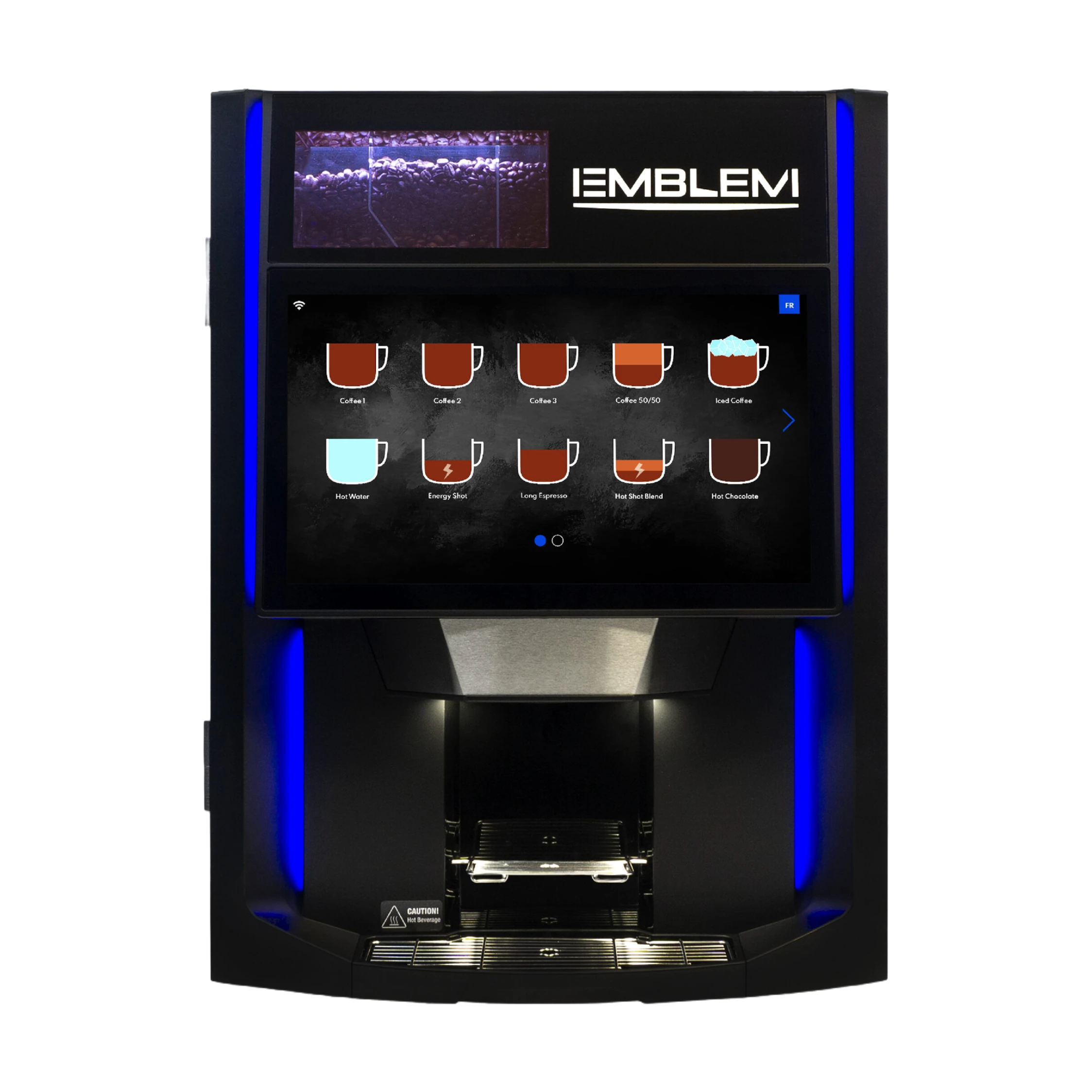
Usually not. Most frozen Emblem screens are firmware hangs or a ribbon cable worked loose behind the panel, and both clear without parts. We test properly before quoting, because the large display is a longer-lead, bigger-ticket part, and nobody should order one on a guess.
Why did contactless ordering stop working on the Emblem?
One of three things: the WiFi or cellular module, the scanner itself, or the machine's Sophia registration drifting. Drinks usually still pour from the touchscreen while contactless is down. We test the module and scanner at the machine and coordinate with your operator's Sophia administrator if reauthorization is what's missing.
Why does one of the three coffees on our Emblem taste different lately?
Each hopper has its own dedicated grinder, and they wear at different rates, so one bean source drifts while the others hold. We weigh the dose from every hopper, measure the burr gaps, and recalibrate each grinder to its own target. Mixed wear like this is the most Emblem-specific fault there is.
The hot chocolate is coming through tasting of vanilla. What's going on?
Cross-contamination between the three soluble canisters, carried by residue in the discharge tubes. It's a cleaning fault rather than a breakage. We strip and clean each tube and verify powder can't migrate between canisters again.
What does the LED branding fault on an Emblem involve?
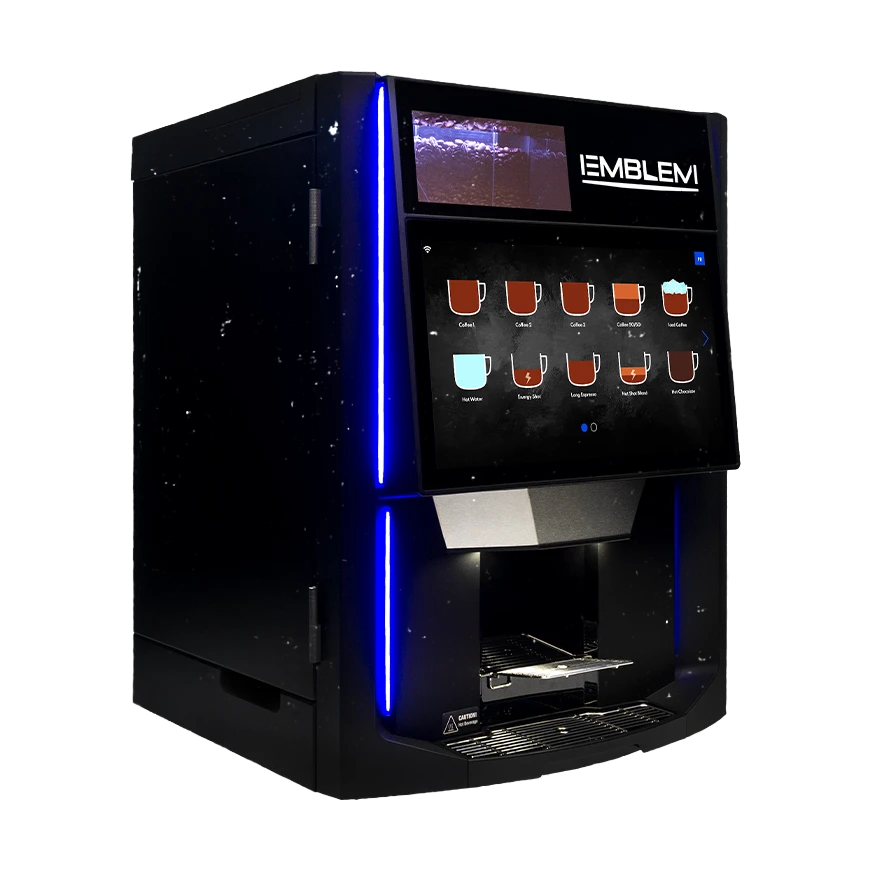
Either the LED controller firmware has glitched or a driver on the RGB strip has failed. A controller reset fixes the first in minutes; the second means verifying driver outputs and replacing the failed driver or section of strip. Cosmetic, yes, but on a machine bought partly for its looks, worth fixing.
Is the Emblem's soluble milk hopper smaller than other Cafection machines?
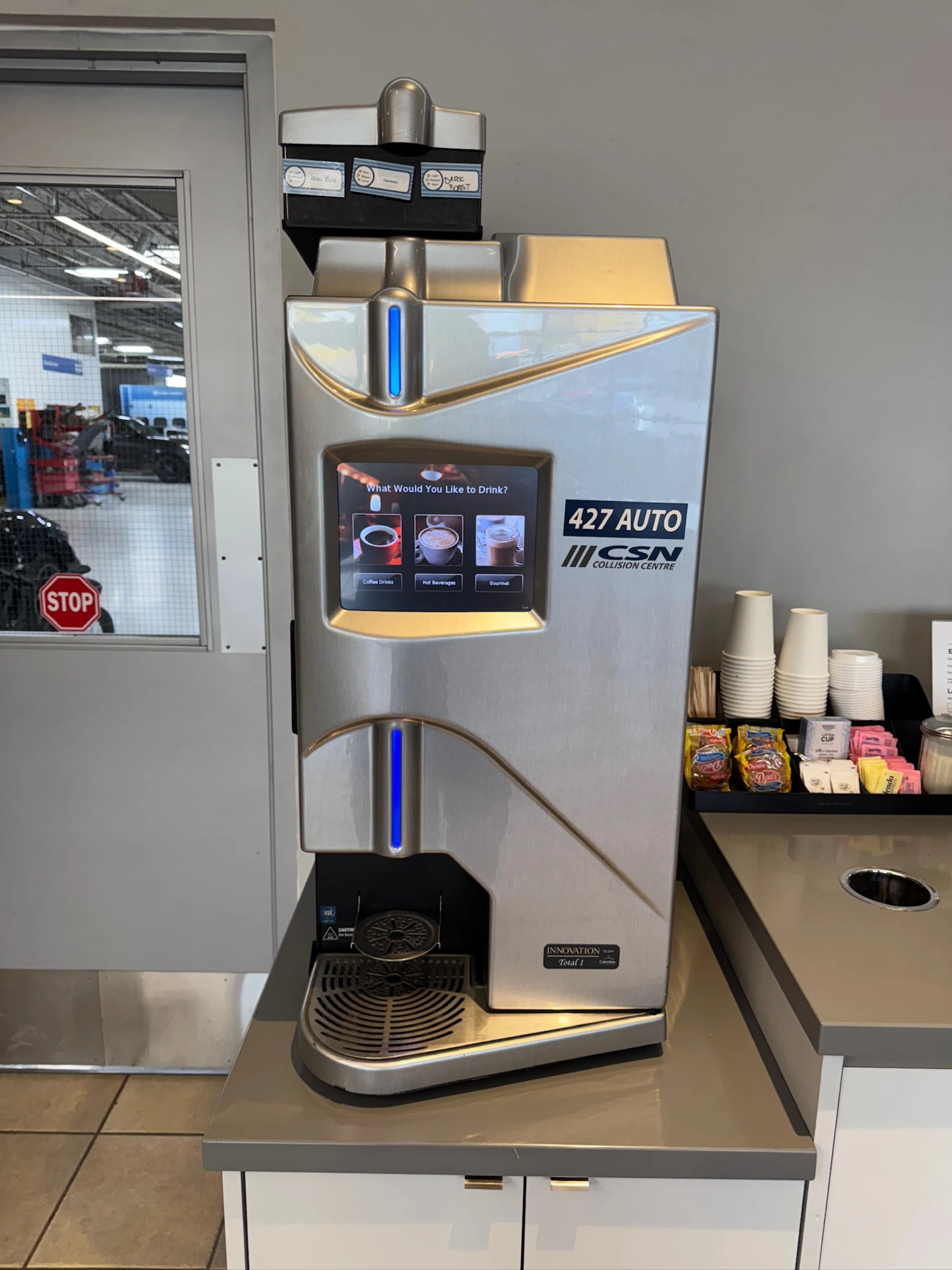
Yes, it holds about 1.2 lb, noticeably less than the Total 1's, and it cakes faster in humid spots because of it. More frequent top-ups with smaller amounts keep the powder fresher. If clumping persists, we fit a new gasket and recommend a desiccant.
What does NSF/ANSI-4 mean on the Emblem?
It's a third-party sanitation standard for commercial food equipment, covering how the machine's materials and cleaning design handle hygiene. For an office it mostly matters at procurement time and during food-safety audits. For us it means the cleaning circuit is designed to be verified, which we do on every service visit.
Why does the Emblem show a communication fault after a power cut?
The main controller sometimes fails to re-sync with the screen after an abrupt power loss, and a normal restart won't always fix it. The cure is the red reset button on the main board, inside the cabinet. We press it, watch the reboot, and check the serial cable seating that usually explains repeat cases.
How much coffee can an Emblem actually serve in a day?
It's rated at 60 drinks an hour, so the daily ceiling is really about your peak periods rather than a single number. Morning rushes at full tilt are well within it. If your building queues at the machine all day, the wear schedule shortens and a second unit starts making sense; we'll tell you honestly which side of that line you're on.
How much does a repair visit cost?
Flat rate for the visit, parts billed at their actual cost on top. You'll hear the rate when you book, and for bigger jobs we quote in writing on-site before any work starts. No estimate that balloons mid-job.
How fast can you get here?
Same-day in most cases. Call in the morning and a technician is usually on-site before the day is out; calls placed later in the day book for the next morning. Urgent breakdowns get priority routing.
Which areas do you cover?
The GTA and most of the Golden Horseshoe: Toronto through Mississauga, Vaughan, and Markham, out to Oshawa, Hamilton, and Niagara. If you're not sure you're in range, call and we'll tell you straight.
Do I need a service contract?
No. We work call by call. Plenty of customers put us on a maintenance schedule eventually, but that's their choice after seeing the work, never a requirement.
Are the repairs warrantied?
Parts carry their manufacturer warranty, and we stand behind our labour: if the same fault recurs, call us and we'll review it. Specific terms are discussed upfront on each job, not promised in marketing copy.
Do you repair on-site or take the machine away?
On-site whenever possible, which is most of the time. If a job genuinely needs the bench, like a full boiler rebuild or major electronics work, we'll say so before anything leaves your building.
How do I book a service call?
Call us or send the form on this page. We confirm the machine, the fault, and a time window the same day. If it's urgent, say so and we'll route the nearest technician.
What happens on the first visit?
Diagnosis first: we confirm the fault, tell you what caused it, and quote the fix before touching a wrench. Most repairs finish in that same visit because the common wear parts ride on the truck.
Do you carry parts or order them in?
High-wear parts for the platforms we service constantly ride on the truck. Anything else we order, usually next-day where suppliers allow, and we tell you the lead time before committing you to anything.
My machine is older or out of production. Will you still look at it?
Usually, yes. We service legacy machines for as long as parts can be sourced, and we're honest when a repair stops making financial sense against a replacement. You get the math, you make the call.
Are you cheaper than the manufacturer's service network?
Often, but that's not the pitch. We quote against the actual work, not a factory pricing book, and we'll tell you when a manufacturer warranty claim is the better route. Transparency is the value; the price usually follows.
Can you train our staff so this doesn't happen again?
Yes, and we do it by default on the way out. Half of repeat faults trace back to skipped daily cleaning or wrong routine, so the technician walks your team through what actually matters before leaving.