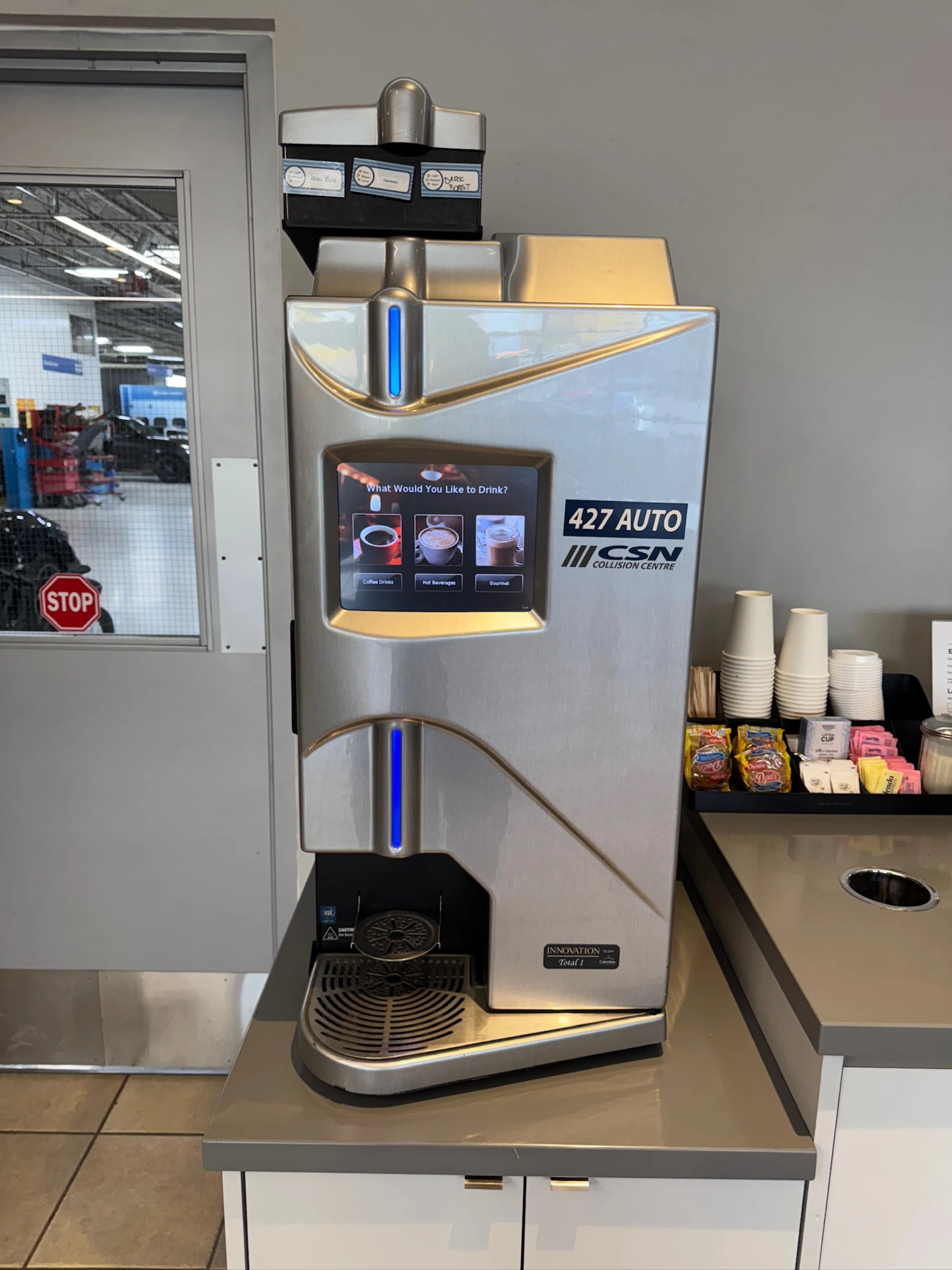
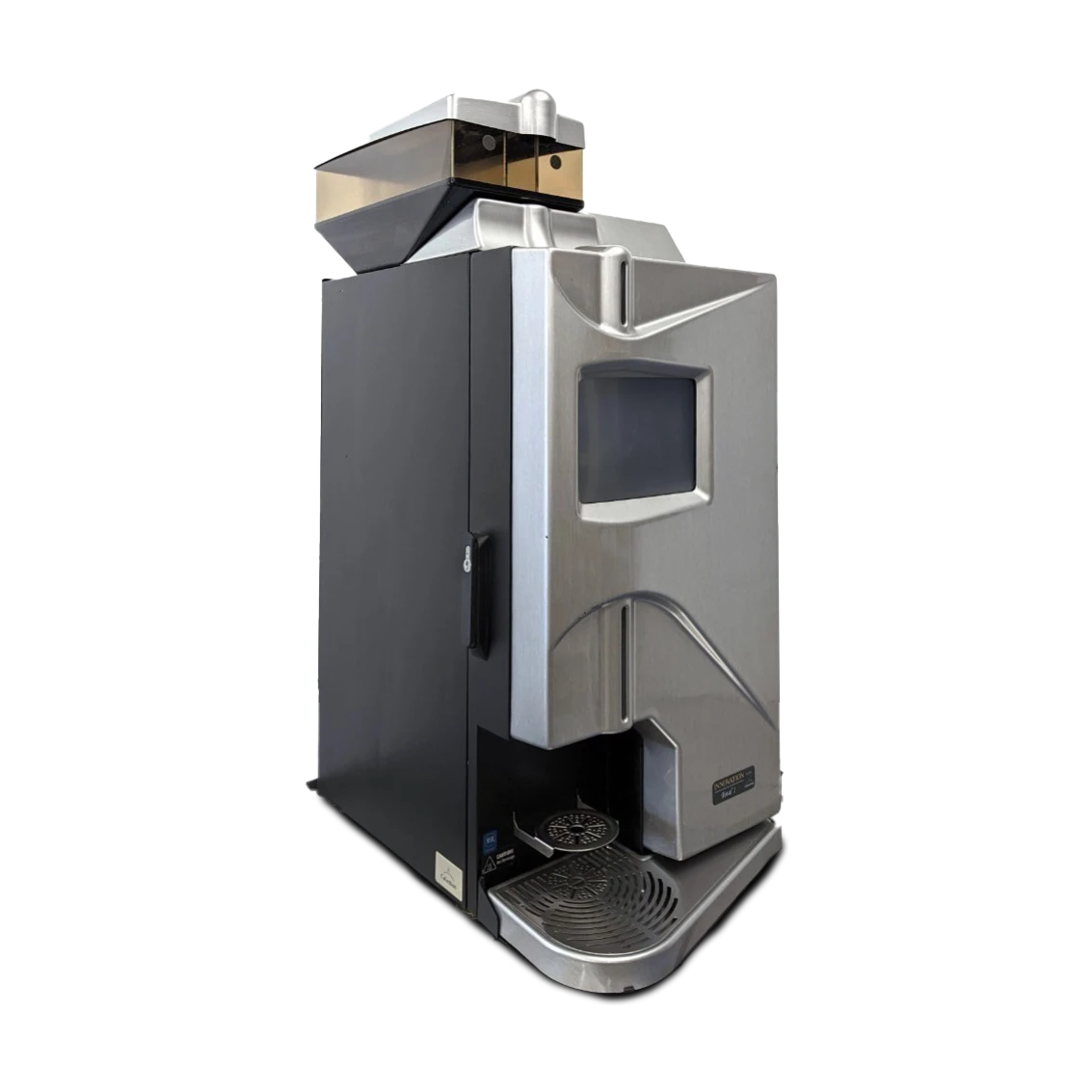
Why is my Total 1 showing a brew chamber alert?
The chamber didn't reach its commanded position, which usually means worn seals, grind packed onto the filter screen, or an agitator nudged out of alignment. A power cycle is worth one try. If the alert returns, the chamber needs to come out for cleaning, fresh seals, and a check of the position sensor, all one-visit work.
Can a Total 1 really pour 300 cups a day?
Yes, that's its design point, and plenty of campus machines run near it. The cost of that volume is a faster wear schedule: chamber seals and filter screens on a high-mileage Total 1 want attention more often than on a quiet Encore. Budget service by cup count, not by calendar.
The Total 1's screen is frozen and rebooting does nothing. Is the display dead?
Probably not. This platform's controller can drop into a communication fault that only the red reset button on the main board clears, and the display gets blamed for it constantly. We press the reset, watch the controller and screen reboot in sync, and reseat the serial cable that usually caused it.
Why did the Total 1 stop dispensing one of the three coffees?
One hopper has stopped feeding: beans bridged above the throat, a stuck hopper gate, or that hopper's feed motor. Tap the hopper to break an obvious bridge and see if it recovers. If not, we free the gate and test the motor before quoting anything.
Our Sophia dashboard says the Total 1 is offline but it still pours. Urgent?
Not urgent, but worth fixing: you've lost remote alerts and consumption data, not coffee. The cause is the site network, the telemetry board, or the Sophia registration, and we work through them in that order at the machine. Boards, when needed, ship next-day from Quebec.
What does it cost to fix the milk system on a Total 1?
Usually less than people fear. Most fresh-milk faults are deep-clean and hose-replacement work, and soluble-side faults are usually a cleaned canister and a new gasket. The bill climbs only when a milk pump or auger motor is genuinely done, and you'll see that quote before we proceed.
How often should a Total 1 be descaled?
By water and volume rather than calendar. At campus volumes the boiler works constantly, so on harder water a Total 1 may need descaling twice as often as the same machine on a soft supply. We set the filter and descale intervals from a TDS measurement at the tap, not the factory default.
Is the Total 1 worth repairing after eight or more years?
Usually, yes. The platform is built to be rebuilt, parts remain available from the Quebec depot, and a chamber overhaul costs a fraction of a replacement kiosk. We'll give you an honest read on remaining life alongside any larger quote.
Why is the overnight cleaning cycle failing on our Total 1?
The cycle is stalling at a specific stage: a misreading level sensor, exhausted detergent, or a blocked return line. Re-run it once with fresh detergent loaded. If it aborts again, note where it stops; that detail usually lets us arrive with the right part.
How much does a repair visit cost?
Flat rate for the visit, parts billed at their actual cost on top. You'll hear the rate when you book, and for bigger jobs we quote in writing on-site before any work starts. No estimate that balloons mid-job.
How fast can you get here?
Same-day. Call in the morning and a technician is usually on-site before the day is out; calls placed later in the day book for the next morning. Urgent breakdowns get priority routing.
Which areas do you cover?
The GTA and most of the Golden Horseshoe: Toronto through Mississauga, Vaughan, and Markham, out to Oshawa, Hamilton, and Niagara. If you're not sure you're in range, call and we'll tell you straight.
Do I need a service contract?
No. We work call by call. Plenty of customers put us on a maintenance schedule eventually, but that's their choice after seeing the work, never a requirement.
Are the repairs warrantied?
Parts carry their manufacturer warranty, and we stand behind our labour: if the same fault recurs, call us and we'll review it. Specific terms are discussed upfront on each job, not promised in marketing copy.
Do you repair on-site or take the machine away?
On-site whenever possible, which is most of the time. If a job genuinely needs the bench, like a full boiler rebuild or major electronics work, we'll say so before anything leaves your building.
How do I book a service call?
Call us or send the form on this page. We confirm the machine, the fault, and a time window the same day. If it's urgent, say so and we'll route the nearest technician.
What happens on the first visit?
Diagnosis first: we confirm the fault, tell you what caused it, and quote the fix before touching a wrench. Most repairs finish in that same visit because the common wear parts ride on the truck.
Do you carry parts or order them in?
High-wear parts for the platforms we service constantly ride on the truck. Anything else we order, usually next-day where suppliers allow, and we tell you the lead time before committing you to anything.
My machine is older or out of production. Will you still look at it?
Usually, yes. We service legacy machines for as long as parts can be sourced, and we're honest when a repair stops making financial sense against a replacement. You get the math, you make the call.
Are you cheaper than the manufacturer's service network?
Often, but that's not the pitch. We quote against the actual work, not a factory pricing book, and we'll tell you when a manufacturer warranty claim is the better route. Transparency is the value; the price usually follows.
Can you train our staff so this doesn't happen again?
Yes, and we do it by default on the way out. Half of repeat faults trace back to skipped daily cleaning or wrong routine, so the technician walks your team through what actually matters before leaving.