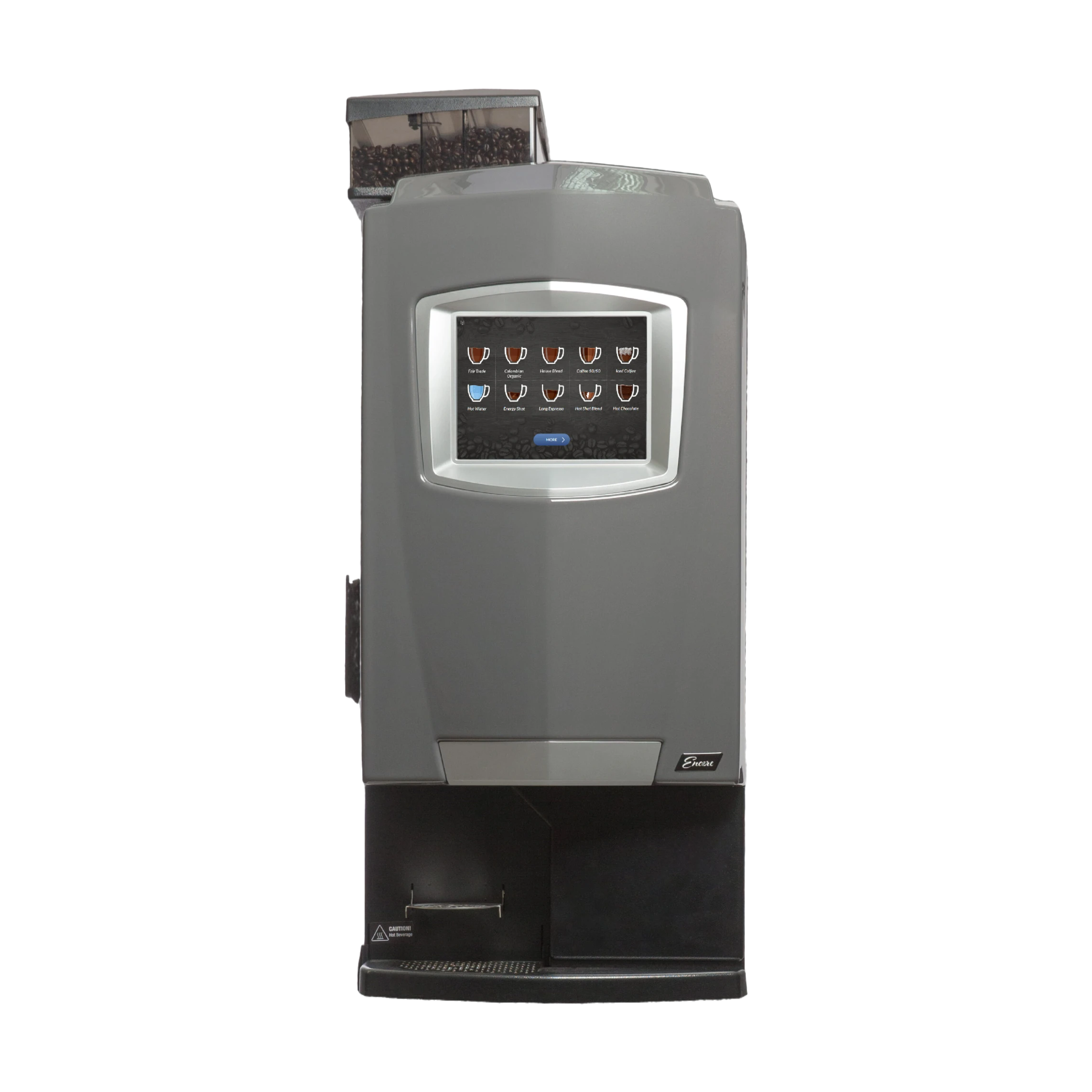
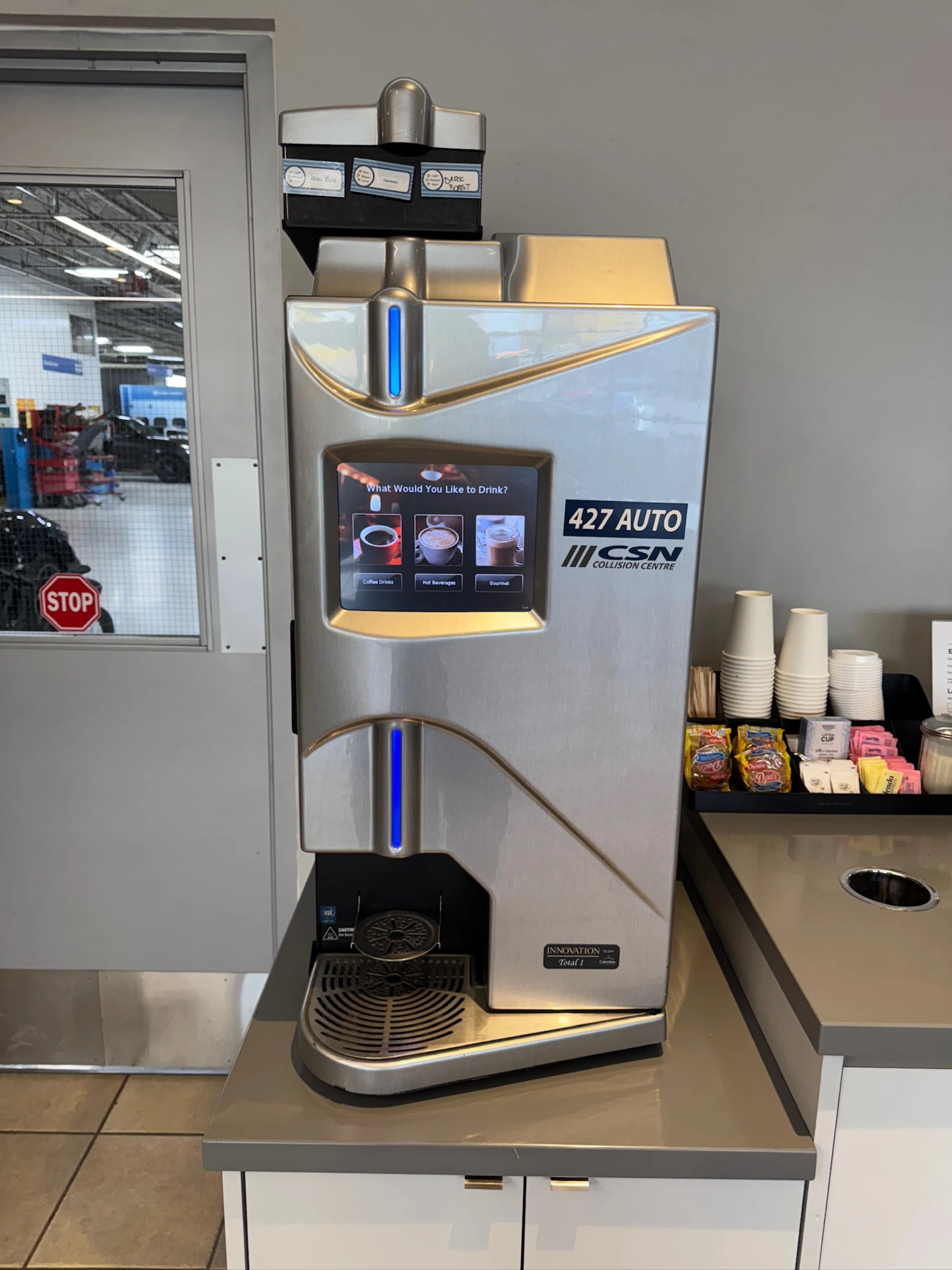
Why does my Encore Venti pour weak coffee in large cups?
The Venti uses an extended brew profile for big formats, and when its calibration drifts, large cups under-extract while small ones still taste fine. That split symptom is the giveaway. We verify brew time across every cup size, recalibrate the extended profile, and check the grind dose actually carries the volume.
Why do drinks from the Encore Venti come out cooler on big sizes?
The boiler is being asked to hold temperature through a long draw, and scale or a fading element shows up there first. Small drinks mask the problem; travel mugs expose it. A descale plus measured heat-up and recovery times tells us whether the element survives.
Can the Encore Venti really fill a travel mug?
Yes, that's the machine's defining trick; brew timings are tuned for cup formats up to travel mug size. The honest caveat is that every oversized drink works the boiler, pump, and milk system harder than a standard cup. Volume habits like that just mean the wear parts come due a little sooner.
Why is milk weak or sputtering only on large drinks?
An extended pull exposes a milk pump that's already losing output. Short drinks finish before the weakness shows. We pressure-test the pump, inspect the impeller, and quote an upgrade only if output measures below the Venti profile's spec.
The cup sensor on our Encore Venti doesn't see travel mugs. Fix?
Alignment drift, almost certainly; tall cups exit the sensor's sweet spot first. We clean the optical sensor, re-aim it, and verify it triggers across every cup size before we leave. A sensor that still hesitates after that gets replaced.
Is the Encore Venti's brew chamber the same as other Encores?
Same reverse French press chamber, different timing. Parts interchange with the rest of the Encore family, which keeps repairs quick, but the brew profile is Venti-specific and needs to be calibrated as such. That's why a generalist's recalibration often leaves big cups tasting thin.
How many cups a day is the Encore Venti good for?
Up to 160, with the caveat that the rating assumes a mix of sizes. An office pouring mostly extra-large formats is closer to the machine's limit than the cup count suggests, because each drink draws more water, heat, and milk. We help you read the real duty cycle on a service visit.
Our Encore Venti throws a chamber alert every few weeks. Why?
A repeating chamber alert means a mechanical cause is being reset rather than fixed: worn seals dragging, grind packed on the screen, or a tired position sensor. Each reset buys days, not a repair. One strip-down with fresh seals normally ends the cycle for good.
How much does a repair visit cost?
Flat rate for the visit, parts billed at their actual cost on top. You'll hear the rate when you book, and for bigger jobs we quote in writing on-site before any work starts. No estimate that balloons mid-job.
How fast can you get here?
Same-day. Call in the morning and a technician is usually on-site before the day is out; calls placed later in the day book for the next morning. Urgent breakdowns get priority routing.
Which areas do you cover?
The GTA and most of the Golden Horseshoe: Toronto through Mississauga, Vaughan, and Markham, out to Oshawa, Hamilton, and Niagara. If you're not sure you're in range, call and we'll tell you straight.
Do I need a service contract?
No. We work call by call. Plenty of customers put us on a maintenance schedule eventually, but that's their choice after seeing the work, never a requirement.
Are the repairs warrantied?
Parts carry their manufacturer warranty, and we stand behind our labour: if the same fault recurs, call us and we'll review it. Specific terms are discussed upfront on each job, not promised in marketing copy.
Do you repair on-site or take the machine away?
On-site whenever possible, which is most of the time. If a job genuinely needs the bench, like a full boiler rebuild or major electronics work, we'll say so before anything leaves your building.
How do I book a service call?
Call us or send the form on this page. We confirm the machine, the fault, and a time window the same day. If it's urgent, say so and we'll route the nearest technician.
What happens on the first visit?
Diagnosis first: we confirm the fault, tell you what caused it, and quote the fix before touching a wrench. Most repairs finish in that same visit because the common wear parts ride on the truck.
Do you carry parts or order them in?
High-wear parts for the platforms we service constantly ride on the truck. Anything else we order, usually next-day where suppliers allow, and we tell you the lead time before committing you to anything.
My machine is older or out of production. Will you still look at it?
Usually, yes. We service legacy machines for as long as parts can be sourced, and we're honest when a repair stops making financial sense against a replacement. You get the math, you make the call.
Are you cheaper than the manufacturer's service network?
Often, but that's not the pitch. We quote against the actual work, not a factory pricing book, and we'll tell you when a manufacturer warranty claim is the better route. Transparency is the value; the price usually follows.
Can you train our staff so this doesn't happen again?
Yes, and we do it by default on the way out. Half of repeat faults trace back to skipped daily cleaning or wrong routine, so the technician walks your team through what actually matters before leaving.