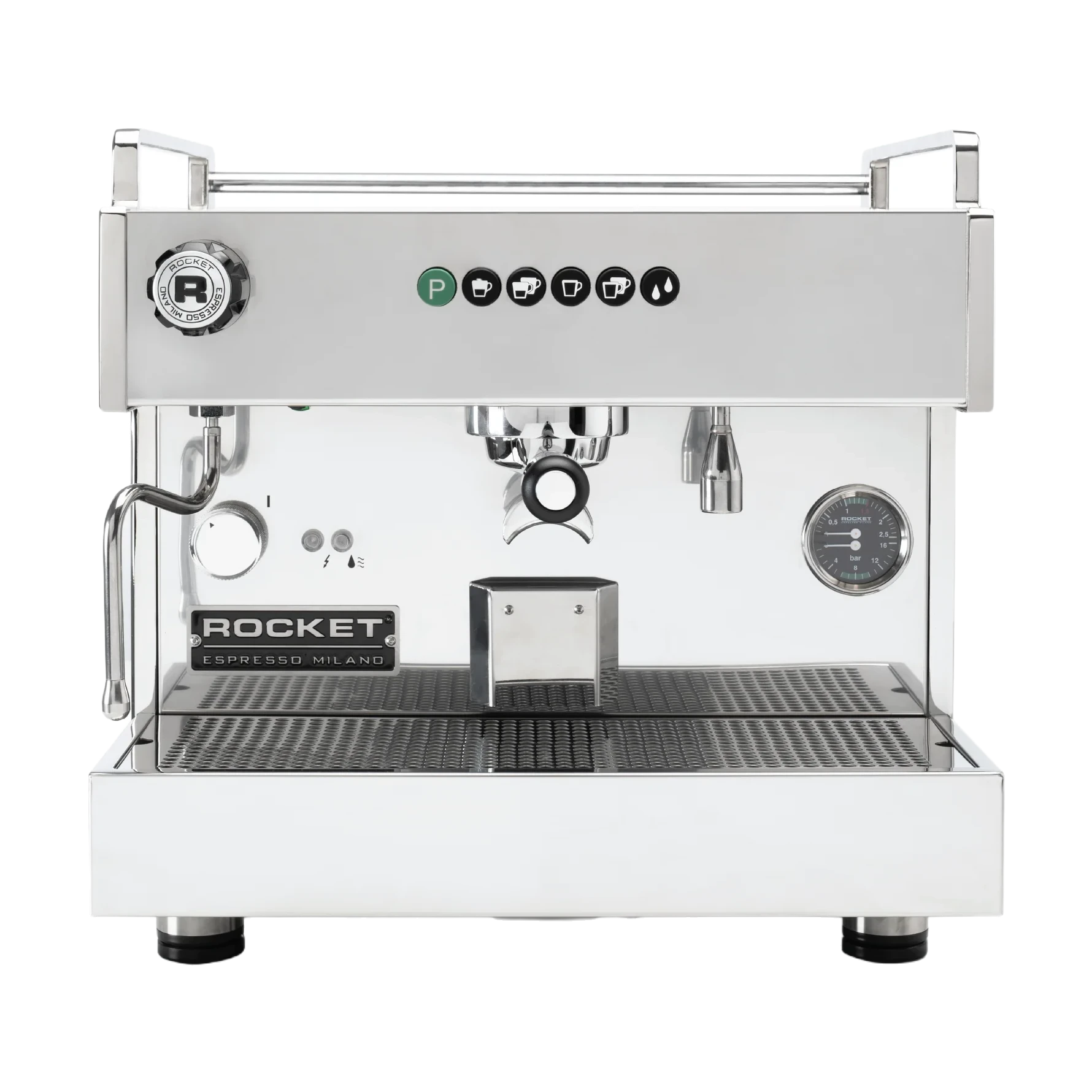
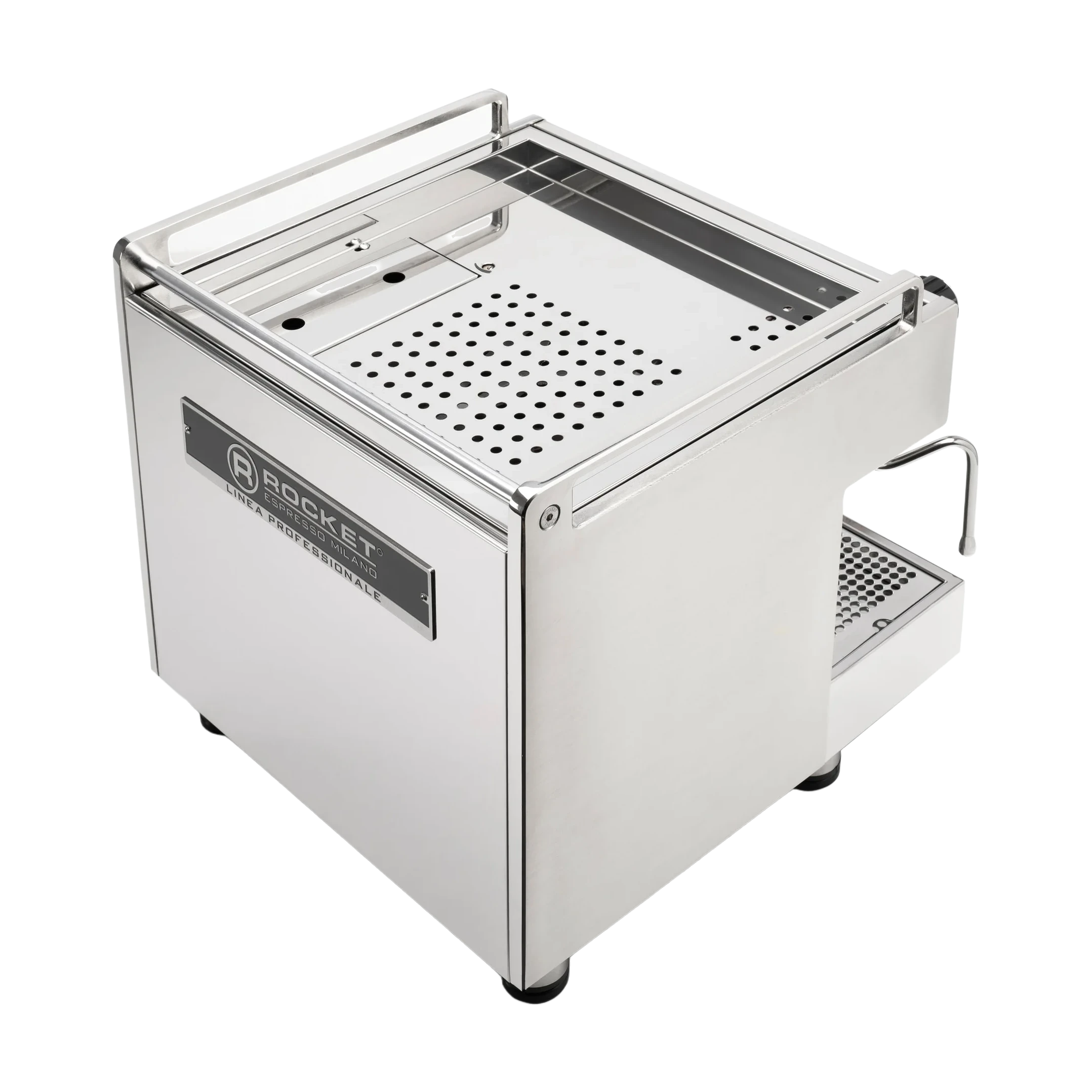
Why is my Boxer Tank's boiler scaling so fast?
Because the tank drinks whatever the venue offers, and event-site water is usually hard. We descale, log the exposure, and fit a tank-side filter cartridge so the boiler stops paying for every gig. Machines on filtered fills scale at a fraction of the rate.
The low-water warning on my Boxer Tank never triggers. Is that serious?
Yes, more than it seems. A dead float switch means nothing stops the pump from running the tank dry, and dry running kills pumps and risks the element. It's a continuity test and a cheap part; fix it before it costs you real money.
Does the Boxer Tank use a different pump than other Rockets?
Most tank builds run a vibration pump instead of the rotary pump found on plumbed machines. Vibe pumps get noisy as they wear, which is useful: the machine tells you before output actually drops. We measure output and replace once it falls below spec.
Water is pooling around the reservoir. What's leaking?
Usually the reservoir gasket, which hardens and gives up with age and vibration. We replace it and test with the tank completely full, because a seal that holds at half can still weep under full load. If it isn't the gasket, a dye-trace finds what it actually is.
Can a Boxer Tank be converted to a plumbed water line?
Yes, we see converted units in the field. The conversion has to set the fill solenoid wiring and the float-bypass jumper correctly, because a wrong configuration causes the classic fault of the auto-fill pulling the tank dry mid-shot. If your converted machine does that, the jumper is the first thing we check.
Will you come to an event or the truck to fix our Boxer Tank?
Yes, we service these machines where they work: festival sites, markets, commissaries, parking pads. Tell us the location and the symptom when you book. Most Tank faults are small parts we can carry to the site.
How many drinks can a Boxer Tank actually handle in a day?
It's rated for 50 to 120 cups, and the honest ceiling depends on milk drinks, refill discipline, and how hot the venue runs. A steady stream suits it better than slam-and-wait rushes. If your events keep crossing the top of that range, that's a conversation about a second machine, and we'll say so plainly.
What water should I put in the Boxer Tank?
Filtered, low-hardness water whenever you can get it; straight tap from an unknown venue is how these boilers scale out early. A tank-side filter cartridge is the practical answer when sources vary. The cost of the cartridge is rounding error next to a boiler descale.
What's the most common Boxer Tank repair you see?
Scale damage first, float switches and reservoir gaskets after that, then vibration pumps. It's a short list, and almost all of it is small-parts work when caught early. The machines that avoid the list are the ones running filtered water.
How much does a repair visit cost?
Flat rate for the visit, parts billed at their actual cost on top. You'll hear the rate when you book, and for bigger jobs we quote in writing on-site before any work starts. No estimate that balloons mid-job.
How fast can you get here?
Same-day. Call in the morning and a technician is usually on-site before the day is out; calls placed later in the day book for the next morning. Urgent breakdowns get priority routing.
Which areas do you cover?
The GTA and most of the Golden Horseshoe: Toronto through Mississauga, Vaughan, and Markham, out to Oshawa, Hamilton, and Niagara. If you're not sure you're in range, call and we'll tell you straight.
Do I need a service contract?
No. We work call by call. Plenty of customers put us on a maintenance schedule eventually, but that's their choice after seeing the work, never a requirement.
Are the repairs warrantied?
Parts carry their manufacturer warranty, and we stand behind our labour: if the same fault recurs, call us and we'll review it. Specific terms are discussed upfront on each job, not promised in marketing copy.
Do you repair on-site or take the machine away?
On-site whenever possible, which is most of the time. If a job genuinely needs the bench, like a full boiler rebuild or major electronics work, we'll say so before anything leaves your building.
How do I book a service call?
Call us or send the form on this page. We confirm the machine, the fault, and a time window the same day. If it's urgent, say so and we'll route the nearest technician.
What happens on the first visit?
Diagnosis first: we confirm the fault, tell you what caused it, and quote the fix before touching a wrench. Most repairs finish in that same visit because the common wear parts ride on the truck.
Do you carry parts or order them in?
High-wear parts for the platforms we service constantly ride on the truck. Anything else we order, usually next-day where suppliers allow, and we tell you the lead time before committing you to anything.
My machine is older or out of production. Will you still look at it?
Usually, yes. We service legacy machines for as long as parts can be sourced, and we're honest when a repair stops making financial sense against a replacement. You get the math, you make the call.
Are you cheaper than the manufacturer's service network?
Often, but that's not the pitch. We quote against the actual work, not a factory pricing book, and we'll tell you when a manufacturer warranty claim is the better route. Transparency is the value; the price usually follows.
Can you train our staff so this doesn't happen again?
Yes, and we do it by default on the way out. Half of repeat faults trace back to skipped daily cleaning or wrong routine, so the technician walks your team through what actually matters before leaving.