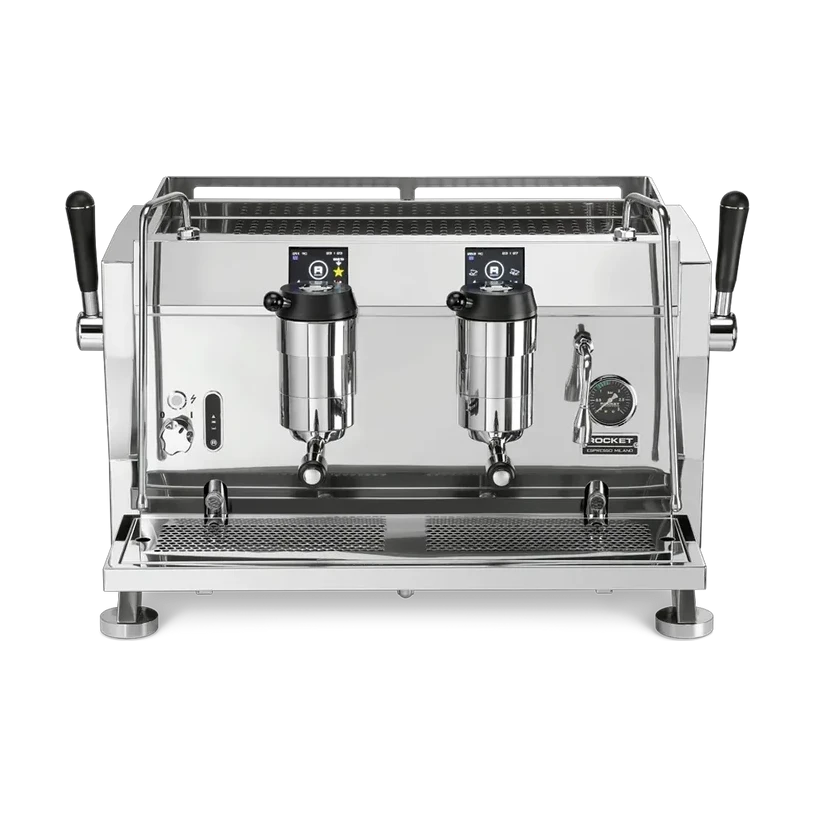
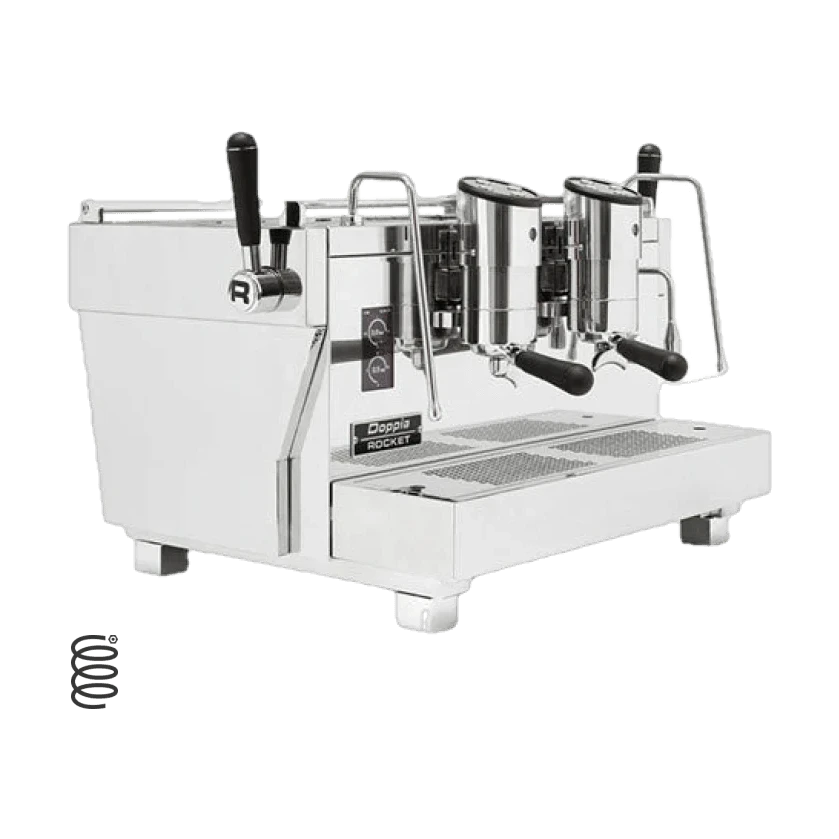
Why doesn't my R 9V's pressure profile match what I programmed?
The usual cause is the flow meter or gear-pump calibration drifting on that group, so the machine executes the curve slightly wrong every time. We verify the pulse count against a calibrated reference, clean or replace the flow meter, and re-run your presets to confirm the curve matches again. Mineral buildup is behind most of it, which is why water treatment matters double on this machine.
My R 9V lost its profile presets after a power outage. Are they gone for good?
Not necessarily. If a backup exists we restore from it; if not, the profiles get reprogrammed from scratch, which is tedious but routine. If presets keep vanishing, the controller's backup memory is failing and we'll quote that repair. Either way, keep a written copy of your profiles somewhere off the machine.
Why does one group on my R 9V run hotter than the others?
Each group has its own brew boiler, so one group drifting points at that boiler's NTC sensor or scale around its element. The upside of the design is containment: we fix the one boiler while the rest of the bank keeps working. Diagnosis is a reference-probe measurement, not guesswork.
Do the gear pumps on the R 9V wear out?
They do, the same as any precision pump: bearings and motor couplings wear, and the first signs are noise and a loss of fine pressure resolution. Because profiling depends on that pump's accuracy, we measure output and replace early rather than waiting for a failure mid-service.
Is the R 9V harder to repair than a regular espresso machine?
It has more layers: gear pumps, flow meters, profile electronics, and a brew boiler per group on top of standard espresso mechanics. None of it is mysterious, but it punishes guesswork, which is why everything we do on an R 9V is measured against instruments. Familiarity with the platform is most of the job.
Why do group gaskets wear faster on the R 9V?
In profile mode the group sees the gear-pump pressure curve directly instead of gentle line-pressure pre-infusion, so the gasket cycles harder. That's a design trade, not a defect. We treat gaskets as a more frequent consumable on this machine and check them at every visit.
Steam recovery on our R 9V got slow during rush. What's the fix?
Slow recovery under simultaneous milk drinks usually means the steam boiler's pressure transducer is drifting or scale has coated the element. We test the transducer against a reference gauge, descale, and replace the element if it draws low. The steam boiler on this machine is big enough that healthy hardware keeps up with two baristas.
Do you service both the 2-group and 3-group R 9V?
Yes, both. The architecture is identical; the 3-group adds a group, a larger 12 L steam boiler, and more simultaneous load on the steam side. Faults and fixes carry straight across.
The shot timer on one R 9V group froze. Is that expensive?
Rarely. A frozen timer on one group is usually the display ribbon or sensor harness making intermittent contact, and reseating the connectors fixes most of them. A damaged ribbon is a small part. It doesn't affect extraction, but it's worth fixing before anyone starts timing shots by phone.
How much does a repair visit cost?
Flat rate for the visit, parts billed at their actual cost on top. You'll hear the rate when you book, and for bigger jobs we quote in writing on-site before any work starts. No estimate that balloons mid-job.
How fast can you get here?
Same-day. Call in the morning and a technician is usually on-site before the day is out; calls placed later in the day book for the next morning. Urgent breakdowns get priority routing.
Which areas do you cover?
The GTA and most of the Golden Horseshoe: Toronto through Mississauga, Vaughan, and Markham, out to Oshawa, Hamilton, and Niagara. If you're not sure you're in range, call and we'll tell you straight.
Do I need a service contract?
No. We work call by call. Plenty of customers put us on a maintenance schedule eventually, but that's their choice after seeing the work, never a requirement.
Are the repairs warrantied?
Parts carry their manufacturer warranty, and we stand behind our labour: if the same fault recurs, call us and we'll review it. Specific terms are discussed upfront on each job, not promised in marketing copy.
Do you repair on-site or take the machine away?
On-site whenever possible, which is most of the time. If a job genuinely needs the bench, like a full boiler rebuild or major electronics work, we'll say so before anything leaves your building.
How do I book a service call?
Call us or send the form on this page. We confirm the machine, the fault, and a time window the same day. If it's urgent, say so and we'll route the nearest technician.
What happens on the first visit?
Diagnosis first: we confirm the fault, tell you what caused it, and quote the fix before touching a wrench. Most repairs finish in that same visit because the common wear parts ride on the truck.
Do you carry parts or order them in?
High-wear parts for the platforms we service constantly ride on the truck. Anything else we order, usually next-day where suppliers allow, and we tell you the lead time before committing you to anything.
My machine is older or out of production. Will you still look at it?
Usually, yes. We service legacy machines for as long as parts can be sourced, and we're honest when a repair stops making financial sense against a replacement. You get the math, you make the call.
Are you cheaper than the manufacturer's service network?
Often, but that's not the pitch. We quote against the actual work, not a factory pricing book, and we'll tell you when a manufacturer warranty claim is the better route. Transparency is the value; the price usually follows.
Can you train our staff so this doesn't happen again?
Yes, and we do it by default on the way out. Half of repeat faults trace back to skipped daily cleaning or wrong routine, so the technician walks your team through what actually matters before leaving.