
!
Brew unit jam or incomplete cycle
Grind buildup around the piston, worn cam followers, or a misaligned group. We remove the brew unit, clean the wear surfaces, fit fresh seals, lubricate the drive, and cycle it until it runs clean.

228 mm wide, always working
The Black & White 4 Compact earns its slot on counters where every centimetre is rented, which makes a dead one impossible to ignore. We repair these slim Thermoplans regularly: milk pumps losing prime, brew group jams, grinders drifting apart, leaks hiding in that tightly packed chassis. Most faults are diagnosed and sorted at the machine in one visit.
We'll get back to you today.
Thanks. We received your request.
A Grajqevci technician will get back to you today to confirm your machine and book the visit. If it's urgent, call us directly at (289) 217-3796.
Something went wrong sending your request.
Please try again, or call us directly at (289) 217-3796 and we'll book your service over the phone. You can also email support@grajqevci.com.
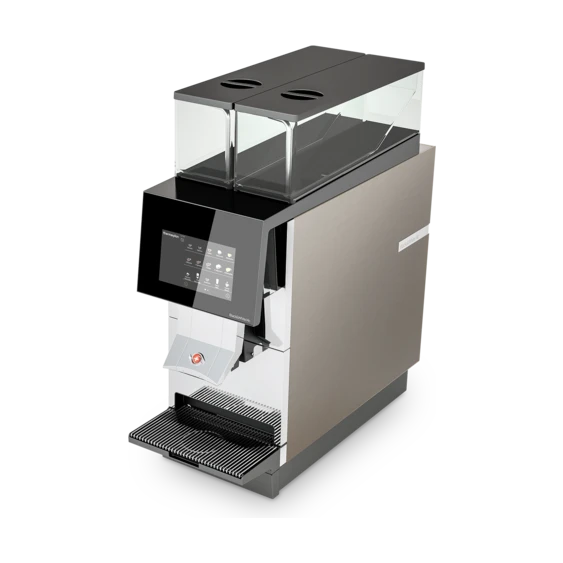
Thermoplan · High-volume super-automatic, narrow footprint
The Black & White 4 Compact squeezes the full B&W4 platform into a chassis just 228 mm wide. Thermoplan calls it the slimmest professional super-automatic in its class, and hotels and restaurants with crowded back bars buy it for precisely that. Inside, the architecture mirrors the full-size machine: dual grinders, dual boilers, Auto-Steam Master. So the wear patterns are familiar; the difference for a technician is reach, since the tight packaging makes leak tracing and some component access slower.
Why Grajqevci
Call in the morning and a technician is usually on-site before the day is out. Most Thermoplan Black & White 4 Compact jobs get diagnosed and fixed on the first visit.
Commercial coffee equipment is all we do, and Thermoplan Black & White 4 Compact is one of the platforms we know best. Not a generalist guessing at a service manual. Genuine OEM parts, industry-standard procedures.
Flat rate for the visit, with parts billed separately. For bigger jobs you'll see a written quote on-site before we proceed.
Skip the wait
Trusted by Toronto's most demanding teams






Black & White 4 Compact faults we diagnose
These Black & White 4 Compact faults book most of the platform's service calls; each entry covers the cause and our fix.
Grind buildup around the piston, worn cam followers, or a misaligned group. We remove the brew unit, clean the wear surfaces, fit fresh seals, lubricate the drive, and cycle it until it runs clean.
Either a brew screen has torn, the piston seal is worn, or the grind has crept too fine. We inspect both screens, replace what's worn, fit a new piston seal, and recalibrate the grind.
Grind gone coarse, brew water running cool, or pump output sagging. We measure pressure and temperature, reset grind and dose, and only quote a pump if the readings condemn it.
Scale, element degradation, or regulator drift. We descale the steam side, measure output, verify the regulator, and replace anything below spec.
Almost typically scale insulating the element, occasionally NTC drift. We descale, test element resistance, and replace the element if heat-up times don't recover.
The cycle didn't finish or the counter rarely reset. We verify completion, reset the counter, and replace the filter cartridge if it's exhausted.
An O-ring, a seal, or a cracked internal hose, and the Compact packs its plumbing tight, so tracing takes longer than on the full-width machine. We pressure-test the circuit, locate the exact leak, and replace the failing part.
The Compact runs the same Auto-Steam Master as its bigger sibling, and it fails the same way: protein buildup, a tired intake spring, or air-metering drift. We strip and sanitize the milk module, renew the spring and O-rings, recalibrate the air intake, and prove the foam on each profile.
Test the sensor first, blame scale second. We check the milk temperature sensor against a reference probe, descale the milk circuit, and replace the sensor where it reads out of spec.
Losing prime points to a worn impeller or air sneaking into the suction line. We pressure-test the milk path, open the pump head, replace the impeller if flow is low, and renew the suction seals while we're there.
Skipped daily cleans or spent cleaning chemical, almost without exception. We deep-clean the milk pathway end to end, sanitize the cooler connection, and swap the milk hose if it's stained.
One side's burrs typically wear first. We weigh the dose from each grinder, measure the burr gaps, recalibrate per hopper, and replace burrs when the gap says so.
A stone in the burrs, beans bridging, or oils gumming the throat. We strip the grinder, clear it, clean the throat, inspect the burrs, and replace them if they're chipped.
Firmware before hardware: we diagnose which, reflash from a known-good image, and only replace the controller if the board itself has failed.
Network drift or a comms module fault. We verify the network settings, reset the telemetry stack, test the sensors, and replace the module if it has died.
A misreading level sensor or a blocked cleaning circuit. We find where the cycle stalls, clear the blockage, and replace the sensor if needed.
Your coffee emergency ends here
Call or submit the form. We confirm your address, model, and the issue.
An experienced technician arrives, runs full diagnostics, and identifies the root cause.
You receive a flat, itemized quote. Nothing proceeds without your green light.
We complete the repair, run a test cycle, and walk you through what to watch for.
Parts on the truck
The record
Their team consistently delivers exceptional maintenance services, prolonging equipment lifespan.
*Estimated based on the approximate distance from our nearest service centre, average commute time, and median service-call length for one machine. Prices in Canadian dollars (CAD $). Final quote provided on-site after diagnosis.
FAQ
21 answers covering service, repair, parts, installation, warranty, and edge cases.
Updated August 2026
Mechanically it's a very close sibling: same dual-grinder, dual-boiler layout and the same Auto-Steam Master milk system, packaged into 228 mm of width. Capacity is the real difference, around 150 cups a day against the flagship's 500. For repairs that's good news, because parts and fault knowledge carry straight over.
Harder to reach, sometimes; more expensive, rarely. The tight chassis means leak tracing and some component swaps take longer than on the full-width machine, and we're upfront about that when quoting. The parts themselves are shared with the rest of the B&W4 family, so there's no compact premium on components.
An air leak in the suction line between the cooler and the machine is the usual thief, with a worn impeller close behind. The pump sounds like it's working while drawing nothing but air. We pressure-test to separate the two causes, replace what's actually worn, and renew the suction seals while the path is open.
It needs attention, but it's rarely catastrophic. In a chassis this tight a failed O-ring, a brew group seal, or a hairline hose crack all drain to the same puddle, which is why guessing doesn't work. We pressure-test the water circuit, trace the leak to its actual source, and replace the failed part.
It's rated for up to 150 cups a day, and it holds that comfortably with its cleaning cycles respected. Sites that creep past the rating, a busy breakfast bar for instance, tend to show milk-system and brew group wear sooner. If your volume has outgrown it, that's worth a conversation before the faults start arriving.
Either the cycle never actually completed or the counter didn't reset, and occasionally the filter cartridge is exhausted so the machine keeps protesting. We verify the cycle, reset the counter through the service menu, and check the hardness setting against your real water. An alert that's been ignored for weeks usually means genuine scale, so we check for that too.
Usually, yes. Most freezes and restarts on this platform are firmware hangs, cleared with a controlled reset or a reflash from a known-good image. The display module is only replaced when the digitizer itself has failed, and we test for that before quoting anything.
Skipped milk cleans and unmanaged scale, the same two things that kill every high-volume super-automatic. The Compact adds one wrinkle: because it often sits in space-starved bars, trays and drawers get emptied in a hurry and sensors get knocked. Keep the daily clean honest and the hardness setting true, and a 10-to-15-year service life is realistic.
Enough to pull it forward and get panels off, which on most back bars means sliding it out of its slot. If yours is built in tight, tell us when booking so we plan the visit accordingly. It changes prep, not feasibility.
Flat rate for the visit, parts billed at their actual cost on top. You'll hear the rate when you book, and for bigger jobs we quote in writing on-site before any work starts. No estimate that balloons mid-job.
Same-day. Call in the morning and a technician is usually on-site before the day is out; calls placed later in the day book for the next morning. Urgent breakdowns get priority routing.
The GTA and most of the Golden Horseshoe: Toronto through Mississauga, Vaughan, and Markham, out to Oshawa, Hamilton, and Niagara. If you're not sure you're in range, call and we'll tell you straight.
No. We work call by call. Plenty of customers put us on a maintenance schedule eventually, but that's their choice after seeing the work, never a requirement.
Parts carry their manufacturer warranty, and we stand behind our labour: if the same fault recurs, call us and we'll review it. Specific terms are discussed upfront on each job, not promised in marketing copy.
On-site whenever possible, which is most of the time. If a job genuinely needs the bench, like a full boiler rebuild or major electronics work, we'll say so before anything leaves your building.
Call us or send the form on this page. We confirm the machine, the fault, and a time window the same day. If it's urgent, say so and we'll route the nearest technician.
Diagnosis first: we confirm the fault, tell you what caused it, and quote the fix before touching a wrench. Most repairs finish in that same visit because the common wear parts ride on the truck.
High-wear parts for the platforms we service constantly ride on the truck. Anything else we order, usually next-day where suppliers allow, and we tell you the lead time before committing you to anything.
Usually, yes. We service legacy machines for as long as parts can be sourced, and we're honest when a repair stops making financial sense against a replacement. You get the math, you make the call.
Often, but that's not the pitch. We quote against the actual work, not a factory pricing book, and we'll tell you when a manufacturer warranty claim is the better route. Transparency is the value; the price usually follows.
Yes, and we do it by default on the way out. Half of repeat faults trace back to skipped daily cleaning or wrong routine, so the technician walks your team through what actually matters before leaving.
A flat visit rate and a straight answer before any work starts.
Call (289) 217-3796 now →