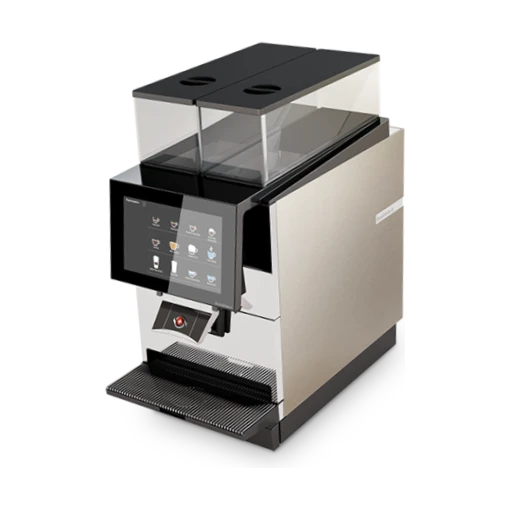
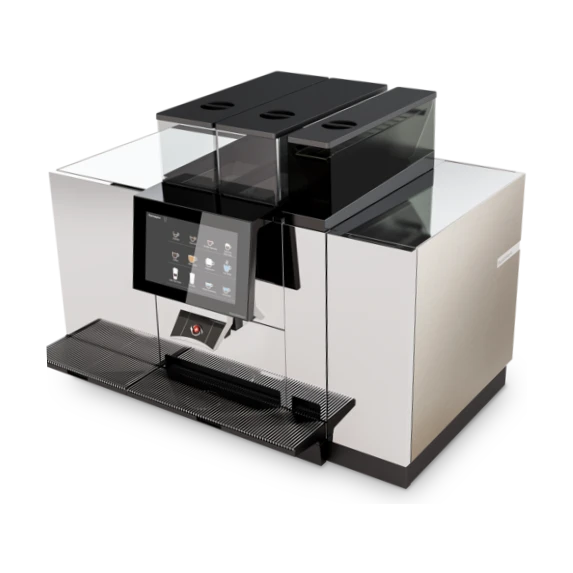
Why is the milk foam on my Black & White 4 inconsistent?
Almost always the Auto-Steam Master needs attention: protein buildup in the steam-milk module, a fatigued intake spring, or air-metering drift. Foam quality depends on a precise air-to-milk ratio, so small faults show up in the cup early. We strip and sanitize the module, renew the spring and O-rings, and recalibrate against each drink profile.
Can the Black & White 4 really do 500 cups a day?
That's its design rating, and machines in airline catering and big hotels genuinely run near it. The honest caveat is that the rating assumes the cleaning cycles happen and the water is filtered to spec. Run it hard while skipping those and the milk system and boilers will collect the debt.
The brew unit keeps jamming. What's the permanent fix?
A jam that keeps returning means grind buildup on the piston, worn cam followers, or a group out of alignment, and no number of restarts changes that. The lasting fix is pulling the brew unit, cleaning the wear surfaces, replacing seals and gaskets, and lubricating the drive. Done properly, it stays fixed for a long service interval.
Why do the two grinders dose differently?
One hopper usually does more of the work, so its burrs wear faster and the doses drift apart. We weigh output from both sides across ten shots, measure the burr gaps, and recalibrate each hopper separately. Burrs get replaced only when the measurements say they're done.
Steam pressure drops halfway through breakfast service. Why?
Sustained steam draw is where scale, element wear, and regulator drift all show themselves. The machine looks fine at low volume because the boiler can keep up between drinks. We test under load, descale the steam circuit, and replace whichever component the readings condemn.
What is the SuperSteam option on the Black & White 4?
SuperSteam is Thermoplan's wand option for manually steaming milk alongside the automated Auto-Steam Master. When its pressure goes weak the cause is usually scale in the SuperSteam circuit or a worn valve cartridge. Both are quick, inexpensive repairs compared to most of what can go wrong on a machine this size.
Our CTM screen froze mid-service. Is that a board replacement?
Usually not. Most CTM freezes are firmware hangs that clear with a controlled reset, and a reflash settles the repeat offenders. We replace the display or controller only when testing shows the hardware itself failed, because the two outcomes carry very different price tags.
Is the Black & White 4 worth repairing or should we replace it?
At this machine's purchase price, repair wins almost every argument. Seals, sensors, milk-system parts, even a full brew group overhaul cost a small fraction of a new unit. We give you the quote and an honest read on remaining life; the decision stays yours.
How often should a Black & White 4 be descaled at high volume?
Follow the machine's interval, but only after confirming the hardness setting matches your actual water; a wrong setting makes the schedule fiction. High-volume sites on moderately hard water typically land between two and three months. Skipping it is how boilers and flow meters end up on the invoice.
How much does a repair visit cost?
Flat rate for the visit, parts billed at their actual cost on top. You'll hear the rate when you book, and for bigger jobs we quote in writing on-site before any work starts. No estimate that balloons mid-job.
How fast can you get here?
Same-day. Call in the morning and a technician is usually on-site before the day is out; calls placed later in the day book for the next morning. Urgent breakdowns get priority routing.
Which areas do you cover?
The GTA and most of the Golden Horseshoe: Toronto through Mississauga, Vaughan, and Markham, out to Oshawa, Hamilton, and Niagara. If you're not sure you're in range, call and we'll tell you straight.
Do I need a service contract?
No. We work call by call. Plenty of customers put us on a maintenance schedule eventually, but that's their choice after seeing the work, never a requirement.
Are the repairs warrantied?
Parts carry their manufacturer warranty, and we stand behind our labour: if the same fault recurs, call us and we'll review it. Specific terms are discussed upfront on each job, not promised in marketing copy.
Do you repair on-site or take the machine away?
On-site whenever possible, which is most of the time. If a job genuinely needs the bench, like a full boiler rebuild or major electronics work, we'll say so before anything leaves your building.
How do I book a service call?
Call us or send the form on this page. We confirm the machine, the fault, and a time window the same day. If it's urgent, say so and we'll route the nearest technician.
What happens on the first visit?
Diagnosis first: we confirm the fault, tell you what caused it, and quote the fix before touching a wrench. Most repairs finish in that same visit because the common wear parts ride on the truck.
Do you carry parts or order them in?
High-wear parts for the platforms we service constantly ride on the truck. Anything else we order, usually next-day where suppliers allow, and we tell you the lead time before committing you to anything.
My machine is older or out of production. Will you still look at it?
Usually, yes. We service legacy machines for as long as parts can be sourced, and we're honest when a repair stops making financial sense against a replacement. You get the math, you make the call.
Are you cheaper than the manufacturer's service network?
Often, but that's not the pitch. We quote against the actual work, not a factory pricing book, and we'll tell you when a manufacturer warranty claim is the better route. Transparency is the value; the price usually follows.
Can you train our staff so this doesn't happen again?
Yes, and we do it by default on the way out. Half of repeat faults trace back to skipped daily cleaning or wrong routine, so the technician walks your team through what actually matters before leaving.