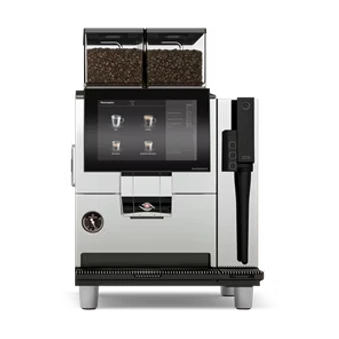
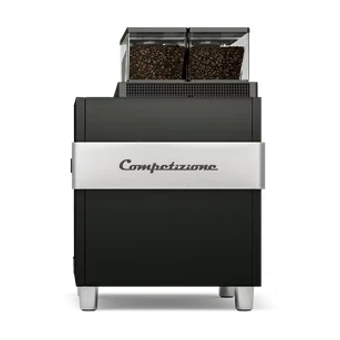
What's different about servicing the Competizione compared to a standard B&W4?
The steam side. AirSteam automation and AutoSteam manual control add a wand position sensor, a valve cartridge, and module pairing that the other B&W4 machines don't carry. Everything else, brew group, grinders, boilers, milk hygiene, services exactly like the rest of the platform.
The AutoSteam wand stopped responding to manual input. Can it be fixed?
Yes, and it's usually the wand's input sensor drifting out of calibration or the controller losing its read on wand position. We test the sensor against reference, check the controller signal, and replace the sensor module if it's intermittent. Manual mode gets verified through both rolling and steaming phases before we leave.
Why is the steam pattern uneven from the tip?
Mineral buildup inside the tip bores, or a tip that's been knocked against a pitcher one time too many, which happens a lot in training environments. We clean or replace the tip and descale the steam pathway if scale is the deeper cause. The pattern gets checked across every bore afterwards.
Does heavy latte-art training actually wear the machine faster?
Measurably, yes. Back-to-back steaming loads the steam boiler and valve cartridge well beyond typical service patterns, and continuous shots accelerate brew piston and screen wear. None of that is a design flaw; it's duty cycle. Sites running training programs just reach service intervals sooner.
Our shot volumes drift between drinks during busy service. What causes that?
Three usual suspects: pump pressure drift, scale forming in the flow meter, and grinder dose creeping under heavy use. Each is measurable at the machine, so we don't guess. We clean the flow meter, weigh and recalibrate the dose, and quote pump work only if the pressure readings demand it.
Why does the wand smell sour even though the machine self-cleans?
The automated cycles clean the internal milk path, not the outside of a manually used wand. AutoSteam tempts baristas away from the purge-and-wipe habit a manual wand still needs. We deep-clean the wand inside and out, replace the tip if it's pitted, and rebuild that habit with your bar team.
Is the Competizione's SCA recognition relevant to repairs at all?
Indirectly, yes: it signals the dose and texture tolerances this machine is expected to hold. We calibrate to tighter targets than we would on a lobby machine, because a Competizione that's merely okay defeats the point of buying one. Same parts, stricter standards.
Drink profiles disappeared after a firmware update. Are they gone for good?
Not necessarily. If a backup exists we restore it; if not, profiles can be rebuilt through the service menu against your recipes. Either way we back up the finished configuration before leaving so the next update can't repeat the trick.
Can our baristas adjust milk texture themselves, or does that need a technician?
Day-to-day texture is in their hands: AutoSteam mode gives manual control during rolling and steaming, and programmed AirSteam profiles cover the automated drinks. A technician comes in when texture won't respond to either, which points to air-metering drift, intake spring fatigue, or buildup in the AirSteam module. That boundary keeps training useful and service calls rare.
How much does a repair visit cost?
Flat rate for the visit, parts billed at their actual cost on top. You'll hear the rate when you book, and for bigger jobs we quote in writing on-site before any work starts. No estimate that balloons mid-job.
How fast can you get here?
Same-day. Call in the morning and a technician is usually on-site before the day is out; calls placed later in the day book for the next morning. Urgent breakdowns get priority routing.
Which areas do you cover?
The GTA and most of the Golden Horseshoe: Toronto through Mississauga, Vaughan, and Markham, out to Oshawa, Hamilton, and Niagara. If you're not sure you're in range, call and we'll tell you straight.
Do I need a service contract?
No. We work call by call. Plenty of customers put us on a maintenance schedule eventually, but that's their choice after seeing the work, never a requirement.
Are the repairs warrantied?
Parts carry their manufacturer warranty, and we stand behind our labour: if the same fault recurs, call us and we'll review it. Specific terms are discussed upfront on each job, not promised in marketing copy.
Do you repair on-site or take the machine away?
On-site whenever possible, which is most of the time. If a job genuinely needs the bench, like a full boiler rebuild or major electronics work, we'll say so before anything leaves your building.
How do I book a service call?
Call us or send the form on this page. We confirm the machine, the fault, and a time window the same day. If it's urgent, say so and we'll route the nearest technician.
What happens on the first visit?
Diagnosis first: we confirm the fault, tell you what caused it, and quote the fix before touching a wrench. Most repairs finish in that same visit because the common wear parts ride on the truck.
Do you carry parts or order them in?
High-wear parts for the platforms we service constantly ride on the truck. Anything else we order, usually next-day where suppliers allow, and we tell you the lead time before committing you to anything.
My machine is older or out of production. Will you still look at it?
Usually, yes. We service legacy machines for as long as parts can be sourced, and we're honest when a repair stops making financial sense against a replacement. You get the math, you make the call.
Are you cheaper than the manufacturer's service network?
Often, but that's not the pitch. We quote against the actual work, not a factory pricing book, and we'll tell you when a manufacturer warranty claim is the better route. Transparency is the value; the price usually follows.
Can you train our staff so this doesn't happen again?
Yes, and we do it by default on the way out. Half of repeat faults trace back to skipped daily cleaning or wrong routine, so the technician walks your team through what actually matters before leaving.