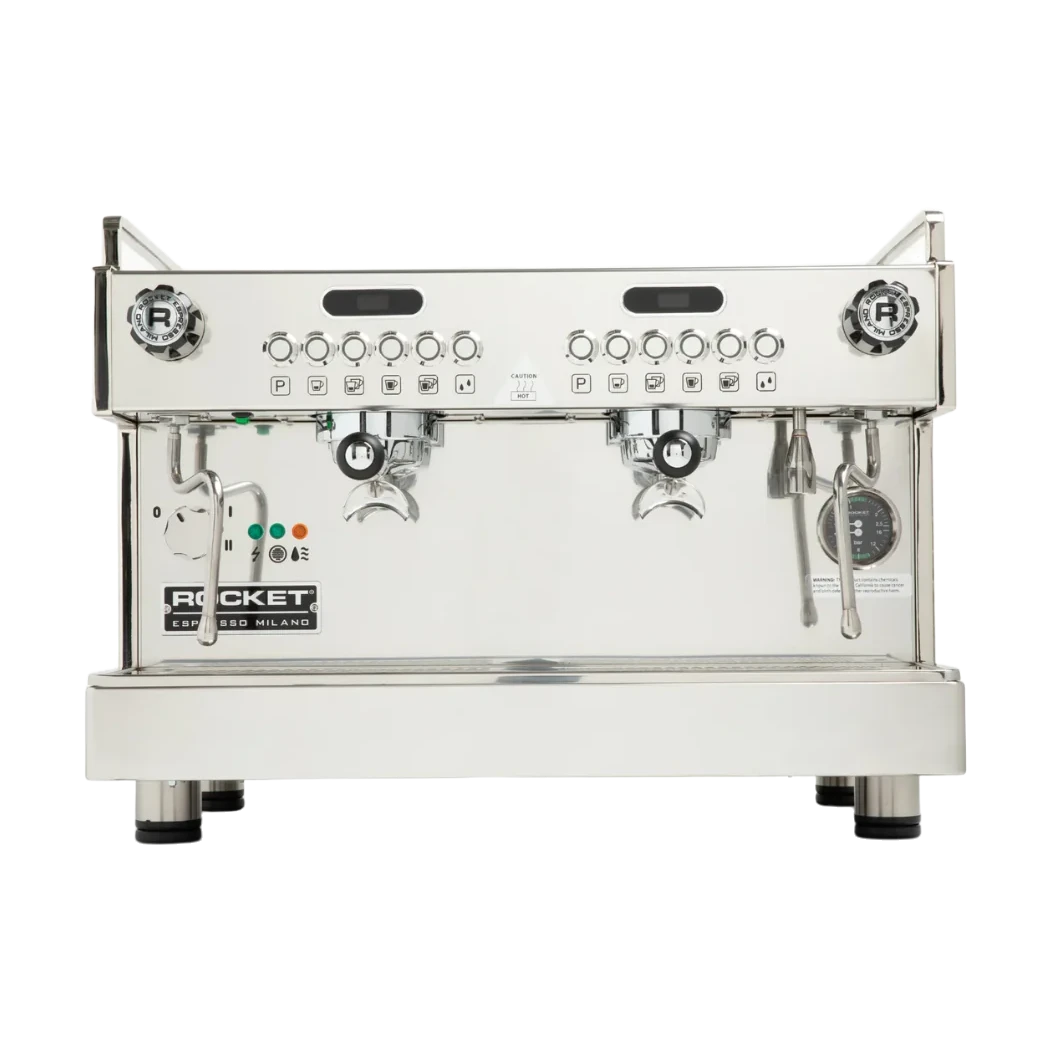
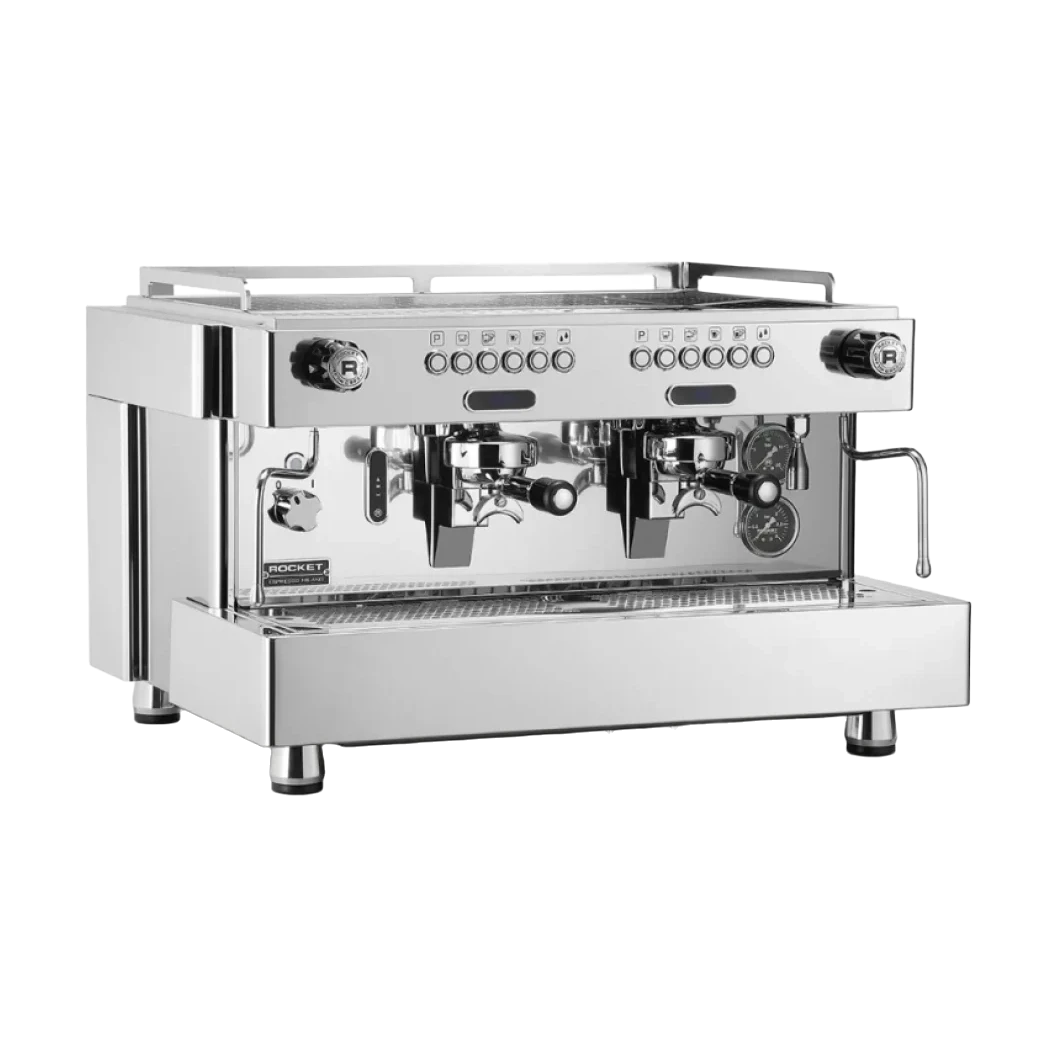
Do you repair Boxer Evo machines in food trucks?
Yes, regularly. We service the Evo wherever it works: trucks, kiosks, market stalls, and cafe counters. Mobile units mostly need the same fixes as fixed ones, plus closer attention to whatever water they've been fed.
Why does my Boxer Evo lose temperature between shots?
The thermosiphon loop that keeps the group hot is scaling up and circulation is dropping. A brew-circuit descale and loop flush restores it, verified with a probe at the group. On an HX machine this loop is the whole temperature story.
What does the NSF listing on the Boxer Evo mean for my permit?
It means the machine itself meets North American commercial food-service requirements, which inspectors and permit offices care about. The listing belongs to the machine, so what you need is an intact, legible plate and a sensible service record. We can replace a damaged plate through the Rocket channel and document the work we've done.
The dose buttons on my Boxer Evo pour different amounts every time. Why?
The Evo timer doses by counting flow meter pulses, and mineral deposit on the impeller corrupts the count. Cleaning the impeller and reprogramming each dose by weight fixes it. A damaged meter gets replaced first so the calibration holds.
How often should a mobile Boxer Evo be descaled?
More often than a plumbed cafe machine, because event and venue water is a lottery. We log what the machine has been exposed to and set the interval from evidence rather than habit; for hard-working mobile units that can mean a descale every few months. A tank-side or inline filter stretches the interval considerably.
Can you fix a Boxer Evo on-site, or does it have to go to a workshop?
On-site for almost everything: gaskets, screens, joystick rebuilds, dose calibration, pumps, and most boiler work happen where the machine sits. A severe scale-out or major rebuild is better on a bench, and we'll say so before anything moves. For trucks, on-site can mean your commissary or your driveway.
What wears out first on a Boxer Evo?
Group gaskets and dispersion screens, then the joystick bushings and seals, then the pump. All of them are inexpensive, predictable parts we carry. The expensive failures on this machine are almost always scale damage, which is preventable.
Can a Boxer Evo really do 200 cups a day?
The 2-group can, at the top of its comfortable range, provided the steam demand is paced rather than constant. A 1-group doing that volume is being asked to be a bigger machine. If you're hitting those numbers daily, we'll tell you honestly whether the machine or the menu needs adjusting.
Is the Boxer Evo different to service than the original Boxer?
The bones are familiar, so most service knowledge carries over. The Evo brings the current timer board for volumetric dosing and the certification paperwork North American sites need. Parts supply for current-production machines is also quicker, which shortens repairs.
How much does a repair visit cost?
Flat rate for the visit, parts billed at their actual cost on top. You'll hear the rate when you book, and for bigger jobs we quote in writing on-site before any work starts. No estimate that balloons mid-job.
How fast can you get here?
Same-day. Call in the morning and a technician is usually on-site before the day is out; calls placed later in the day book for the next morning. Urgent breakdowns get priority routing.
Which areas do you cover?
The GTA and most of the Golden Horseshoe: Toronto through Mississauga, Vaughan, and Markham, out to Oshawa, Hamilton, and Niagara. If you're not sure you're in range, call and we'll tell you straight.
Do I need a service contract?
No. We work call by call. Plenty of customers put us on a maintenance schedule eventually, but that's their choice after seeing the work, never a requirement.
Are the repairs warrantied?
Parts carry their manufacturer warranty, and we stand behind our labour: if the same fault recurs, call us and we'll review it. Specific terms are discussed upfront on each job, not promised in marketing copy.
Do you repair on-site or take the machine away?
On-site whenever possible, which is most of the time. If a job genuinely needs the bench, like a full boiler rebuild or major electronics work, we'll say so before anything leaves your building.
How do I book a service call?
Call us or send the form on this page. We confirm the machine, the fault, and a time window the same day. If it's urgent, say so and we'll route the nearest technician.
What happens on the first visit?
Diagnosis first: we confirm the fault, tell you what caused it, and quote the fix before touching a wrench. Most repairs finish in that same visit because the common wear parts ride on the truck.
Do you carry parts or order them in?
High-wear parts for the platforms we service constantly ride on the truck. Anything else we order, usually next-day where suppliers allow, and we tell you the lead time before committing you to anything.
My machine is older or out of production. Will you still look at it?
Usually, yes. We service legacy machines for as long as parts can be sourced, and we're honest when a repair stops making financial sense against a replacement. You get the math, you make the call.
Are you cheaper than the manufacturer's service network?
Often, but that's not the pitch. We quote against the actual work, not a factory pricing book, and we'll tell you when a manufacturer warranty claim is the better route. Transparency is the value; the price usually follows.
Can you train our staff so this doesn't happen again?
Yes, and we do it by default on the way out. Half of repeat faults trace back to skipped daily cleaning or wrong routine, so the technician walks your team through what actually matters before leaving.