Why does our TopBrewer Compact keep jamming mid-cycle?
Grind buildup and seal wear, the same physics as every bean-to-cup machine. The brew unit comes out with the chassis, gets stripped, resealed, and greased, then cycles until it runs clean. The Compact's shallower cabinet makes this one of the quicker jobs on the platform.
Why is the coffee from the Compact weak and watery?
Three suspects: grind drifted coarse, brew temperature down, or pump pressure off spec. Each has a clean test, with an inline gauge for pressure and the service interface for grind targets. If the pump is the problem, you'll see a quote before anything is swapped.
The hopper has beans but the grinder isn't feeding. Why?
Either the hopper gate is stuck, the beans have bridged above the throat, or the grinder motor is failing. Bridging is the common one, especially on low-volume sites where beans go stale before they're used. We clear it, test the motor's current draw, and go over bean rotation with your team.
Can one grinder really keep up with our office?
The Compact is rated to 200 cups a day, and the single grinder is commercial-spec. What matters more is wear: one grinder doing all the work drifts sooner than the Pro's pair sharing it. We weigh the dose at every visit and replace burrs only when measurements say so.
Why does the filter alert stay on after we replaced the cartridge?
The counter has to be reset through the service menu; the alert never clears itself. We reset it, confirm the cartridge is seated and primed, and verify the alert is gone at both the machine and the app.
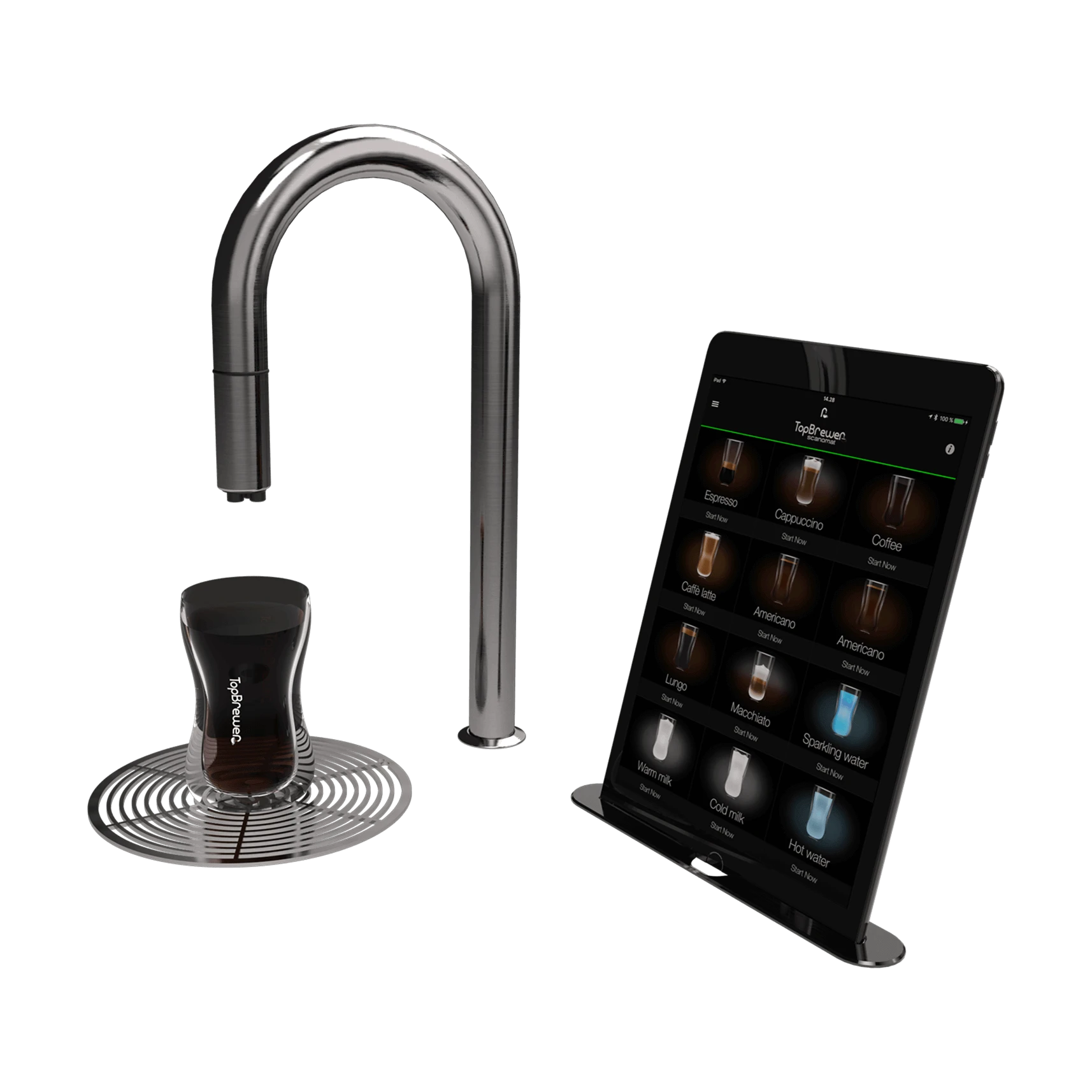
Our TopBrewer Compact's foam went thin. What's the fix?
Milk protein in the line run between the cabinet fridge and the tap, almost every time. We strip the pathway to the nozzle, sanitize it, replace the O-rings and foam-intake spring, and make sure the app's daily clean is actually being run. Foam comes back dense the same visit.
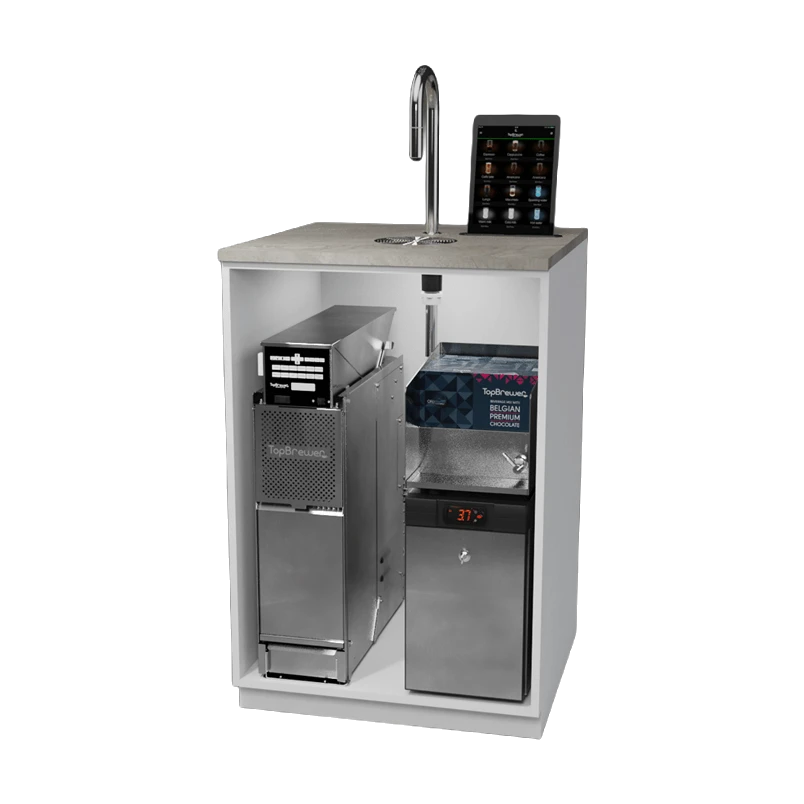
Is the Compact harder to service because everything is under the counter?
No, mostly the opposite. The chassis slides out on rails with quick-disconnects, and the Compact's shallow cabinet gives better access than most counter-top machines bolted into tight millwork. The exception is a compromised fit-out, and we quote remediation when we meet one.
What does it cost to keep a TopBrewer Compact healthy long-term?
Less than the downtime it prevents: filter cartridges on schedule, milk pathway service, a periodic brew unit reseal, and burr checks. None of it is exotic, and a Compact that gets this rhythm reliably reaches the 8-to-10-year window the platform is known for.
Do you fix the wrong-volume pours on the Compact?
Yes. The dispense is flow timing, so a leaking solenoid or drifting flow sensor sends volumes off recipe. We isolate the valve, replace or recalibrate, and weigh the pours until they match the programmed drink.
How much does a repair visit cost?
Flat rate for the visit, parts billed at their actual cost on top. You'll hear the rate when you book, and for bigger jobs we quote in writing on-site before any work starts. No estimate that balloons mid-job.
How fast can you get here?
Same-day. Call in the morning and a technician is usually on-site before the day is out; calls placed later in the day book for the next morning. Urgent breakdowns get priority routing.
Which areas do you cover?
The GTA and most of the Golden Horseshoe: Toronto through Mississauga, Vaughan, and Markham, out to Oshawa, Hamilton, and Niagara. If you're not sure you're in range, call and we'll tell you straight.
Do I need a service contract?
No. We work call by call. Plenty of customers put us on a maintenance schedule eventually, but that's their choice after seeing the work, never a requirement.
Are the repairs warrantied?
Parts carry their manufacturer warranty, and we stand behind our labour: if the same fault recurs, call us and we'll review it. Specific terms are discussed upfront on each job, not promised in marketing copy.
Do you repair on-site or take the machine away?
On-site whenever possible, which is most of the time. If a job genuinely needs the bench, like a full boiler rebuild or major electronics work, we'll say so before anything leaves your building.
How do I book a service call?
Call us or send the form on this page. We confirm the machine, the fault, and a time window the same day. If it's urgent, say so and we'll route the nearest technician.
What happens on the first visit?
Diagnosis first: we confirm the fault, tell you what caused it, and quote the fix before touching a wrench. Most repairs finish in that same visit because the common wear parts ride on the truck.
Do you carry parts or order them in?
High-wear parts for the platforms we service constantly ride on the truck. Anything else we order, usually next-day where suppliers allow, and we tell you the lead time before committing you to anything.
My machine is older or out of production. Will you still look at it?
Usually, yes. We service legacy machines for as long as parts can be sourced, and we're honest when a repair stops making financial sense against a replacement. You get the math, you make the call.
Are you cheaper than the manufacturer's service network?
Often, but that's not the pitch. We quote against the actual work, not a factory pricing book, and we'll tell you when a manufacturer warranty claim is the better route. Transparency is the value; the price usually follows.
Can you train our staff so this doesn't happen again?
Yes, and we do it by default on the way out. Half of repeat faults trace back to skipped daily cleaning or wrong routine, so the technician walks your team through what actually matters before leaving.