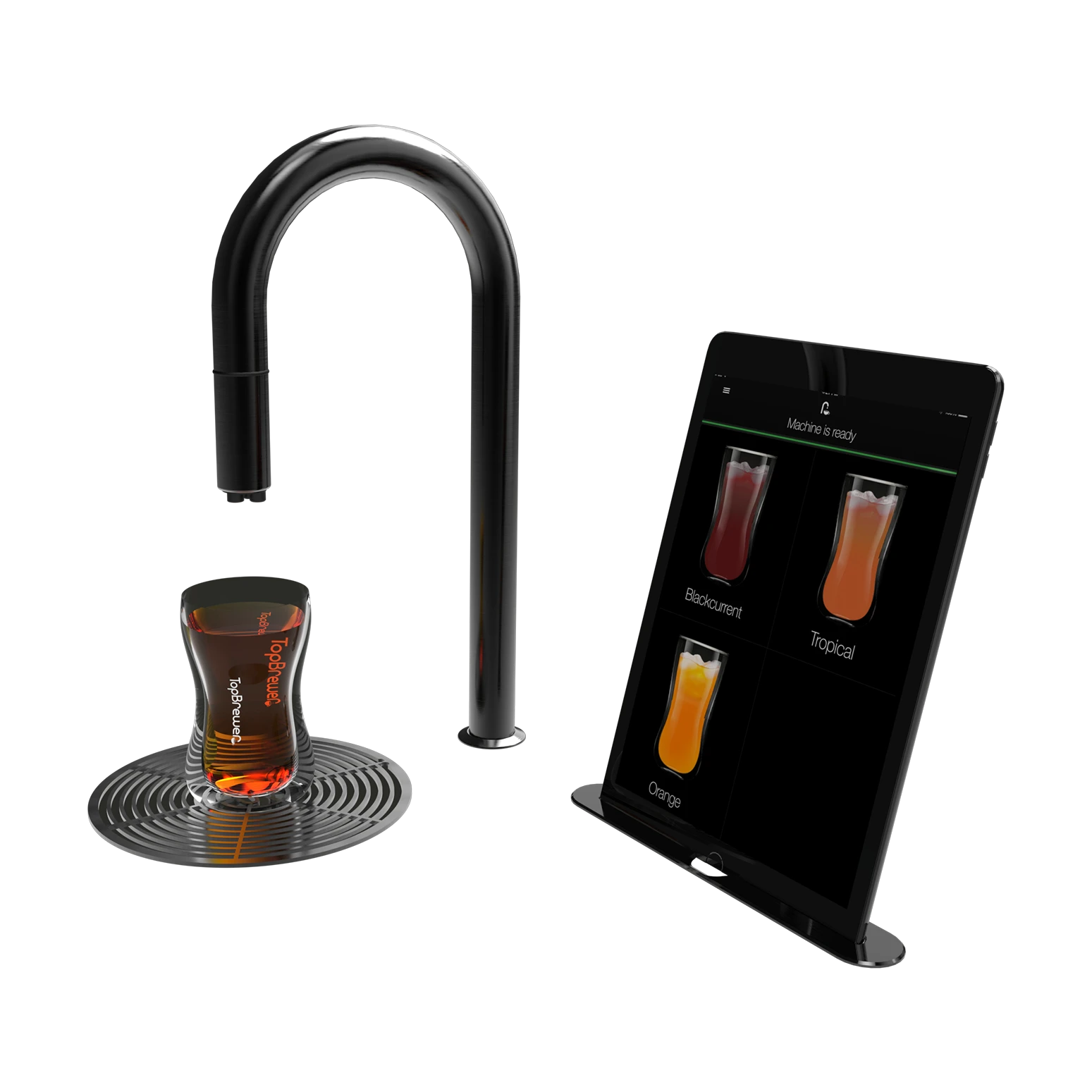
Why is the juice dispensing slowly from our TopJuicer?
Low pump output, a restricted line, or deposit narrowing the dispense nozzle. We measure the pump, clear the line, and descale the nozzle, then verify the pour is back on target. Slow dispense rarely fixes itself, because all three causes only get worse.
The TopJuicer won't stop pouring when we release the button. What's wrong?
A stuck dispense solenoid or a control board fault, the same failure mode as the TopWater tap. We test the coil, replace the solenoid if it's failed, and confirm the dispense cuts off cleanly before we leave.
Why does the juice taste off after a quiet week?
Residue in the juice path during light use is the usual cause. We check the cleaning cycle is genuinely running on schedule, run the manual deep-clean with your team, and replace any gaskets that have absorbed residue. Low-traffic sites need the cleaning rhythm more, not less.
Our TopJuicer's daily clean cycle keeps failing. Why?
An empty cleaner cartridge, low water inlet pressure, or a sensor fault interrupting the cycle. We verify all three and re-run the cycle to confirm it completes. A clean cycle that can't finish will eventually lock out dispensing, so it's worth fixing early.
What does the status light on the tap actually tell you?
On its own, only that something tripped. The detail lives in the fault log, which we read through the Scanomat service interface beneath the counter. That log points to dispense, chilling, sensors, or electronics, and we fix the cause rather than resetting the light.
The TopJuicer disappeared from our Scanomat dashboard. Is that serious?
Not usually. It means the unit lost its network link or its cloud registration drifted, and the tap typically keeps pouring locally in the meantime. We restore the connection, re-pair if needed, and involve your IT contact if the building's network is the blocker.
Can you service a TopJuicer and a TopBrewer in the same visit?
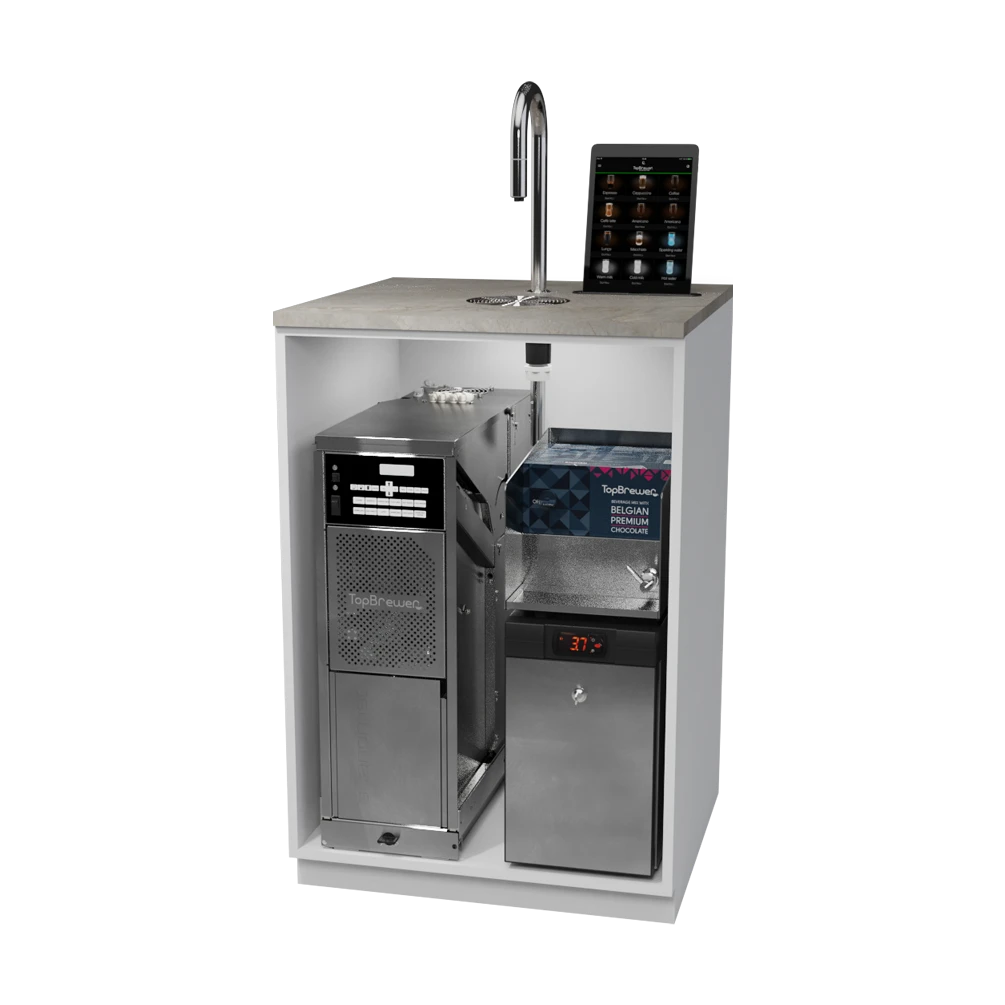
Yes, and it's the efficient way to do it. The two share the under-counter architecture, so one slide-out session covers both cabinets, one report covers the lot, and you pay for one trip.
Our TopJuicer won't power on after a power cut. Is it dead?
Almost never. The usual finding is a failed power supply, a blown fuse, or a tripped protection circuit, all diagnosable at the test points with a multimeter. We replace the failed component and bring the unit back up, profiles intact.
How much does a repair visit cost?
Flat rate for the visit, parts billed at their actual cost on top. You'll hear the rate when you book, and for bigger jobs we quote in writing on-site before any work starts. No estimate that balloons mid-job.
How fast can you get here?
Same-day. Call in the morning and a technician is usually on-site before the day is out; calls placed later in the day book for the next morning. Urgent breakdowns get priority routing.
Which areas do you cover?
The GTA and most of the Golden Horseshoe: Toronto through Mississauga, Vaughan, and Markham, out to Oshawa, Hamilton, and Niagara. If you're not sure you're in range, call and we'll tell you straight.
Do I need a service contract?
No. We work call by call. Plenty of customers put us on a maintenance schedule eventually, but that's their choice after seeing the work, never a requirement.
Are the repairs warrantied?
Parts carry their manufacturer warranty, and we stand behind our labour: if the same fault recurs, call us and we'll review it. Specific terms are discussed upfront on each job, not promised in marketing copy.
Do you repair on-site or take the machine away?
On-site whenever possible, which is most of the time. If a job genuinely needs the bench, like a full boiler rebuild or major electronics work, we'll say so before anything leaves your building.
How do I book a service call?
Call us or send the form on this page. We confirm the machine, the fault, and a time window the same day. If it's urgent, say so and we'll route the nearest technician.
What happens on the first visit?
Diagnosis first: we confirm the fault, tell you what caused it, and quote the fix before touching a wrench. Most repairs finish in that same visit because the common wear parts ride on the truck.
Do you carry parts or order them in?
High-wear parts for the platforms we service constantly ride on the truck. Anything else we order, usually next-day where suppliers allow, and we tell you the lead time before committing you to anything.
My machine is older or out of production. Will you still look at it?
Usually, yes. We service legacy machines for as long as parts can be sourced, and we're honest when a repair stops making financial sense against a replacement. You get the math, you make the call.
Are you cheaper than the manufacturer's service network?
Often, but that's not the pitch. We quote against the actual work, not a factory pricing book, and we'll tell you when a manufacturer warranty claim is the better route. Transparency is the value; the price usually follows.
Can you train our staff so this doesn't happen again?
Yes, and we do it by default on the way out. Half of repeat faults trace back to skipped daily cleaning or wrong routine, so the technician walks your team through what actually matters before leaving.