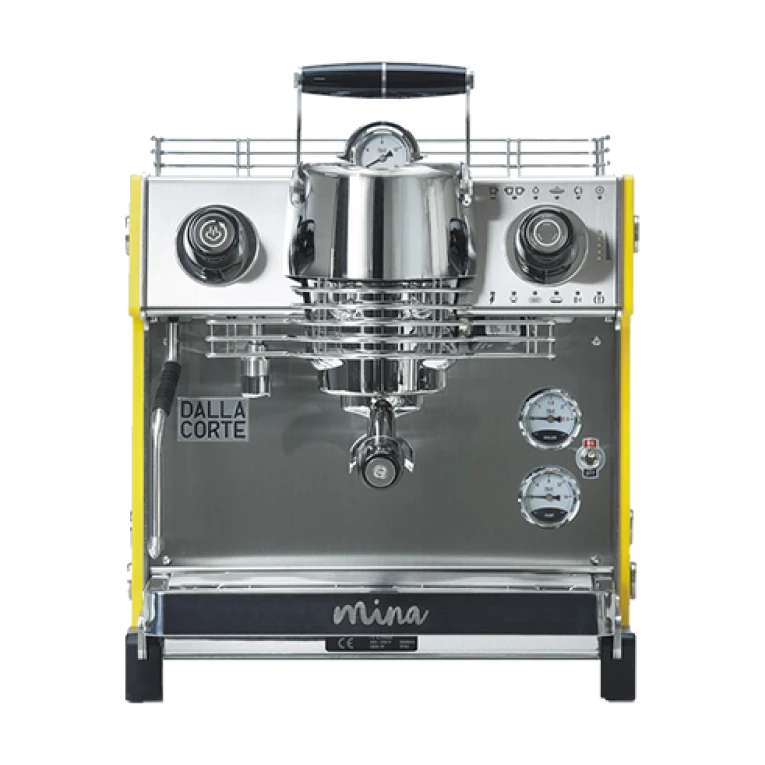
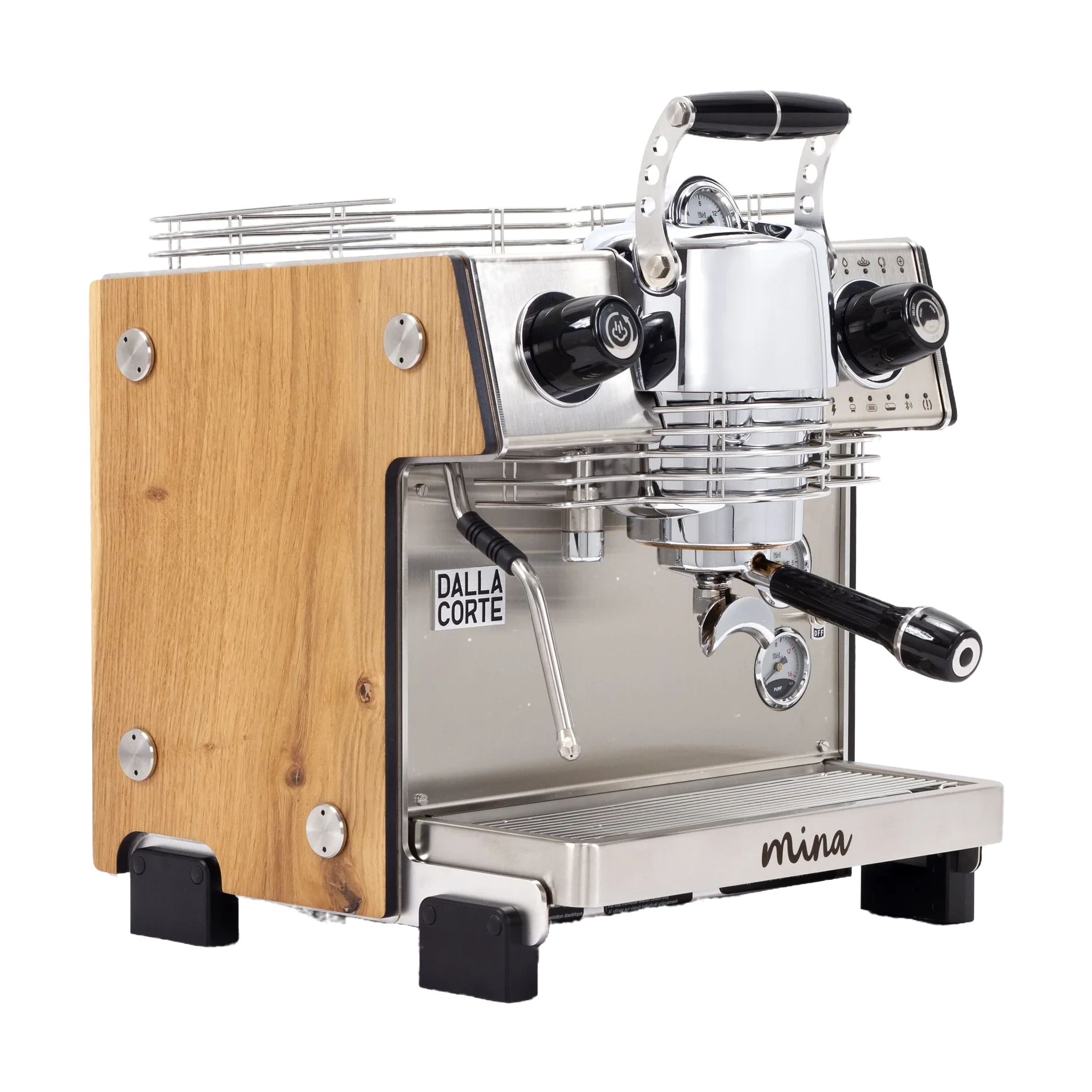
Why is the flow regulator on my Mina sticking?
Sediment, scale, or a worn valve seat, almost always. The regulator is a precision needle valve, and tiny mineral deposits are enough to make modulation feel gritty or inconsistent. We strip it, clean the needle and seat, fit a new seal kit, and verify smooth control across the full range. Forcing a binding lever only scores the seat, so book it early.
How many shots a day can a Mina handle?
It's rated for up to 150 shots a day, which covers most single-station bars with room to spare. Push it consistently past that and wear shows up first in the group gasket and the steam valve. If your volume has outgrown it, we'll tell you honestly rather than keep billing repairs.
Why are my Mina's shots inconsistent from one pull to the next?
Three usual suspects: rotary pump wear, expansion-valve drift, or a flow regulator that's started sticking. We gauge brew pressure at the portafilter, measure pump output, and test the regulator's travel. Each has a clear measurement, so you get a diagnosis rather than a guess.
What does it mean when the Mina's brew temperature drifts?
The brew boiler runs its own NTC sensor and PID, and either can drift with age. We test the sensor against a reference probe, recalibrate the PID through the service interface, and replace the sensor if it reads out of tolerance. Drift is usually gradual, so trust your palate if shots have slowly gone sour or flat.
My Mina's steam is weak. Is that the boiler?
Sometimes, but check the simple things first: scale in the steam circuit and a partially blocked tip cause most weak-steam calls. If the boiler genuinely can't hold pressure, the pressurestat or element is the suspect. We descale, clear the tip jets, and test both components at the gauge.
Why does my Mina keep overflowing the drip tray?
Usually a blocked drain hose or a drain run without enough fall. We clear the line and correct the plumbing slope if that's the real problem. If the overflow comes with water under the machine, mention it when you book; that points at a seal instead.
Can you fix dose programming that keeps drifting on the Mina?
Yes, and it's nearly always mineral buildup in the flow meter rather than the controller. We pull the meter, clean the impeller, verify the pulse output, and reprogram your doses. If it recurs quickly, your water filtration needs a look.
Which grinder should run beside a Mina?
Dalla Corte's own DC One is the natural partner, and the Mina also pairs happily with third-party specialty grinders. From the service side, what matters is that grinder drift gets ruled out before the machine takes the blame. We check both on the same visit.
Is the Mina serviceable at the bar, or does it go to a workshop?
At the bar for nearly everything: regulator rebuilds, boiler work, valve cartridges, and calibration all happen in place. It's a compact, logically laid-out machine. Only severe water damage or a full rebuild would send it to a bench, and we'd tell you that before moving it.
How much does a repair visit cost?
Flat rate for the visit, parts billed at their actual cost on top. You'll hear the rate when you book, and for bigger jobs we quote in writing on-site before any work starts. No estimate that balloons mid-job.
How fast can you get here?
Same-day in most cases. Call in the morning and a technician is usually on-site before the day is out; calls placed later in the day book for the next morning. Urgent breakdowns get priority routing.
Which areas do you cover?
The GTA and most of the Golden Horseshoe: Toronto through Mississauga, Vaughan, and Markham, out to Oshawa, Hamilton, and Niagara. If you're not sure you're in range, call and we'll tell you straight.
Do I need a service contract?
No. We work call by call. Plenty of customers put us on a maintenance schedule eventually, but that's their choice after seeing the work, never a requirement.
Are the repairs warrantied?
Parts carry their manufacturer warranty, and we stand behind our labour: if the same fault recurs, call us and we'll review it. Specific terms are discussed upfront on each job, not promised in marketing copy.
Do you repair on-site or take the machine away?
On-site whenever possible, which is most of the time. If a job genuinely needs the bench, like a full boiler rebuild or major electronics work, we'll say so before anything leaves your building.
How do I book a service call?
Call us or send the form on this page. We confirm the machine, the fault, and a time window the same day. If it's urgent, say so and we'll route the nearest technician.
What happens on the first visit?
Diagnosis first: we confirm the fault, tell you what caused it, and quote the fix before touching a wrench. Most repairs finish in that same visit because the common wear parts ride on the truck.
Do you carry parts or order them in?
High-wear parts for the platforms we service constantly ride on the truck. Anything else we order, usually next-day where suppliers allow, and we tell you the lead time before committing you to anything.
My machine is older or out of production. Will you still look at it?
Usually, yes. We service legacy machines for as long as parts can be sourced, and we're honest when a repair stops making financial sense against a replacement. You get the math, you make the call.
Are you cheaper than the manufacturer's service network?
Often, but that's not the pitch. We quote against the actual work, not a factory pricing book, and we'll tell you when a manufacturer warranty claim is the better route. Transparency is the value; the price usually follows.
Can you train our staff so this doesn't happen again?
Yes, and we do it by default on the way out. Half of repeat faults trace back to skipped daily cleaning or wrong routine, so the technician walks your team through what actually matters before leaving.