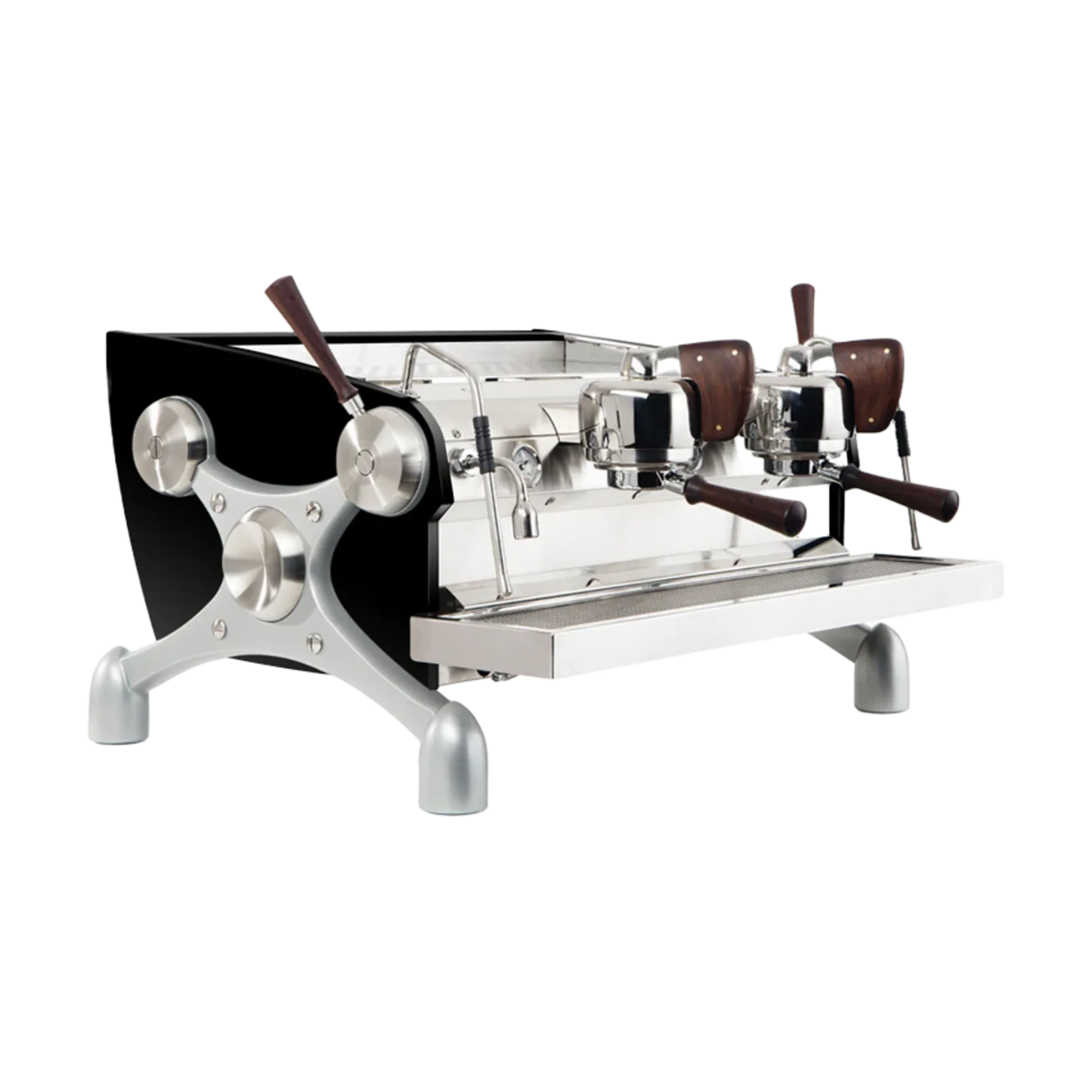
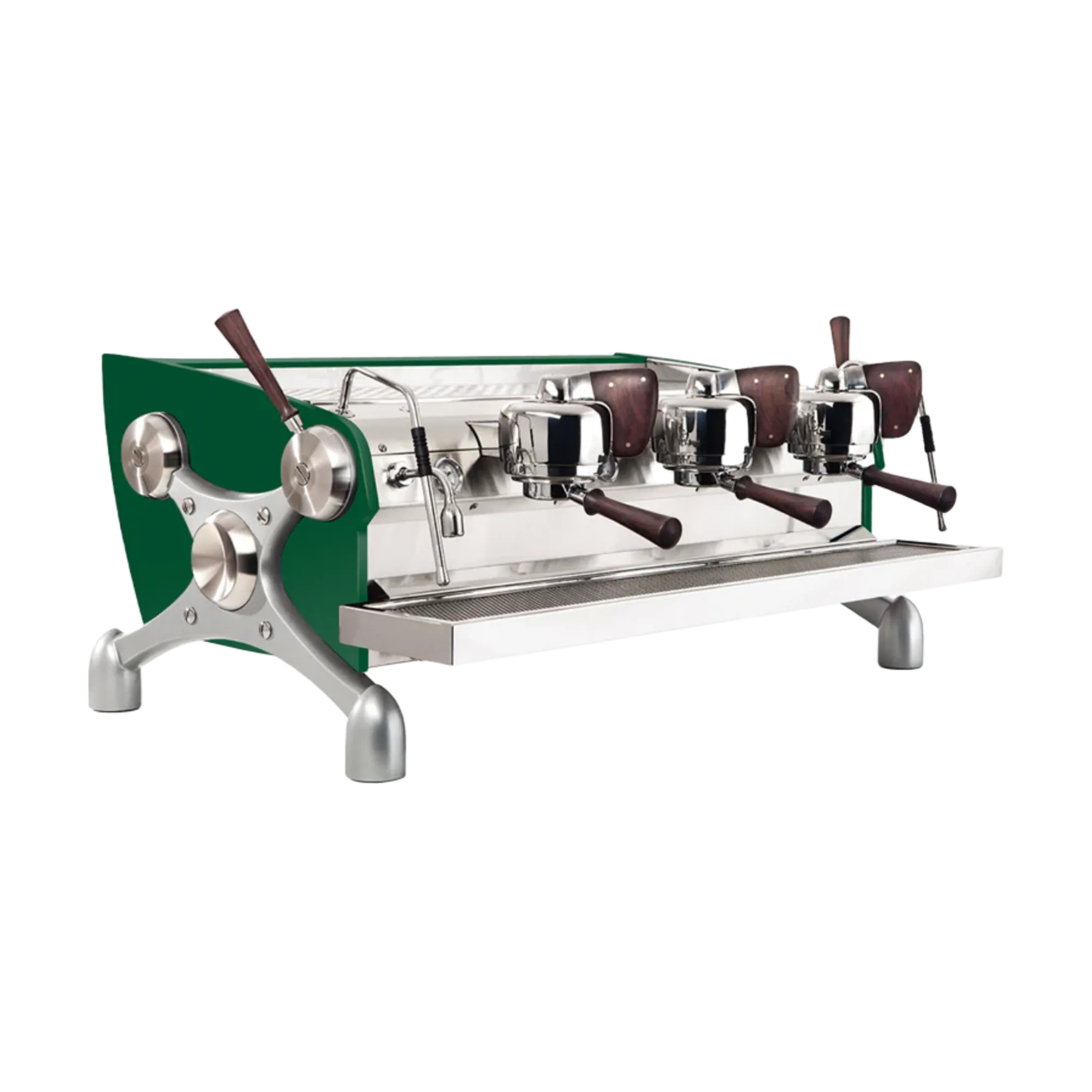
Why does the needle valve on my Espresso V3 feel stiff or gritty?
Sediment in the valve seat, scale on the needle, or a seal kit at the end of its life. It's wear, not damage, and it's the most common V3 job we do. The valve gets stripped, polished, and resealed, and the paddle comes back smooth across the whole range.
What causes inconsistent pre-infusion on the Espresso V3?
Three usual suspects: the needle valve leaking past its restriction, worn bushings in the paddle linkage, or a paddle encoder feeding the controller a dropping signal. Each leaves a different fingerprint on the pressure curve. We log the curve with a portafilter gauge, identify which one is bending it, and replace that part only.
One group on my V3 runs cooler than the other. Why?
Each group has its own brew boiler, PID, NTC sensor, and element, so a cold group is a fault inside that group alone. Usually it's a drifted sensor or scale insulating the element. We test against a reference probe and fix the group that's wrong; the healthy one stays untouched.
Can you match the machine back to our house profile after a repair?
Yes, that's part of the job, not an extra. We log the pre-infusion curve before and after the work and verify it against your reference profile, then pull calibration shots with your barista. The repair isn't finished until the pour matches.
How long do Espresso V3 group gaskets last in a busy cafe?
Six to twelve months under real cafe volume, less if back-flushing is sporadic. Weeping around the portafilter during pre-infusion is the early sign. We replace them with Slayer-spec parts and inspect the dispersion screens in the same visit.
My V3's steam wand drips even when closed. Is that serious?
Not serious, but not nothing: a worn cartridge or tip seal in the joystick valve, and it wastes boiler pressure all day. A rebuild with fresh internals plus a descale of the tip orifice cures it. Catching it early keeps it a small job.
Is an older Espresso V1 or V2 still repairable?
Yes. Some original parts have left production, so we lean on Slayer's parts network, salvaged donors, and fabricated equivalents where appropriate. If a particular repair stops making financial sense, we tell you before quoting.
Do you keep Espresso V3 parts in stock?
The wear parts, yes: needle valve seal kits, group gaskets, PTFE paddle bushings, steam valve cartridges, and common sensors travel on the truck. Encoders, pump heads, and boards are ordered through Slayer or Cimbali, typically days rather than weeks. Most V3 faults are fixed on the first visit.
The shots taste flat but the V3 passes every check. What now?
That pattern usually means stacked small drift: dispersion screen wear, grinder drift, brew temperature offset, and pre-infusion timing all moving a little. We measure and reset all four. The cup is the final test, so we pull shots with your team before leaving.
How much does a repair visit cost?
Flat rate for the visit, parts billed at their actual cost on top. You'll hear the rate when you book, and for bigger jobs we quote in writing on-site before any work starts. No estimate that balloons mid-job.
How fast can you get here?
Same-day. Call in the morning and a technician is usually on-site before the day is out; calls placed later in the day book for the next morning. Urgent breakdowns get priority routing.
Which areas do you cover?
The GTA and most of the Golden Horseshoe: Toronto through Mississauga, Vaughan, and Markham, out to Oshawa, Hamilton, and Niagara. If you're not sure you're in range, call and we'll tell you straight.
Do I need a service contract?
No. We work call by call. Plenty of customers put us on a maintenance schedule eventually, but that's their choice after seeing the work, never a requirement.
Are the repairs warrantied?
Parts carry their manufacturer warranty, and we stand behind our labour: if the same fault recurs, call us and we'll review it. Specific terms are discussed upfront on each job, not promised in marketing copy.
Do you repair on-site or take the machine away?
On-site whenever possible, which is most of the time. If a job genuinely needs the bench, like a full boiler rebuild or major electronics work, we'll say so before anything leaves your building.
How do I book a service call?
Call us or send the form on this page. We confirm the machine, the fault, and a time window the same day. If it's urgent, say so and we'll route the nearest technician.
What happens on the first visit?
Diagnosis first: we confirm the fault, tell you what caused it, and quote the fix before touching a wrench. Most repairs finish in that same visit because the common wear parts ride on the truck.
Do you carry parts or order them in?
High-wear parts for the platforms we service constantly ride on the truck. Anything else we order, usually next-day where suppliers allow, and we tell you the lead time before committing you to anything.
My machine is older or out of production. Will you still look at it?
Usually, yes. We service legacy machines for as long as parts can be sourced, and we're honest when a repair stops making financial sense against a replacement. You get the math, you make the call.
Are you cheaper than the manufacturer's service network?
Often, but that's not the pitch. We quote against the actual work, not a factory pricing book, and we'll tell you when a manufacturer warranty claim is the better route. Transparency is the value; the price usually follows.
Can you train our staff so this doesn't happen again?
Yes, and we do it by default on the way out. Half of repeat faults trace back to skipped daily cleaning or wrong routine, so the technician walks your team through what actually matters before leaving.