
!
Group gasket leak under the portafilter
A standard wear item on any machine pulling cafe volume. We back-flush the group, pull the dispersion screen, fit a new Slayer-spec gasket, and verify a clean seal across multiple test shots.

Volumetric Slayer, dialed in
A Steam EP that doses differently every cycle turns a tight bar program into guesswork. We repair the volumetric side and the steam side alike: flow meters fouled by minerals, pre-infusion solenoids that quit, group boilers drifting off setpoint, steam gone wet. Book with the symptom and the group count, and the right parts ride along.
We'll get back to you today.
Thanks. We received your request.
A Grajqevci technician will get back to you today to confirm your machine and book the visit. If it's urgent, call us directly at (289) 217-3796.
Something went wrong sending your request.
Please try again, or call us directly at (289) 217-3796 and we'll book your service over the phone. You can also email [email protected].
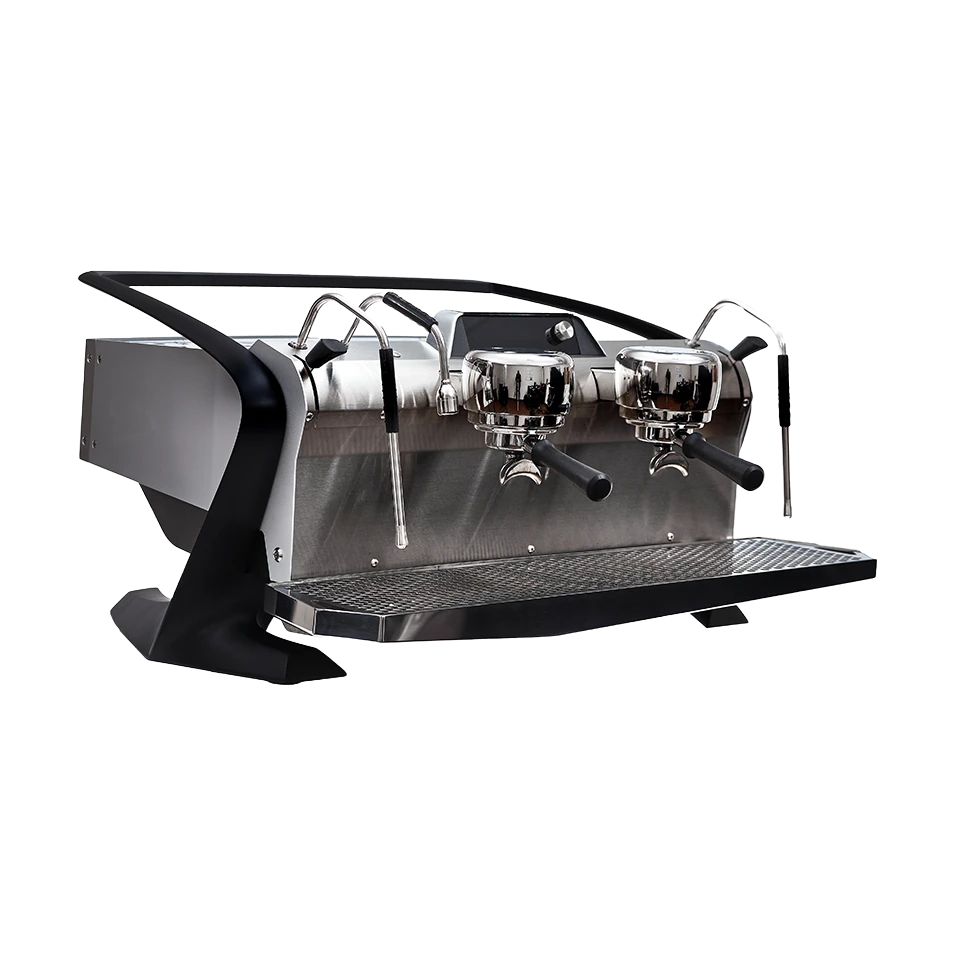
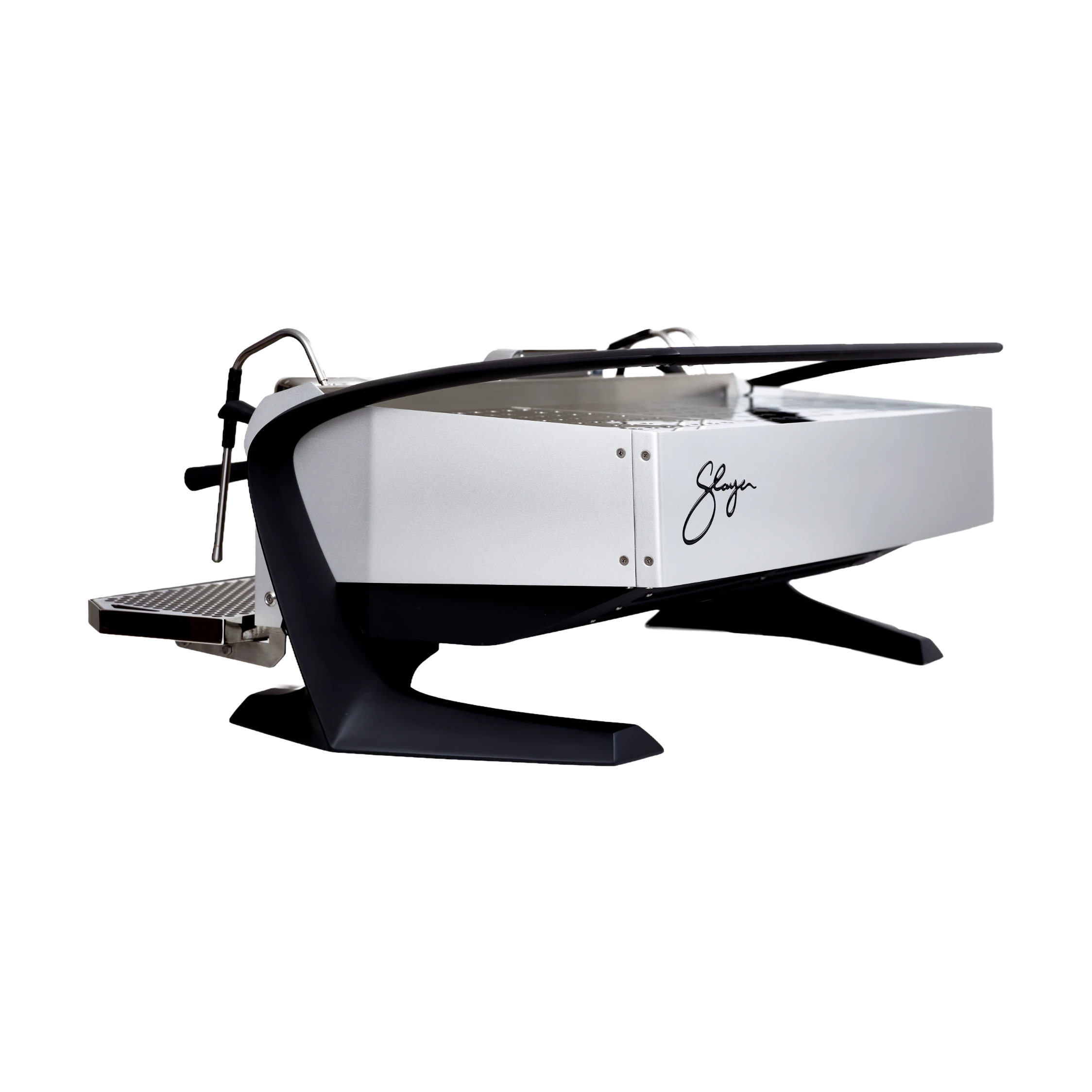
Slayer · Volumetric specialty espresso with dedicated steam circuit
The Steam EP is the volumetric face of the Slayer Steam platform: programmed doses, push-button consistency. Electronically gated pre-infusion, a separate brew boiler for every group, flow-meter dosing, and the dedicated dry-steam circuit the Steam line is named for, in two or three group builds rated up to 600 shots a day. High-volume specialty bars and hospitality programs choose it for repeatability. From the bench, the electronics that create that repeatability are also where the faults concentrate.
Why Grajqevci
Call in the morning and a technician is usually on-site before the day is out. Most Slayer Steam EP jobs get diagnosed and fixed on the first visit.
Commercial coffee equipment is all we do, and Slayer Steam EP is part of the weekly rotation. Not a generalist guessing at a service manual. Genuine OEM parts, industry-standard procedures.
Flat rate for the visit, with parts billed separately. For bigger jobs you'll see a written quote on-site before we proceed.
Skip the wait
Trusted by Toronto's most demanding teams






Steam EP faults we diagnose
The Steam EP fault list below is built from service calls, not the manual: each entry covers the cause and the repair.
A standard wear item on any machine pulling cafe volume. We back-flush the group, pull the dispersion screen, fit a new Slayer-spec gasket, and verify a clean seal across multiple test shots.
Plan on this annually under cafe volume. The screens come out, soak in cafiza, and get inspected for dimpling; any that are past their best are replaced rather than reinstalled.
The Steam EP gates pre-infusion electronically, with a solenoid per group, so a dead solenoid simply deletes the phase. We scope the solenoid's actuation, verify the controller is sending the signal, and replace whichever side has failed. Pre-infusion timing is re-confirmed against your preferred profile afterward.
A worn pre-infusion solenoid, a degraded flow meter, or controller calibration drift will each bend the curve in its own way. Logging the curve with a portafilter gauge shows us which signature we're looking at. We replace the failing component and recalibrate.
When all groups drift together, look at the rotary pump or the expansion valve rather than the groups. We measure pressure at each portafilter, check pump output, and adjust the expansion valve. A pump head below spec under load gets replaced.
Every Steam EP group runs its own brew boiler with its own PID, NTC sensor, and element, so a cold group is a self-contained diagnosis. We test that group's components against a reference probe, descale, recalibrate the PID, and replace whatever measures out of spec. The other groups are left alone.
Heavy milk service exposes scale, a failed pressurestat, or a tired element faster than anything else. We descale the steam boiler, test the pressurestat, and measure element resistance. The component that fails its test gets replaced.
Brew solenoid, group gasket, boiler fitting, or a blocked drain: the puddle looks the same either way. We pressure-test the circuits and dye-trace until the true source shows, then replace that component. The drain line is inspected and cleared while the panels are off.
Cartridges and tip seals wear out; that's their job. We rebuild the joystick steam valve, descale the wand and tip orifice, and verify dry steam at full open before moving on.
Dense, dry steam is the whole point of the Slayer Steam architecture, so wet steam means something specific has slipped. Scale in the steam boiler is the usual cause, with a failing superheater the second suspect on machines so equipped. We descale, inspect the superheater circuit, and verify the steam comes back dry.
Mineral buildup on the flow meter leads this one, with controller calibration drift a distant second. We weigh shot output across 10 cycles to confirm the variance is real, clean or replace the flow meter, and recalibrate dose-per-button through the service menu.
Mineral deposits on the impeller throw the pulse count, and the controller doses off bad data. Pulling the flow meter for an ultrasonic clean usually restores it; a worn impeller means a new meter before recalibration. Either way the doses get reprogrammed by weight.
A ribbon connector, membrane, or controller board fault in nearly every case. Board-level diagnosis tells us which before any part is ordered, with replacements sourced through Slayer or Cimbali. Most of these wrap up in a single visit.
New filtration changes the water, and the flow meter notices before anyone else does. We recalibrate dose-per-button against the new water profile and confirm consistency across all groups. Worth booking any time the water source changes.
Quiet drift in four places adds up: dispersion screen wear, grind drift, brew temperature offset, and pre-infusion solenoid timing. We work through each and recalibrate what has moved. Calibration shots with your barista close the visit.
Pre-Cimbali Steam EP machines are still excellent producers and still worth fixing. Parts come through Slayer's network and the Cimbali chain, which has kept availability healthy. Should a repair ever stop being economical, we'll say so up front.
Your coffee emergency ends here
Call or submit the form. We confirm your address, model, and the issue.
An experienced technician arrives, runs full diagnostics, and identifies the root cause.
You receive a flat, itemized quote. Nothing proceeds without your green light.
We complete the repair, run a test cycle, and walk you through what to watch for.
Parts on the truck
By the numbers
Our two-group went down right before the morning rush and they had a tech out the same day. Back in business before our regulars noticed.
*Estimated based on the approximate distance from our nearest service centre, average commute time, and median service-call length for one machine. Prices in Canadian dollars (CAD $). Final quote provided on-site after diagnosis.
FAQ
21 answers covering service, repair, parts, installation, warranty, and edge cases.
Updated July 2026
Nine times out of ten, mineral buildup on the flow meter impeller is dropping pulses and the controller doses off bad data. We confirm by weighing output across ten cycles, then clean or replace the meter and reprogram each dose by weight. Filtration gets checked at the same time so it doesn't come straight back.
It's the electronic stand-in for the paddle: the solenoid gates the pre-infusion phase instead of a mechanical needle valve. When it fails, pre-infusion goes flat or vanishes entirely. We test the solenoid and the controller signal separately, replace the failed side, and re-confirm the timing against your preferred profile.
No, that's cause and effect. The flow meter reads water movement, and new filtration changes the water enough to shift the pulse count. A dose-per-button recalibration against the new water profile sorts it, usually in a short single visit.
Yes. Every Steam EP group runs its own brew boiler, PID, sensor, and element, so we diagnose and repair per group. Your working groups keep pouring while we fix the one that isn't.
The Steam platform is engineered for dry, dense steam, so wet steam points at scale in the steam boiler or, on equipped machines, a failing superheater. Both show up clearly under test. A descale and circuit inspection usually brings the texture back.
Partly. The groups, gaskets, and steam side are shared territory, but the EP adds flow meters, dosing calibration, and pre-infusion solenoids that the manual machines simply don't have. We service both architectures, so nothing on the machine is unfamiliar.
Usually not. Ribbon connectors and membranes wear long before the board does, and board-level diagnosis tells us which it is before anything gets ordered. Boards, when genuinely needed, come through Slayer or the Cimbali channel.
By weight, not by eye. After cleaning or replacing the flow meter we weigh shot output across repeated cycles on every group and reprogram the buttons until the variance disappears. You get consistent doses, demonstrated at your own counter.
Harder than the machine would like, especially north and west of the city where hardness climbs. Flow meters and group boilers feel it first; that's why dose drift is our most common EP call. Good filtration plus scheduled descaling keeps the platform happy.
Flat rate for the visit, parts billed at their actual cost on top. You'll hear the rate when you book, and for bigger jobs we quote in writing on-site before any work starts. No estimate that balloons mid-job.
Same-day in most cases. Call in the morning and a technician is usually on-site before the day is out; calls placed later in the day book for the next morning. Urgent breakdowns get priority routing.
The GTA and most of the Golden Horseshoe: Toronto through Mississauga, Vaughan, and Markham, out to Oshawa, Hamilton, and Niagara. If you're not sure you're in range, call and we'll tell you straight.
No. We work call by call. Plenty of customers put us on a maintenance schedule eventually, but that's their choice after seeing the work, never a requirement.
Parts carry their manufacturer warranty, and we stand behind our labour: if the same fault recurs, call us and we'll review it. Specific terms are discussed upfront on each job, not promised in marketing copy.
On-site whenever possible, which is most of the time. If a job genuinely needs the bench, like a full boiler rebuild or major electronics work, we'll say so before anything leaves your building.
Call us or send the form on this page. We confirm the machine, the fault, and a time window the same day. If it's urgent, say so and we'll route the nearest technician.
Diagnosis first: we confirm the fault, tell you what caused it, and quote the fix before touching a wrench. Most repairs finish in that same visit because the common wear parts ride on the truck.
High-wear parts for the platforms we service constantly ride on the truck. Anything else we order, usually next-day where suppliers allow, and we tell you the lead time before committing you to anything.
Usually, yes. We service legacy machines for as long as parts can be sourced, and we're honest when a repair stops making financial sense against a replacement. You get the math, you make the call.
Often, but that's not the pitch. We quote against the actual work, not a factory pricing book, and we'll tell you when a manufacturer warranty claim is the better route. Transparency is the value; the price usually follows.
Yes, and we do it by default on the way out. Half of repeat faults trace back to skipped daily cleaning or wrong routine, so the technician walks your team through what actually matters before leaving.
Doses verified by weight before we pack up the tools.
Call (289) 217-3796 now →