
!
Group gasket leak
Standard wear under daily service. We back-flush the group, pull the dispersion screen, fit a new Slayer-spec gasket, and verify the seal stays clean through test shots.

The paddle Steam, kept honest
Mid-rush is exactly when a Steam LP decides the paddle feels wrong or the steam turns damp. We repair the whole platform: paddle linkages, brew solenoid timing, per-group boiler drift, pressurestats, rotary pumps on their last bearings. Describe what changed and when; the diagnosis usually starts before the truck does.
We'll get back to you today.
Thanks. We received your request.
A Grajqevci technician will get back to you today to confirm your machine and book the visit. If it's urgent, call us directly at (289) 217-3796.
Something went wrong sending your request.
Please try again, or call us directly at (289) 217-3796 and we'll book your service over the phone. You can also email support@grajqevci.com.
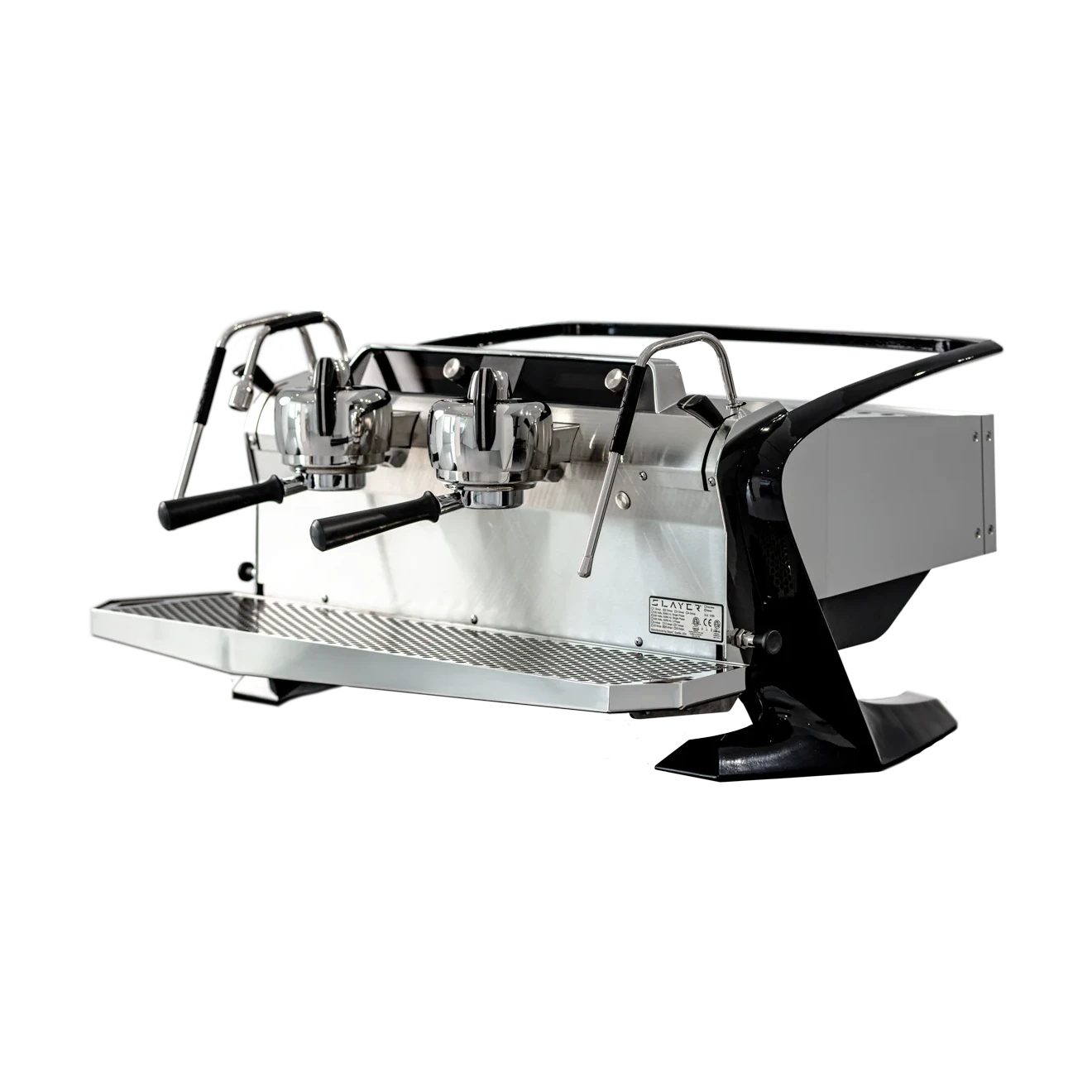
Slayer · Manual paddle specialty espresso, Slayer Steam architecture
The Steam LP is the manual-paddle heart of the Slayer Steam range. A brew boiler for each group, a dedicated dry-steam circuit, and, depending on configuration, a record-and-playback volumetric workflow layered over the paddle. Specialty cafes and latte-art-led bars run them as daily drivers at up to 500 shots a day. From the service side, the paddle linkage and the steam circuit carry most of the wear, and both respond well to scheduled attention.
Why Grajqevci
Call in the morning and a technician is usually on-site before the day is out. Most Slayer Steam LP jobs get diagnosed and fixed on the first visit.
Commercial coffee equipment is all we do, and Slayer Steam LP is one of the platforms we know best. Not a generalist guessing at a service manual. Genuine OEM parts, industry-standard procedures.
Flat rate for the visit, with parts billed separately. For bigger jobs you'll see a written quote on-site before we proceed.
Skip the wait
Trusted by Toronto's most demanding teams






Steam LP faults we diagnose
Most Steam LP calls trace to the faults below. Each one lists the likely cause and the repair we actually perform at the machine.
Standard wear under daily service. We back-flush the group, pull the dispersion screen, fit a new Slayer-spec gasket, and verify the seal stays clean through test shots.
PTFE bushing wear or coffee fines at the pivot, almost without exception. We disassemble the linkage, fit new bushings, clean and lubricate the assembly, and confirm the paddle swings smooth and returns properly.
An annual job under cafe volume. Screens come out for a cafiza soak and a close inspection; anything dimpled or scaled past saving gets replaced.
The paddle linkage, brew solenoid timing, or expansion valve will each distort the ramp differently. We log the curve with a portafilter gauge before and after, which makes the failing component visible rather than guessed. It gets replaced and the curve re-verified.
Rotary pump wear or expansion valve drift, in that order of likelihood. Measuring at the portafilter and checking pump output separates the two. The expansion valve gets adjusted first; a pump head below spec gets replaced.
Bearing wear after thousands of running hours, usually announced by noise before failure. We measure current draw and check output to confirm, then replace the pump head if it's on the way out. Slayer rotary pumps stay in stock.
With its own boiler per group, one cold group is its own contained problem. We test that group's NTC against a reference probe, descale the boiler, and recalibrate the PID. A sensor or element out of spec is replaced on the spot.
Scale, a tired pressurestat, or a degraded element. We descale the boiler, test the pressurestat at setpoint, and measure element resistance to find the one that's failing. Replacement plus a pressure hold test closes the job.
Brew solenoid, group gasket, boiler fitting, or drain: all candidates until tested. We pressure-test the circuits, dye-trace the leak to its source, and replace only what's actually failing.
Scale in the steam boiler or condensate sitting in the steam line will both flatten your microfoam. We descale the boiler, drain and dry the line, and verify the steam comes back dry at full open.
Cartridge and tip seal wear inside the joystick valve. A rebuild with fresh internals and a descaled tip orifice restores the clean on-off action the joystick should have.
A ribbon connector, membrane, or board issue in nearly every case. We diagnose at the board level before ordering, and parts come through the Slayer and Cimbali network.
NTC sensor drift, or a connector corroding where steam has migrated into the loom. Testing the sensor at reference temperatures and inspecting the connectors finds it. We reseat or replace the connector and swap the sensor if it reads out of spec.
Usually several small drifts stacking: dispersion screen wear, grind drift, brew temperature offset, pre-infusion timing. We check each in turn and recalibrate what has moved. The visit ends with calibration shots pulled alongside your barista.
Parts for older LP machines come through Slayer and the Cimbali chain, and availability has stayed solid. If a legacy repair ever stops being economical, you'll hear it from us straight.
Your coffee emergency ends here
Call or submit the form. We confirm your address, model, and the issue.
An experienced technician arrives, runs full diagnostics, and identifies the root cause.
You receive a flat, itemized quote. Nothing proceeds without your green light.
We complete the repair, run a test cycle, and walk you through what to watch for.
Parts on the truck
Receipts
Their team consistently delivers exceptional maintenance services, prolonging equipment lifespan.
*Estimated based on the approximate distance from our nearest service centre, average commute time, and median service-call length for one machine. Prices in Canadian dollars (CAD $). Final quote provided on-site after diagnosis.
FAQ
20 answers covering service, repair, parts, installation, warranty, and edge cases.
Updated August 2026
Worn PTFE bushings or coffee fines collecting at the linkage pivot. The assembly comes apart, gets new bushings, and goes back together cleaned and lubricated. Pre-infusion timing is rechecked afterward because a dragging paddle quietly shifts it.
No, dry steam is the platform's signature. Wet steam means scale in the steam boiler or condensate pooling in the line, both of which we can confirm and fix at the machine. Your milk texture returns to normal once the cause is cleared.
The LP profiles with a paddle and mechanical linkage; the EP gates pre-infusion electronically and doses through flow meters. So LP faults skew mechanical and EP faults skew electronic. We carry parts and procedures for both.
It's the rotary pump's bearings announcing retirement, usually well before outright failure. Current draw and output measurements confirm how far gone it is. Pump heads are stocked, so it's a planned swap rather than an emergency if you call when the noise starts.
Yes, completely. Each group has its own boiler, NTC sensor, element, and PID, so the cold group gets tested against a reference probe, descaled, and recalibrated on its own. The other groups never come offline.
Inspect annually under cafe volume; replace when they're dimpled or scaled past saving. Worn screens cause channeling that no amount of grinder fiddling fixes. We check them in any group-head service automatically.
Yes. On builds with the volumetric workflow, drift usually traces to the flow path or controller calibration rather than the paddle itself. We test the chain, recalibrate, and verify the playback matches the recorded shot by weight.
Gaskets, bushings, steam cartridges, sensors, and rotary pump heads travel with us, which covers the bulk of LP work. Boards and less common items come through Slayer or the Cimbali network with short lead times. You'll know what's stock and what's ordered before we start.
Flat rate for the visit, parts billed at their actual cost on top. You'll hear the rate when you book, and for bigger jobs we quote in writing on-site before any work starts. No estimate that balloons mid-job.
Same-day. Call in the morning and a technician is usually on-site before the day is out; calls placed later in the day book for the next morning. Urgent breakdowns get priority routing.
The GTA and most of the Golden Horseshoe: Toronto through Mississauga, Vaughan, and Markham, out to Oshawa, Hamilton, and Niagara. If you're not sure you're in range, call and we'll tell you straight.
No. We work call by call. Plenty of customers put us on a maintenance schedule eventually, but that's their choice after seeing the work, never a requirement.
Parts carry their manufacturer warranty, and we stand behind our labour: if the same fault recurs, call us and we'll review it. Specific terms are discussed upfront on each job, not promised in marketing copy.
On-site whenever possible, which is most of the time. If a job genuinely needs the bench, like a full boiler rebuild or major electronics work, we'll say so before anything leaves your building.
Call us or send the form on this page. We confirm the machine, the fault, and a time window the same day. If it's urgent, say so and we'll route the nearest technician.
Diagnosis first: we confirm the fault, tell you what caused it, and quote the fix before touching a wrench. Most repairs finish in that same visit because the common wear parts ride on the truck.
High-wear parts for the platforms we service constantly ride on the truck. Anything else we order, usually next-day where suppliers allow, and we tell you the lead time before committing you to anything.
Usually, yes. We service legacy machines for as long as parts can be sourced, and we're honest when a repair stops making financial sense against a replacement. You get the math, you make the call.
Often, but that's not the pitch. We quote against the actual work, not a factory pricing book, and we'll tell you when a manufacturer warranty claim is the better route. Transparency is the value; the price usually follows.
Yes, and we do it by default on the way out. Half of repeat faults trace back to skipped daily cleaning or wrong routine, so the technician walks your team through what actually matters before leaving.
Talk to a tech who knows these paddles.
Call (289) 217-3796 now →