
!
Group gasket leak around the portafilter
An ordinary wear item under daily service. We pull the dispersion screen, fit a new Slayer-spec gasket, lubricate the portafilter ears, and verify the seal holds clean through test shots.

Full Slayer profiling, one group
When the only machine in the room is an Espresso Single Group, there's no second bar to lean on. We repair these one-group Slayers for tasting rooms and boutique bars: needle valve rebuilds, paddle bushings, boiler setpoint drift, steam valves that weep. Most fixes finish in one visit, because the wear parts already live on the truck.
We'll get back to you today.
Thanks. We received your request.
A Grajqevci technician will get back to you today to confirm your machine and book the visit. If it's urgent, call us directly at (289) 217-3796.
Something went wrong sending your request.
Please try again, or call us directly at (289) 217-3796 and we'll book your service over the phone. You can also email support@grajqevci.com.
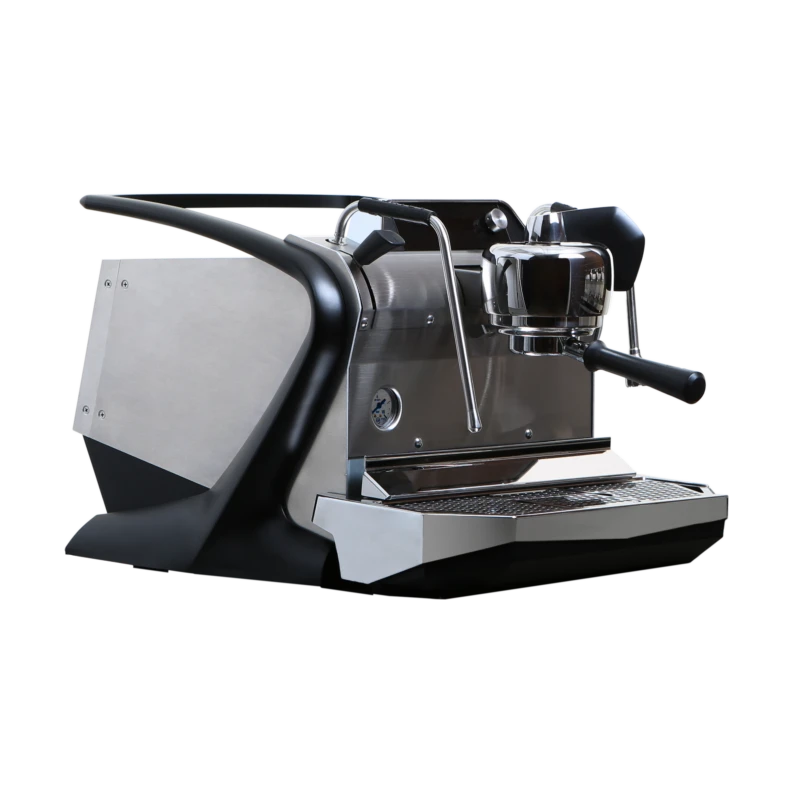
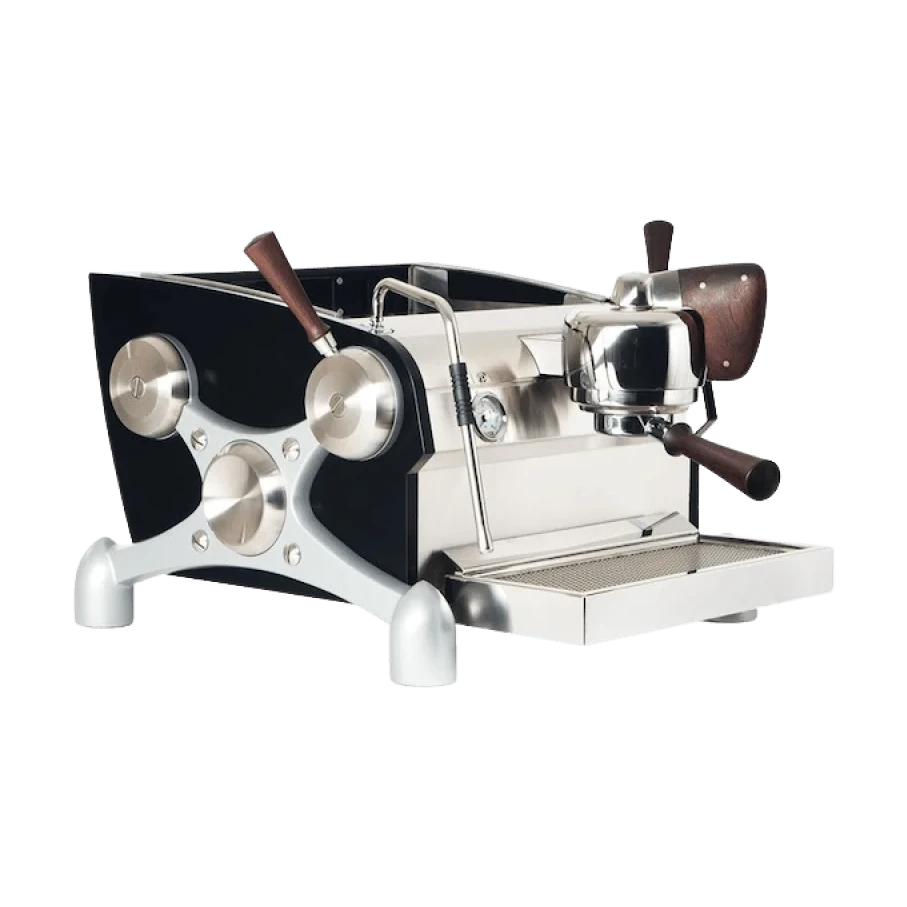
Slayer · Premium specialty espresso, single-group manual
The Espresso Single Group packs Slayer's entire flow-profiling architecture into a one-group footprint. Needle valve, manual paddle, a brew boiler of its own, and a dedicated steam boiler, all hand-assembled in Seattle and rated for up to 150 shots a day. Tasting rooms, micro-roasters, and single-bar concepts run them hard. Service-wise it behaves like its bigger siblings: the valve, linkage, and gaskets wear first, and everything is reachable through the panels.
Why Grajqevci
Call in the morning and a technician is usually on-site before the day is out. Most Slayer Espresso Single Group jobs get diagnosed and fixed on the first visit.
Commercial coffee equipment is all we do, and Slayer Espresso Single Group is one of the platforms we know best. Not a generalist guessing at a service manual. Genuine OEM parts, industry-standard procedures.
Flat rate for the visit, with parts billed separately. For bigger jobs you'll see a written quote on-site before we proceed.
Skip the wait
Trusted by Toronto's most demanding teams






Espresso Single Group faults we diagnose
One group means nowhere to hide a fault. These are the Espresso Single Group issues we see, what causes them, and how each gets fixed.
An ordinary wear item under daily service. We pull the dispersion screen, fit a new Slayer-spec gasket, lubricate the portafilter ears, and verify the seal holds clean through test shots.
Worn PTFE bushings or coffee fines packed into the pivot make the paddle catch partway through its throw. Disassembly, new bushings, and a cleaned, lubricated linkage restore the smooth action. We cycle it through the full range to confirm.
Either rotary pump wear or expansion valve drift. Measuring brew pressure at the portafilter and checking pump output tells us which. We adjust the expansion valve first and replace the pump head only if output stays below spec.
Three components shape that curve: the needle valve, the paddle linkage, and the expansion valve. We log the pressure curve before and after with a portafilter gauge, so the fix is measurable rather than felt. Whichever component is throwing the curve gets replaced.
NTC sensor drift, scale buildup, or a degraded element are the usual causes. We test the sensor against a reference probe, descale the boiler, and recalibrate the PID. Anything measuring out of spec gets replaced the same visit.
Scale, a failed pressurestat, or an element drawing below rated wattage. Descaling plus a pressurestat test and an element resistance reading isolates the fault. We replace the offending part and verify pressure over a hold test.
Could be the brew solenoid, the group gasket, a boiler fitting, or the drain hose. We pressure-test and dye-trace until the actual leak point shows itself, then replace the failing component rather than everything near it.
Grit in the seat, scale on the needle, or a worn seal kit will roughen the paddle feel. We strip the valve, polish the needle and seat, fit a fresh seal kit, and lubricate the linkage until the full range moves smoothly again. Slayer seal kits stay stocked on the truck.
A failed valve seal lets water flow during the phase the needle valve should be restricting. Pressure-testing the brew circuit confirms it, and a needle valve rebuild with a fresh kit cures it. The pre-infusion curve is verified against your reference before we leave.
A worn encoder feeds the controller bad position data and pre-infusion timing stops repeating. We test the signal across the full paddle range, replace the encoder if it's dropping out, and recalibrate the paddle home position.
Usually a ribbon connector, a membrane button, or the controller board itself. Diagnosing at the board level first means we order the right part once. Replacements come through Slayer or the Cimbali network.
Four quiet culprits cause this: dispersion screen wear, grind drift, brew temperature offset, and pre-infusion timing. We work through all four and recalibrate what has moved. The final test is calibration shots pulled with your barista, not just numbers on a gauge.
Earlier-generation Single Group machines remain fully serviceable. Parts come through the Slayer network or from salvaged decommissioned units when production has moved on. If a repair stops being economical, we say so before you spend anything.
Either the element has failed or the thermal cut-out has tripped. A quick element resistance test settles which. We clear any blockage at the cut-out and replace the element if it's gone.
The steam valve cartridge and tip seal are wear items on any busy bar. A rebuild with fresh internals and a descale of the wand and tip puts it right. Dry steam delivery at full open is the test it has to pass.
Your coffee emergency ends here
Call or submit the form. We confirm your address, model, and the issue.
An experienced technician arrives, runs full diagnostics, and identifies the root cause.
You receive a flat, itemized quote. Nothing proceeds without your green light.
We complete the repair, run a test cycle, and walk you through what to watch for.
Parts on the truck
The record
Our boiler failed during a Saturday brunch service and they had us pulling shots again before close. Same-day weekend dispatch.
*Estimated based on the approximate distance from our nearest service centre, average commute time, and median service-call length for one machine. Prices in Canadian dollars (CAD $). Final quote provided on-site after diagnosis.
FAQ
20 answers covering service, repair, parts, installation, warranty, and edge cases.
Updated August 2026
Mechanically, yes: the same patented needle valve, paddle, and dual-boiler architecture as the two-group, scaled to one group. That's good news for repairs, because the parts and procedures carry over. The faults are the same too, just arriving one group at a time.
Worn PTFE bushings or coffee fines packed into the linkage pivot, in nearly every case. It's a disassemble, re-bush, clean, and lubricate job rather than a parts crisis. The paddle should come back feeling the way it did on delivery day.
Usually the needle valve seal letting water bypass the restriction phase, so the ramp starts climbing before you ask it to. A pressure test confirms it and a valve rebuild with a fresh kit fixes it. We verify the curve against your reference before signing off.
Yes, that's its design ceiling, and plenty of busy tasting rooms ride close to it. Sustained volume just accelerates the wear schedule: gaskets, bushings, and the steam cartridge come due sooner. If you're running near capacity, an annual preventive visit pays for itself.
Usually not. An NTC sensor drifting, scale on the element, or a PID needing recalibration covers almost every case. All three are testable at the machine, and the parts are small money against the machine's value.
Two quick things: whether the tip orifice is blocked with milk scale, and whether the boiler gauge is sitting at its normal pressure. If the tip is clear and pressure looks right but steam is still weak or wet, the valve cartridge or boiler scale is the likely story, and that's a service visit.
Yes, earlier-generation Single Groups stay fully serviceable. Parts come through Slayer's network or from salvaged units where production has moved on. We're upfront if any specific repair stops being worth the money.
Within a single visit, almost always. The seal kits travel with us, and the strip, polish, rebuild, and verification runs about an hour of bench time at your bar. You won't be down for days waiting on it.
Flat rate for the visit, parts billed at their actual cost on top. You'll hear the rate when you book, and for bigger jobs we quote in writing on-site before any work starts. No estimate that balloons mid-job.
Same-day. Call in the morning and a technician is usually on-site before the day is out; calls placed later in the day book for the next morning. Urgent breakdowns get priority routing.
The GTA and most of the Golden Horseshoe: Toronto through Mississauga, Vaughan, and Markham, out to Oshawa, Hamilton, and Niagara. If you're not sure you're in range, call and we'll tell you straight.
No. We work call by call. Plenty of customers put us on a maintenance schedule eventually, but that's their choice after seeing the work, never a requirement.
Parts carry their manufacturer warranty, and we stand behind our labour: if the same fault recurs, call us and we'll review it. Specific terms are discussed upfront on each job, not promised in marketing copy.
On-site whenever possible, which is most of the time. If a job genuinely needs the bench, like a full boiler rebuild or major electronics work, we'll say so before anything leaves your building.
Call us or send the form on this page. We confirm the machine, the fault, and a time window the same day. If it's urgent, say so and we'll route the nearest technician.
Diagnosis first: we confirm the fault, tell you what caused it, and quote the fix before touching a wrench. Most repairs finish in that same visit because the common wear parts ride on the truck.
High-wear parts for the platforms we service constantly ride on the truck. Anything else we order, usually next-day where suppliers allow, and we tell you the lead time before committing you to anything.
Usually, yes. We service legacy machines for as long as parts can be sourced, and we're honest when a repair stops making financial sense against a replacement. You get the math, you make the call.
Often, but that's not the pitch. We quote against the actual work, not a factory pricing book, and we'll tell you when a manufacturer warranty claim is the better route. Transparency is the value; the price usually follows.
Yes, and we do it by default on the way out. Half of repeat faults trace back to skipped daily cleaning or wrong routine, so the technician walks your team through what actually matters before leaving.
One machine, one call, and the likely parts already on the way.
Call (289) 217-3796 now →